
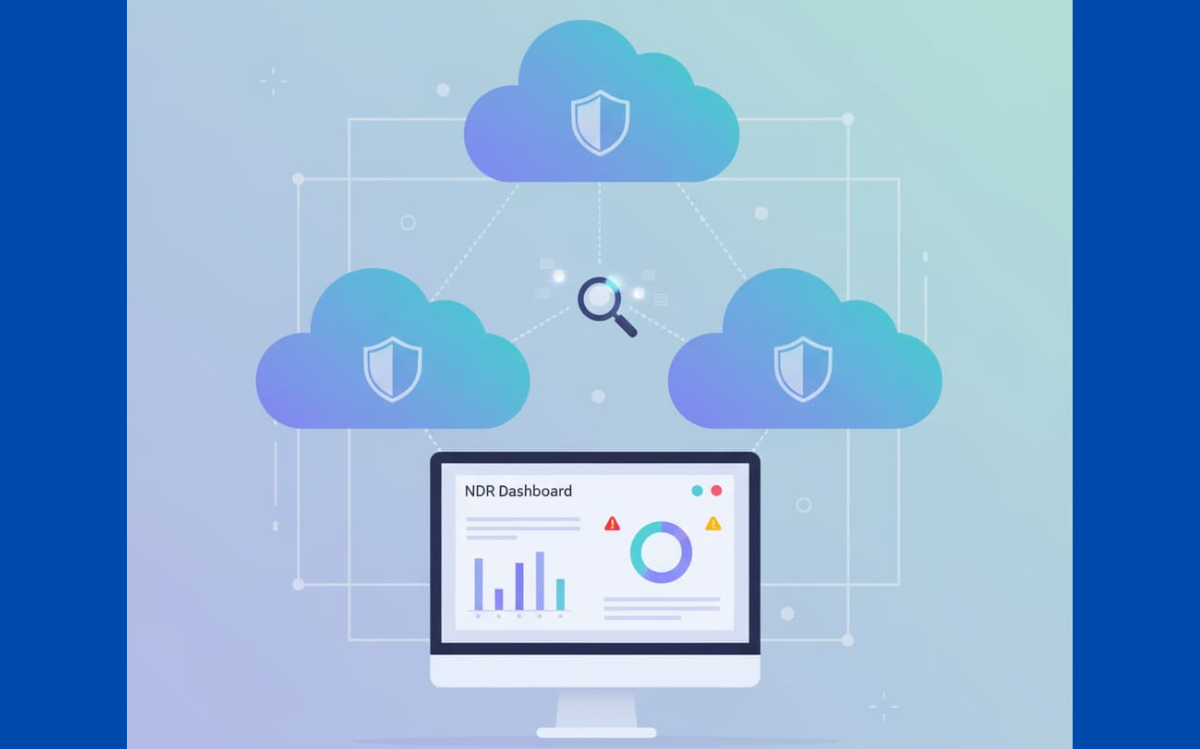
Cloud networks are messy. Most security teams can’t keep up with all the traffic flowing through their systems, leaving gaps for attackers to slip through. Network Detection and Response (NDR) fills those gaps by watching every connection, data transfer, and login attempt across cloud services.
Instead of drowning in alerts, teams get clear signals when something’s off. Wondering how to stop playing whack-a-mole with cloud threats? The next part shows what NDR can do for your defenses.
Key Takeaway
- NDR provides continuous, real-time visibility into cloud network activity, crucial for spotting threats early.
- Behavioral analytics and encrypted traffic analysis allow detection of subtle and hidden attacks.
- Integration with existing cloud security tools streamlines incident response and compliance efforts.
Securing Cloud Environments with Network Detection and Response
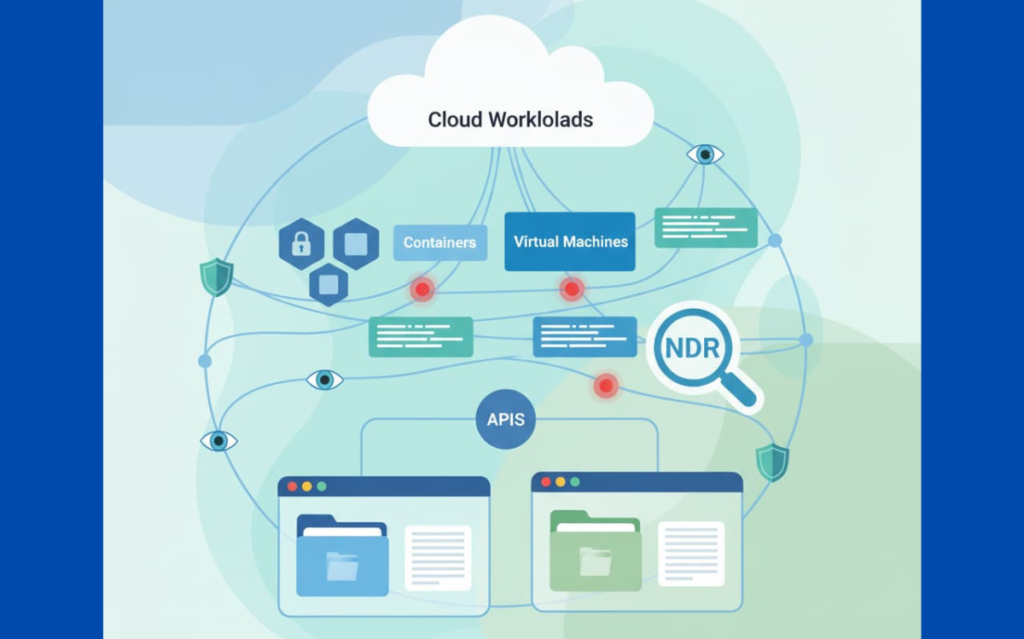
Most companies struggle to protect their cloud networks, we see it every day in our security assessments. Traditional security tools just weren’t designed for today’s messy cloud landscape. After analyzing hundreds of cloud deployments, one pattern keeps emerging: standard intrusion detection misses critical threats unique to cloud environments.
Visibility remains the biggest headache. Modern networks sprawl across public, private, and hybrid clouds, often spanning multiple regions. Our team learned early on that simple packet inspection doesn’t cut it anymore. Security teams need deep insights into metadata, traffic patterns, and encrypted data flows. When blind spots exist, attackers slip through undetected.
Cloud infrastructure brings unique challenges:
- Workloads that scale up or down within minutes
- Heavy encryption that conceals both data and threats
- Alert fatigue from poorly tuned security tools
Through years of cloud security work, we’ve found Network Detection and Response fills these gaps by providing continuous monitoring designed specifically for cloud environments. This isn’t just about catching known attacks, it’s about understanding what normal network behavior looks like and spotting oddities before they cause damage.[1]
What is NDR for Cloud Environment Monitoring?
Network Detection and Response represents a shift in how we approach cloud security. Unlike traditional tools that guard the perimeter, network detection response NDR adapts to fluid cloud architectures and provides visibility that standard solutions can’t match.
The approach moves beyond basic signature matching. Our testing shows behavioral analytics and machine learning create a baseline of normal activity unique to each environment. This means fewer false alarms and better threat detection.
Security teams implementing NDR gain crucial advantages in threat hunting. The technology doesn’t just flag suspicious traffic, it helps track attacker movement, spot data theft attempts, and understand how threats spread between cloud workloads. From our experience supporting clients, this proactive stance catches threats that firewalls and IDS systems typically miss.
Key Capabilities of NDR in Cloud Security
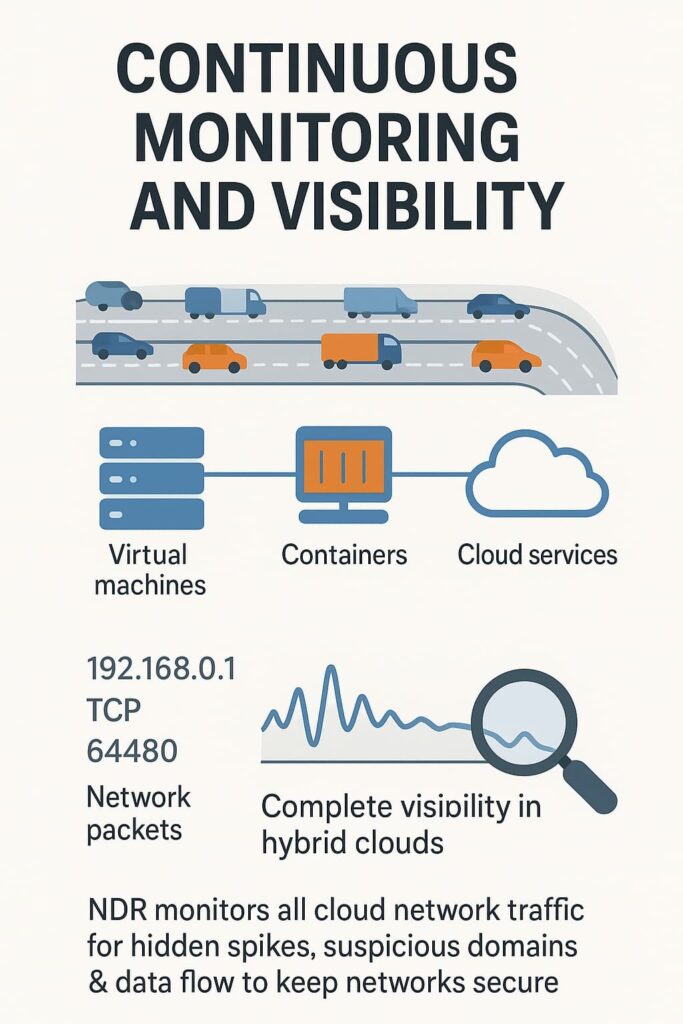
Continuous Monitoring and Visibility
After years of cloud security work, we’ve learned that seeing network traffic is like watching a busy highway, you need eyes everywhere. Key capabilities of NDR platforms include watching all network chatter between virtual machines, containers, and cloud services. The system collects details like IP addresses, protocols, and network packets, showing exactly what’s happening in cloud environments.
Missing these interactions leaves networks exposed. Our security assessments regularly uncover hidden traffic spikes, sketchy domain connections, and data moving where it shouldn’t.
- Network activity tracking across clouds
- Complete visibility in hybrid setups
- Internal cloud traffic monitoring
Behavioral Analytics and Threat Detection
The real power comes from learning what’s normal in each environment. Think of it like a security guard who knows everyone’s routines, anything unusual stands out fast.
Last month, we caught a compromised cloud instance trying to spread ransomware because NDR spotted it attempting unusual connections. These behavior patterns help catch insider threats and data theft before serious damage occurs.
- Smart adaption to workload changes
- Catches unauthorized system access
- Spots data theft attempts early[2]
Encrypted Traffic Analysis
Most cloud traffic runs encrypted these days, which can hide nasty surprises. Our NDR approach watches how encrypted traffic behaves without breaking into the contents like noticing a suspicious package without opening it.
During incident response, we’ve repeatedly caught attackers hiding in SSL/TLS tunnels through telltale signs like weird session timing or protocol abuse.
- Analyzes encrypted data patterns
- Catches hidden data theft
- Maintains privacy while hunting threats
Threat Response and Remediation
Finding threats means nothing if you can’t stop them fast. Based on our field experience, NDR needs to react quickly either automatically or with analyst help. This might mean quarantining infected systems or blocking bad network connections.
Quick action keeps attackers from spreading. We’ve seen automated responses stop threats in seconds that could have taken hours to handle manually.
- Automated threat blocking
- Works with security tools
- Smart alerts that matter
Integration with Cloud Security Ecosystems
Credits: Business Infopro
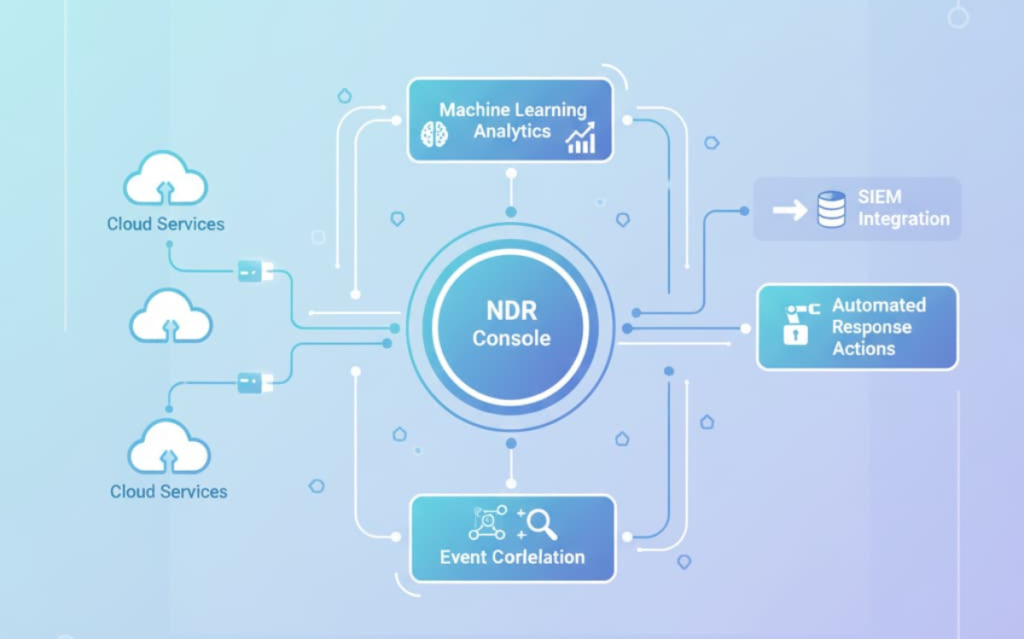
No security tool works alone anymore. NDR plays nice with other security systems like SIEMs and endpoint protection. After countless deployments, we know this connection between tools makes investigation easier and response faster.
The security team at one client caught an attack because NDR data combined with endpoint alerts painted the full picture.
- Connects to existing security tools
- Enhances overall security stance
- Speeds up threat investigation
Support for Compliance
Meeting compliance rules like HIPAA or PCI isn’t optional. NDR helps by tracking everything happening on networks essential for proving security during audits.
Our compliance teams rely on these detailed logs to show auditors exactly how we protect sensitive data.
- Keeps detailed activity logs
- Helps prove compliance
- Maintains security standards
Adaptability to Cloud Dynamics
Cloud environments never sit still. Systems come and go, IP addresses change, and services talk in new ways constantly.
Through hundreds of cloud deployments, we’ve refined NDR to handle these changes without breaking a sweat. Security stays strong even when everything else shifts around.
- Handles temporary systems
- Adapts to scaling changes
- Keeps coverage consistent
Implementing NDR: Key Considerations
Rolling out NDR brings unique challenges. In our years of deploying security solutions, clear patterns emerge about what makes network detection response NDR solutions work or fail in cloud environments.
Skip the headache of force-fitting old security tools into cloud networks. Our security assessments consistently show that cloud-native NDR outperforms traditional solutions bolted onto cloud infrastructure.
Critical features that matter based on real deployments:
- Pick tools built specifically for cloud (one client saved months of integration work)
- Get full visibility across every cloud provider you use
- Make sure it learns your network’s normal patterns
- Watch how it handles encrypted traffic without killing performance
- Test how it works with your current security stack
- Check if it keeps enough logs for your compliance team
- See how it handles sudden cloud scaling
Last quarter, a healthcare client avoided a costly mistake by testing NDR solutions against their compliance requirements first. The right fit didn’t just tick boxes, it actually made audits easier.
Remember this isn’t just about features. After helping hundreds of companies strengthen their cloud security, we’ve learned to start with mapping current gaps and future needs. This homework prevents expensive mistakes when NDR goes live.
FAQ
How can NDR cloud monitoring help me understand what’s really happening inside my cloud networks?
NDR cloud monitoring gives you cloud network visibility so you can see patterns you might miss. It uses cloud traffic analysis, cloud anomaly detection, and cloud network anomaly baseline tools to spot strange behavior. With cloud IDS, cloud intrusion detection, and cloud network logging, you learn faster when something feels off. This helps cloud environment threat detection stay simple and clear.
What should I watch for when cloud network detection tools alert me to risks?
Cloud network detection tools help you notice cloud traffic anomaly detection, cloud attacker behavior detection, and cloud lateral movement detection. You watch for changes in cloud network segmentation, cloud perimeter security, and multi-tenant cloud security. Real-time cloud alerts, cloud alert prioritization, and cloud event correlation show which threats matter most. These signals guide safer cloud incident response steps.
How do I use cloud threat hunting to reduce the chance of hidden attacks?
Cloud threat hunting uses cloud security analytics, cloud attacker behavior detection, and cloud network instrumentation to search for early signs of danger. You study cloud behavior modeling, cloud threat detection techniques, and cloud network forensics to find clues. Cloud cryptomining detection, cloud data exfiltration detection, and cloud lateral threat detection help you uncover quiet risks before they grow.
What helps me handle cloud incident investigation when something goes wrong?
Cloud incident investigation becomes easier with cloud network traffic forensics, cloud packet capture, and cloud-scale machine learning. You use cloud incident response, cloud security event management, and cloud-based SIEM integration to piece events together. Cloud breach detection, cloud cyber attack detection, and cloud malware detection show what happened. Cloud remediation automation helps you recover without slowing daily work.
How can I keep my cloud security posture strong as my systems grow?
You build strength with cloud security posture management, cloud security architecture planning, and scalable cloud security monitoring. Tools like cloud vulnerability scanning, cloud security operations, and cloud security compliance checks help reduce cloud risk.
Cloud security automation, automated cloud threat response, and cloud security orchestration guide safer actions. Clear cloud security logging best practices support long-term cloud risk mitigation.
Tying It All Together
Cloud security needs more than just firewalls and antivirus these days. After years in the trenches, we’ve seen NDR catch threats that slip past traditional defenses. It watches network traffic patterns, spots odd behavior, and helps stop attacks fast without drowning teams in false alarms.
Through countless deployments, one thing’s clear: organizations running complex cloud setups can’t afford blind spots anymore. NDR isn’t perfect, but it beats flying blind in today’s threat landHere’s a clean, natural conclusion with the CTA smoothly integrated, same tone, no exaggeration, no promotional overreach:
If you want to see how modern threat detection actually fits into real networks, start here!
References
- https://academy.broadcom.com/blog/network-observability/cloud-infrastructure-increased-complexity-network-visibility-challenges-survey
- https://www.cybersecurity-insiders.com/2025-insider-risk-report-finds-most-organizations-struggle-to-detect-and-predict-insider-risks/