
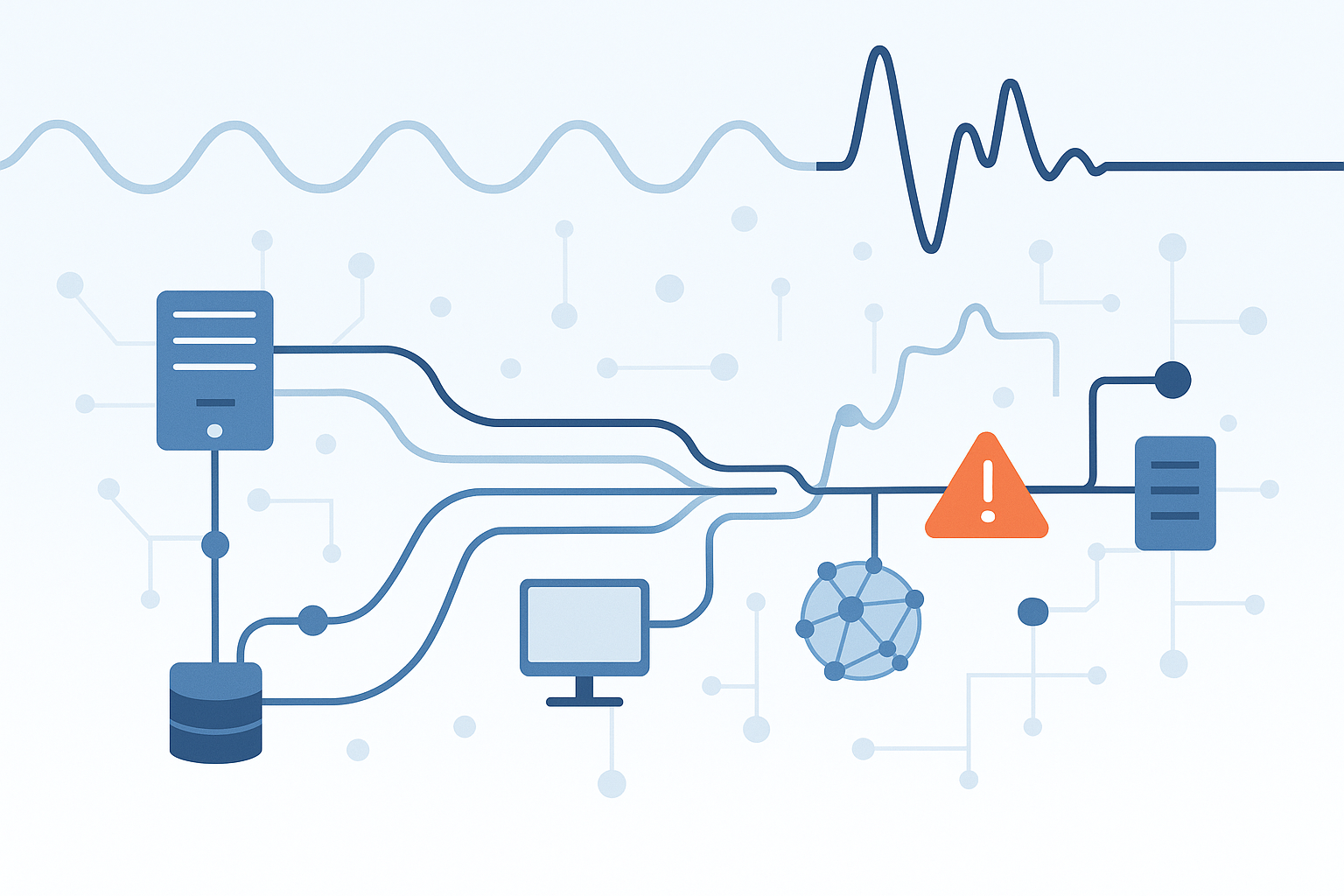
Some networks start to feel alive once you’ve watched them long enough. Traffic ebbs in the morning, spikes before lunch, slows in the late afternoon. There’s a rhythm there, almost like breathing, and after a while you notice when it’s off before any alert lights up a dashboard.
Then, one Tuesday, the pattern snaps: a quiet file server reaches for a new external IP, a marketing workstation suddenly triples outbound traffic to one obscure address.
No alarms, no shouting. Just tiny shifts, like a raised eyebrow in a crowded room, telling you something here doesn’t belong.
Key Takeaways
- Behavior-based detection analyzes normal activity to flag suspicious deviations.
- Anomaly-based systems use machine learning to spot subtle, novel attacks.
- Comprehensive network visibility is non-negotiable for spotting lateral movement.
The Blind Spot in Your Armor
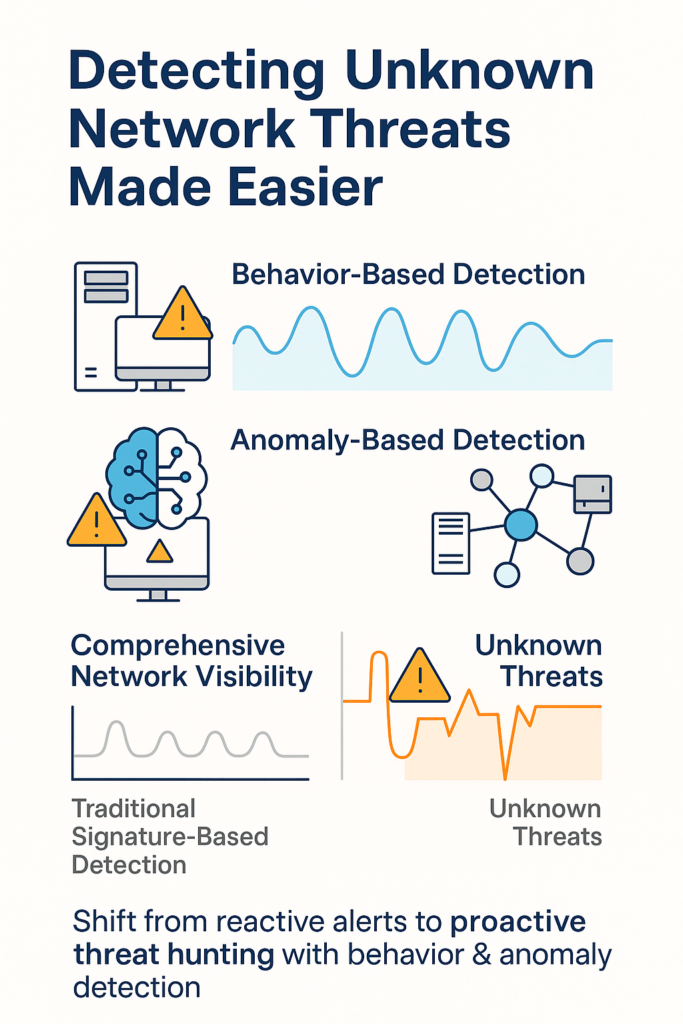
Signature-based security is like a bouncer with a list of known troublemakers. It’s effective at keeping out the usual suspects.
But what about the new ones, the ones who’ve never caused trouble before? They walk right in. This is the fundamental flaw that unknown threats exploit [1].
These aren’t viruses with a known fingerprint; they are zero-day exploits, fileless malware that lives in memory, or sophisticated attacks that mimic legitimate traffic.
The damage isn’t just data loss. It’s the erosion of customer trust and the staggering cost of recovery, a price many organizations pay because they only looked for threats they’d already seen.
The landscape is shifting. Attackers aren’t using the same old tricks. They’re crafting novel techniques designed to fly under the radar.
This makes the difference between an unknown threat and a known one critical. Known threats are predictable. Unknown threats are adaptive, learning your environment just as you try to learn them.
How to See the Invisible
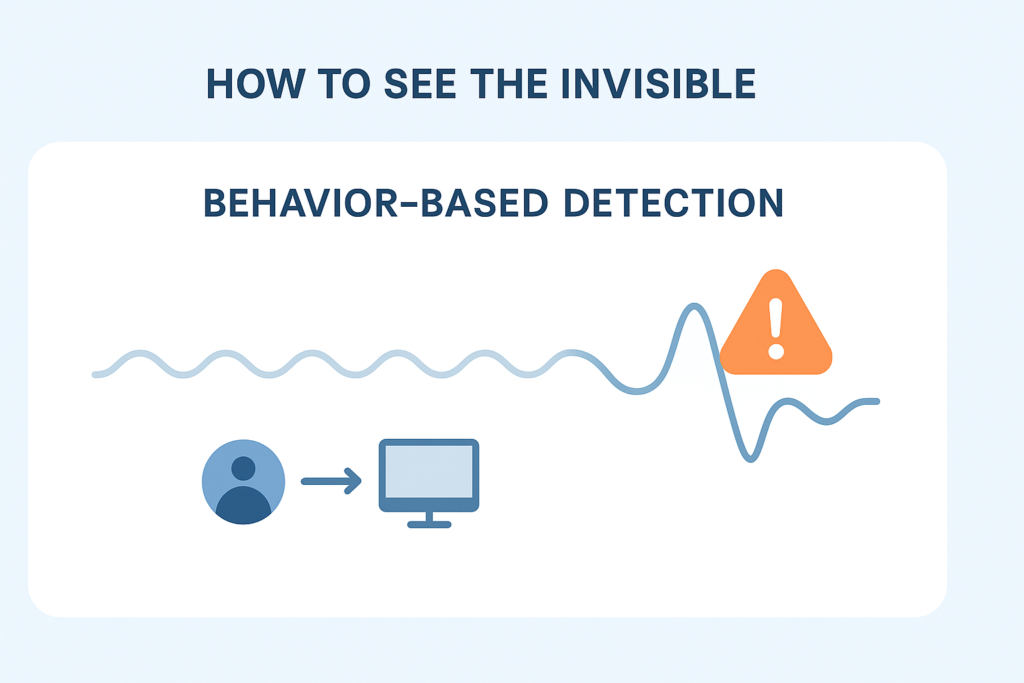
The most powerful method for detecting unknown threats is behavior-based detection. It doesn’t look for a specific malicious file. Instead, it learns what normal looks like for your unique network.
It observes the typical login times for users, the standard data pathways for servers, the ordinary chatter between devices. When something deviates from this established pattern, it raises a flag.
This approach relies heavily on unsupervised learning anomaly detection, which excels in identifying deviations without predefined labels.
This could be an employee’s account accessing sensitive financial data at 3 a.m., or an engineering workstation suddenly attempting to communicate with a server in a foreign country.
It’s effective because it doesn’t care if the attack is brand new; it only cares if the behavior is strange.
- Unauthorized access attempts from new locations or devices.
- Unusual file modifications or large-scale data transfers.
- Strange process executions that don’t align with user roles.
Anomaly-based detection takes this a step further, often powered by machine learning. These systems build a complex mathematical model of your network’s baseline.
They continuously compare real-time activity against this model, scoring each event based on how anomalous it is. The key here is tuning. A system that’s too sensitive will cry wolf constantly, drowning your team in false positives.
The goal is to distinguish between a benign anomaly, like a department-wide download of a new software update, and a malicious one, like a covert data exfiltration.
Signature-based detection still has a role, but it’s a supporting one. Think of it as a foundational layer.
It efficiently blocks the known garbage, allowing the more sophisticated behavior and anomaly systems to focus their energy on the subtle, novel attacks. This layered approach is what comprehensive coverage looks like in practice.
The Tools That Do the Listening
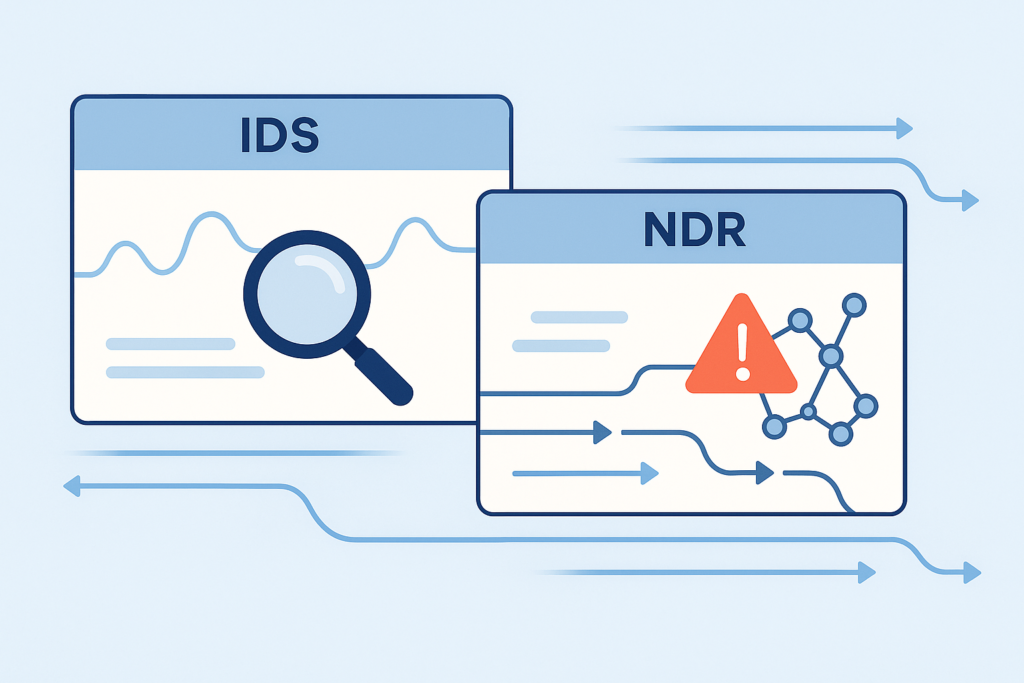
You need the right instruments to hear your network’s whispers. Modern Intrusion Detection Systems (IDS) are the core listeners. They monitor network traffic in real time, looking for those suspicious patterns. But the newer generations have evolved.
They incorporate machine learning to identify subtle anomalies in vast datasets that a human would never spot.
They watch for unusual login sequences, unexpected spikes in data transfer, and attempts to access resources that are far outside a user’s normal purview.
Network Detection and Response (NDR) platforms represent a more holistic approach. They collect a firehose of data, network metadata, packet details, flow information.
This data is analyzed continuously, not just for single events but for sequences of activity that tell a story. Combining network anomaly detection methods with these platforms enhances the ability to catch subtle, suspicious patterns early, even in complex traffic environments. An NDR platform might see a single failed login attempt as unimportant.
But if it correlates that attempt with a later, successful login from a new IP and subsequent unusual database queries, it can piece together a potential breach and often recommend an automated response to contain the threat.
The Inevitable Hurdles
Credits: Work Hard Play Hard Podcast
This approach isn’t without its challenges. The biggest headache is often false positives. Anomaly and behavior-based systems can misinterpret legitimate new activities as threats. The sales team using a new cloud application might trigger an alert.
This necessitates careful calibration and a feedback loop where your security team teaches the system what is truly normal over time. Effective anomaly detection techniques focus on tuning sensitivity to reduce noise while maintaining strong detection performance, ensuring the system adapts as your network evolves.
It’s an ongoing conversation between your tools and your people. The attackers aren’t standing still either.
They adapt their techniques to blend in, to create slower, more low-and-slow attacks that are harder to distinguish from background noise. This means your detection technologies can’t be static.
Their models and rules need to evolve dynamically, learning from new traffic and newly discovered threats.
You’re in an arms race where your intelligence must constantly update. Perhaps the most critical requirement is comprehensive visibility.
You can’t detect a threat you can’t see. If you have blind spots in your network, unmonitored segments, shadow IT, insecure IoT devices, an attacker can hide there.
Effective detection demands broad visibility across all network segments and endpoints. This is the only way to spot lateral movement, where an attacker jumps from a compromised user’s laptop to a critical database server.
Is Your Network Truly Protected?
So, how do you move from theory to practice? It starts with an honest assessment of your current capabilities. Ask yourself a few pointed questions.
Do you have true visibility across every part of your network, or are there shadows where threats could lurk? Are you relying solely on signature-based defenses, or have you implemented behavior-based analytics that learn your environment? Most importantly, how often are your threat detection models updated? A system running on year-old data is already obsolete [2].
This isn’t about achieving perfection. It’s about building resilience. By focusing on behavior, embracing anomaly detection, and demanding total visibility, you shift your security posture from reactive to proactive.
You begin to develop a kind of instinct for your network, an ability to sense trouble before it fully manifests. The goal is to make your network not just a defended fortress, but an intelligent organism that can protect itself. Start listening to it today.
FAQ
How can I start detecting unknown network threats if my tools only catch known attacks?
You can start detecting unknown network threats by using real-time network monitoring and network traffic baselining to learn what normal activity looks like.
These steps help you notice suspicious traffic patterns, anomalous connection detection, and unusual login detection.
When you add anomaly-based detection and signature-less detection, you can identify unknown attack vectors and early network compromise indicators with more confidence.
What signs should I look for when trying to spot hidden attacks inside my network?
You should look for unusual protocol activity, abnormal outbound traffic, and suspicious inbound traffic that stand out from your usual patterns.
Behavioral network analysis and network anomaly monitoring help you detect threat pattern deviation and behavioral fingerprinting shifts.
These changes often signal stealth attack detection needs or early lateral movement detection before attackers reach important systems.
How do AI and machine learning help with unknown threat identification?
AI and machine learning threat detection help by learning your normal traffic patterns and spotting changes quickly.
They use network behavior modeling, adaptive security monitoring, and automated threat scoring to flag strange activity.
AI-driven network defense supports advanced threat analytics, unknown exploit detection, and stealthy reconnaissance detection, giving you stronger network threat detection without relying only on old signatures.
How do I check if a device or user inside my network is acting strangely?
You can check device or user behavior by watching endpoint-network correlation, compromised host behavior, and insider threat detection signals.
Network telemetry analysis, packet anomaly detection, and real-time alerting help you identify odd actions.
Deep packet inspection, network payload inspection, and network flow analysis also reveal network intrusion spotting from unknown malware detection in both local and cloud threat detection environments.
How can I reduce false alarms while still catching zero-day attacks?
You can reduce false alarms by using deviation-based IDS, heuristic threat analysis, and threat anomaly scoring to filter harmless changes from real risks.
These methods support zero-day threat detection and unknown vulnerability exploitation detection without overwhelming your team.
Adding threat intelligence correlation, predictive threat modeling, and continuous threat assessment also strengthens network breach detection during SOC threat monitoring.
Building a Network That Sees the Attacks You Can’t
Detecting unknown threats isn’t about chasing every alert, it’s about giving your network the ability to sense danger before it erupts.
When you combine behavior analytics, anomaly detection, and full visibility, your security posture becomes proactive instead of panicked. Unknown attacks stop being silent intruders and become detectable deviations inside a system that truly knows itself.
Strengthen your visibility, refine your models, and keep listening. Your network is always speaking, now it’s time to truly hear it.
Ready to sharpen your defenses? Join here
References
- https://corelight.com/resources/glossary/signature-based-detection
- https://www.elastic.co/de/security-labs/elastic-releases-debmm