
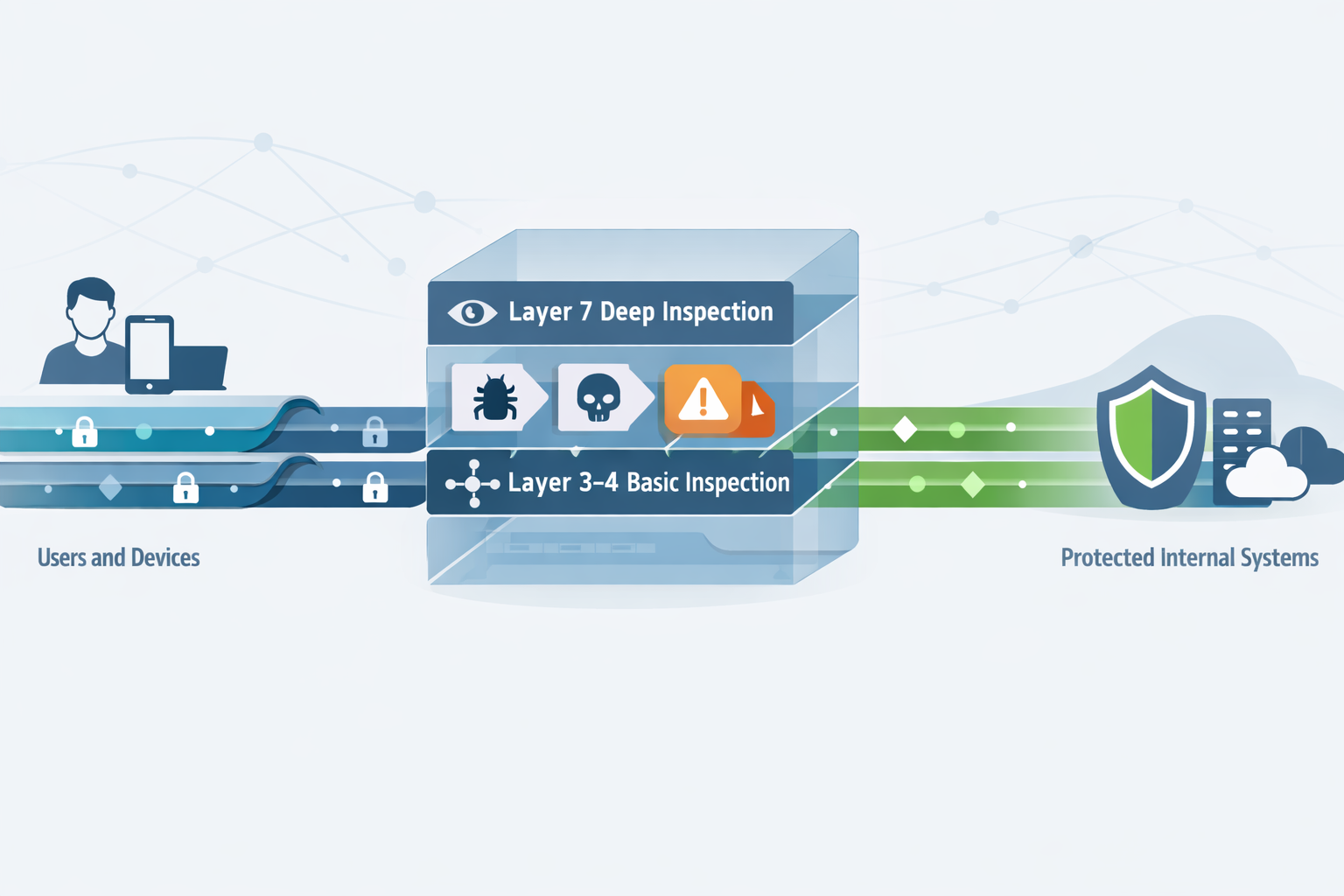
Deep Packet Inspection (DPI) lets your firewall inspect what’s actually inside the traffic, not just where it came from or where it’s going.
Instead of stopping at IP addresses and ports, DPI opens the packet, analyzes the payload, and looks for patterns, behaviors, and threats that hide inside normal protocols and even encrypted flows.
That’s how a Next-Generation Firewall goes from basic filtering to real security decisions based on context and intent, not guesses. If you want your firewall to work more like an analyst than a bouncer, keep reading to see how DPI really works in practice.
Key Takeaways
- DPI examines the full content of data packets, not just their headers.
- It enables application-level control and advanced threat detection.
- Performance and privacy are key considerations for implementation.
The Engine Behind Modern Network Security
He’d seen the old firewalls at work, the kind that only glanced at IP addresses and port numbers. They felt like border guards who checked your passport, then waved you through without ever opening your bags. Simple, fast, and almost blind.
Modern networks can’t afford that kind of trust anymore. The threats don’t shout; they whisper inside normal traffic, hiding in what looks like ordinary web browsing or email [1].
So the guard at the gate has to do more than skim the label. It has to read the contents, follow the conversation, and notice when something feels wrong.
That’s where Deep Packet Inspection comes in. It doesn’t stop at the envelope or the header. It opens the packet, reads the payload, and understands what kind of application or protocol is actually speaking.
Instead of just asking, “Who is this from and where is it going?” DPI adds a harder question: “What is this really?” In a Next-Generation Firewall, DPI is the main engine under the hood:
- It sees inside encrypted or obfuscated flows where older tools go blind.
- It can match patterns that line up with malware, command-and-control traffic, or data exfiltration.
- It lets security rules focus on behavior and content, not just on ports and IP ranges.
Because of that, the firewall stops being a simple gate with a checklist. It becomes an active observer of every conversation crossing the wire, able to tell safe business traffic from a threat pretending to be a normal HTTP request.
That’s the real turn in modern network security. The firewall doesn’t just watch the door anymore, it listens to what’s being said as people walk through it. And DPI is the reason it can understand the language well enough to tell the difference.
What DPI Actually Does in Your NGFW
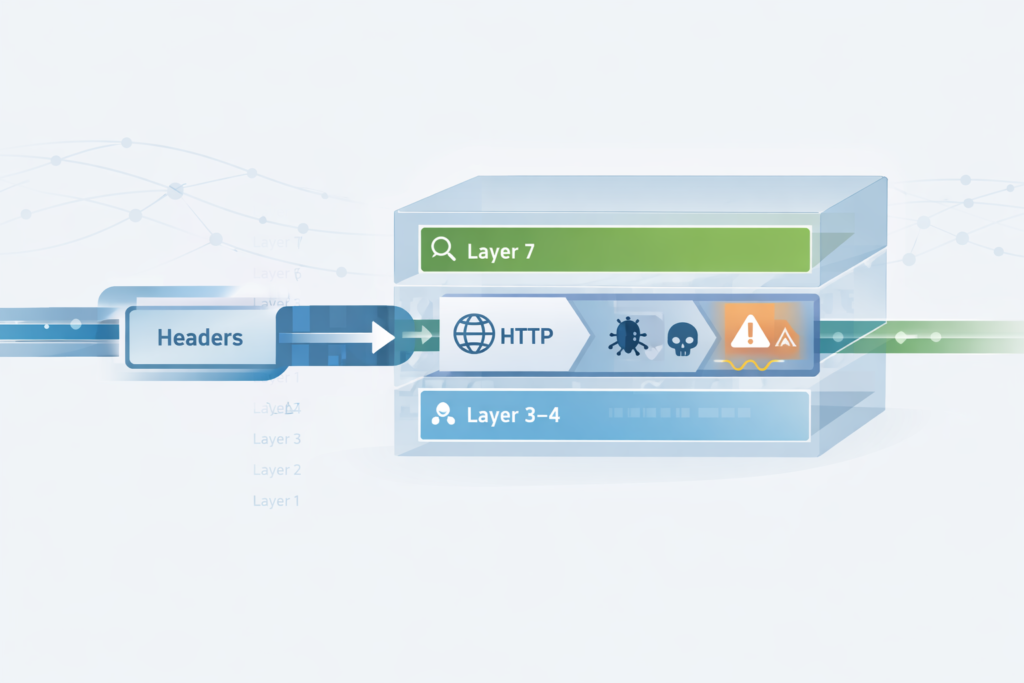
Deep Packet Inspection operates across multiple layers of the OSI model. While traditional firewalls stop at layers 3 and 4 (IP addresses and ports), DPI goes all the way to the application layer, layer 7. It reassembles data streams to see the complete picture.
This allows the firewall to read the payload, the actual message inside the packet. It’s the difference between seeing an envelope from a bank and being able to read the fraudulent wire transfer instructions inside.
This kind of application identification and control is crucial for modern security, allowing the system to distinguish traffic beyond port-based filtering. This deep analysis unlocks several critical capabilities:
- Identifying specific applications, like Facebook or Skype, regardless of the port they use.
- Detecting malware signatures hidden within seemingly harmless data.
- Spotting anomalies in protocol behavior that indicate an attack.
Without DPI, your firewall is largely blind to these modern threats. It’s this application layer inspection that provides the context needed for true security. The firewall becomes application-aware, understanding not just where traffic is going, but what it’s doing there.
The Critical Shift from Stateful to Deep Inspection
Credits: OJSN_the_curious
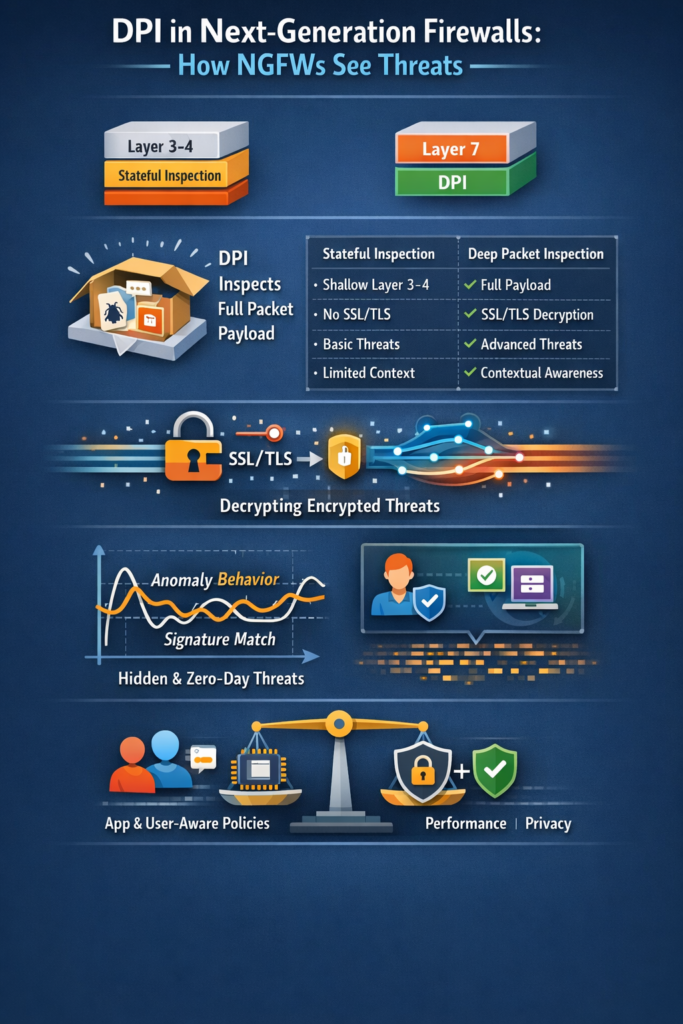
The old method was stateful packet inspection. It was good for its time, tracking the state of network connections to make smarter decisions than simple packet filters.
But it still relied on basic information. It knew a packet was part of an existing web session, but it had no idea if that session was downloading a legitimate file or a piece of ransomware. DPI changes the game entirely. It can identify obfuscated threats that bypass traditional defenses [2].
For example, an attacker might use DNS tunneling to sneak data out of your network. To a stateful firewall, it just looks like normal DNS queries.
But a DPI engine can analyze the content of those DNS packets and see the unusual patterns and encoded data that give the attack away.
Similarly, malware often communicates over encrypted channels like HTTPS. DPI, when coupled with SSL/TLS inspection, can decrypt that traffic (following proper policies) and scan it for malicious content. This contrast is stark, one is watching the road, the other is inspecting every vehicle.
| Aspect | Stateful Packet Inspection | Deep Packet Inspection (DPI) |
| Inspection depth | IP addresses and ports | Full packet payload |
| OSI layers | Layer 3–4 | Layer 7 (application layer) |
| Encrypted traffic visibility | Cannot inspect content | Supports SSL/TLS inspection |
| Threat detection capability | Limited to known sessions | Detects hidden and obfuscated threats |
| Context awareness | Low | High, based on behavior and content |
Gaining Unmatched Application Awareness and Control
He noticed the first real change not in a dashboard, but in the way rules started to sound more human. Instead of “allow port 443,” it became “allow Zoom for sales, throttle it for everyone else.” That’s the kind of shift DPI brings to an NGFW.
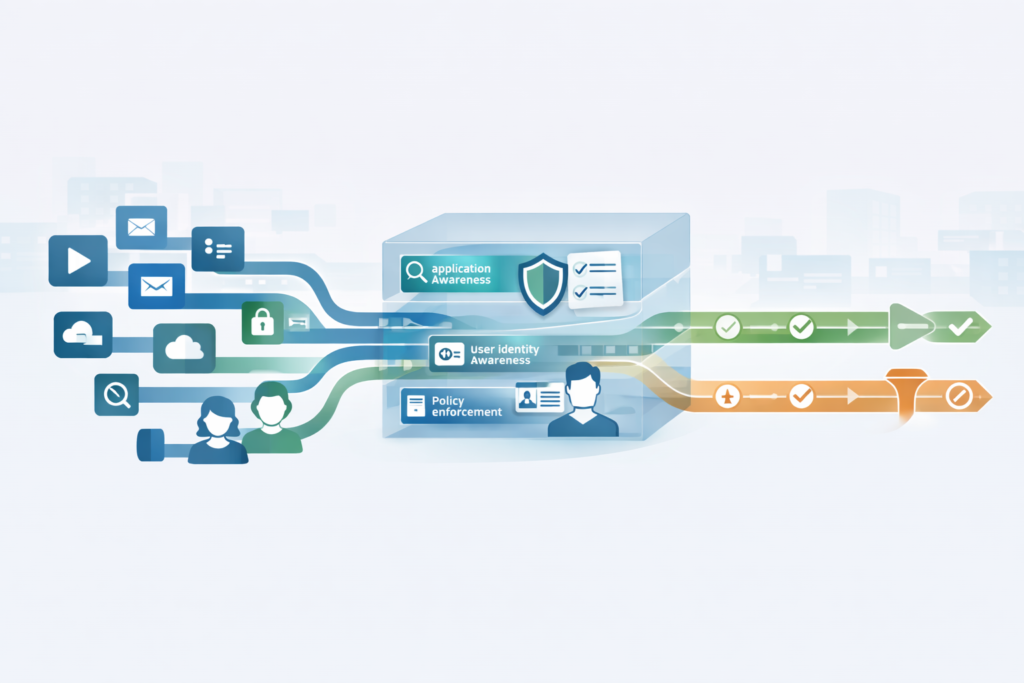
It stops treating traffic like anonymous packets and starts treating it like actual work being done. With Deep Packet Inspection, the firewall can recognize applications by how they behave and what they say on the wire, not just by the port they use.
So even when different apps all ride over HTTPS, the NGFW can still tell one from another and label them correctly. That’s where the control gets sharp. You can begin to write policies that reflect how the business really runs:
- Allow Salesforce across the company, but block Netflix on corporate VLANs.
- Permit Zoom, but cap its bandwidth during peak office hours so critical apps stay responsive.
- Let engineering use Git hosting and code tools, while limiting them for other departments.
Instead of guarding only by “inside vs outside,” the firewall can enforce rules based on what people are actually doing. It’s no longer just, “Is this traffic allowed to leave?” but, “Is this the right use of this application for this user, right now?”
That awareness doesn’t stop at the app layer. It stretches into user identity. With directory integration and user mapping, the NGFW can tie sessions to specific accounts, groups, or departments.
So traffic is no longer just “10.0.5.23,” it’s “Erin from Marketing” or “Finance group.” That opens the door to very specific controls:
- Let the marketing team access social media for campaigns.
- Block social media for finance, legal, or other roles where it creates more risk than value.
- Give IT more access to admin consoles while forcing MFA or stricter logging for those sessions.
This kind of fine-grained control lines up neatly with zero-trust ideas: never assume, always verify, and only grant what’s needed for the job. The firewall shifts from being a wall at the edge to being an active policy enforcement point inside the environment, aware of user, app, and context all at once.
By tightening access around real business needs, who you are, what app you’re using, and why you’re using it, the NGFW helps shrink the attack surface. Less unnecessary access, fewer exposed apps, and a much clearer picture of how the network is actually being used, day to day.
Supercharging Intrusion Prevention and Threat Detection
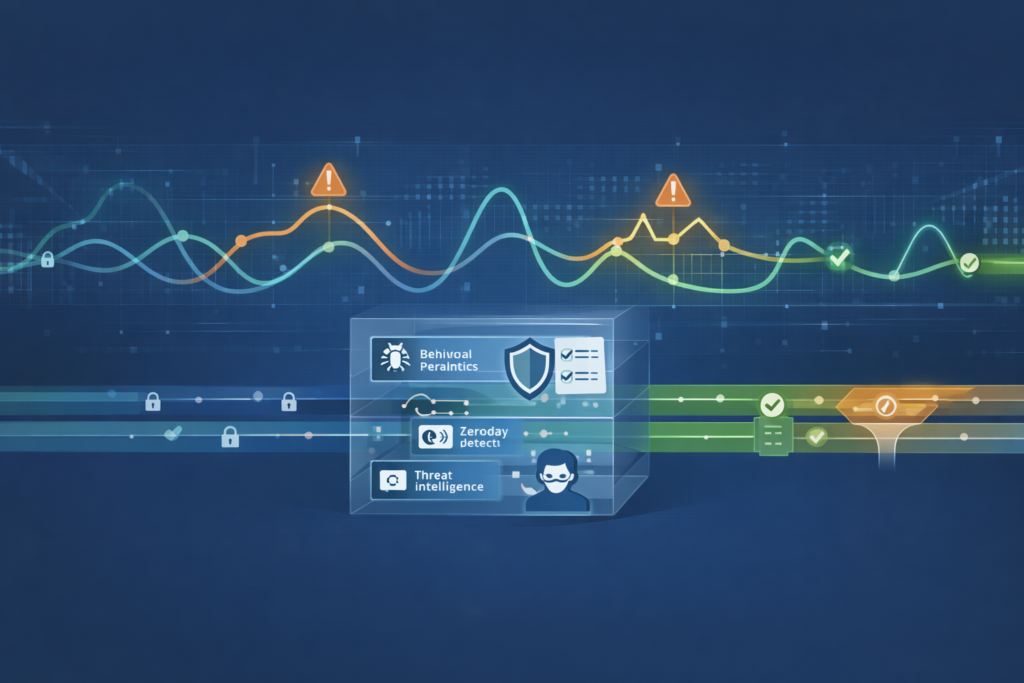
He always thought IPS sounded impressive on paper, until he saw what it could actually do once DPI was plugged in behind it.
On its own, an Intrusion Prevention System can already block known attacks. But when it can read deep into the packet, past just the headers, it stops being a simple filter and starts acting more like a security analyst, watching every move.
Signature-based detection gets sharper when DPI is in play. Instead of scanning only surface details, the engine combs through the full payload, searching for code fragments, exploit patterns, and suspicious sequences that match known attacks.
But that’s only the starting layer. The real strength shows up when behavior is taken into account, not just signatures. This is where network threat detection becomes highly effective, as DPI engines analyze traffic patterns and anomalies that stateful firewalls would miss.
With DPI, a Next-Generation Firewall can build a sense of “normal” for each application. It knows how a web server usually talks to a client, how a database responds to a query, how an API handles requests.
So when it spots something odd, like a server suddenly pushing commands down to a client, or a file transfer where no file should exist, it can treat that as a red flag, even if no one has written a signature for it yet. You can think of the main gains this way:
- Signature checks run against the full packet payload, not just headers.
- Behavioral analysis can spot role reversals, protocol misuse, or odd command sequences.
- Heuristic rules can flag traffic that “looks and feels” like exploitation, even when it’s new.
That’s where zero-day detection comes from. These are threats with no public fingerprint, no CVE ready, no pattern in the classic databases.
By watching behavior at a deep level and comparing it to expected flows, the firewall can still catch them and block them midstream. It doesn’t need to recognize the exact exploit, only that the behavior is off.
DPI also gives real teeth to threat intelligence feeds. Instead of just matching IPs or domains from a blacklist, the NGFW can compare live traffic against:
- Known bad command-and-control patterns
- Malicious file delivery methods
- Data exfiltration techniques spread out slowly over time
Advanced persistent threats rarely rush. They move slowly, blend with normal traffic, and stretch their activity over days or weeks. With deep inspection, the firewall can watch those quiet channels, spot repeated small anomalies, and piece together the bigger picture of a long-running intrusion.
So the firewall stops being just a wall. It becomes a real-time threat hunter sitting in-line, correlating payloads, behavior, and global intelligence feeds as packets flow by.
And it does all of that while your users keep browsing, sending emails, and talking to the cloud, often without ever knowing how many attacks never made it past the gate.
Navigating Performance and Privacy Realities
There’s no free lunch. DPI is computationally expensive. Inspecting every byte of every packet requires significant processing power.
On high-throughput links, this can introduce latency if the firewall hardware isn’t up to the task. Modern NGFWs mitigate this with specialized hardware like ASICs and through how DPI examines network traffic via selective inspection and optimized processing paths, balancing security needs with performance demands.
They might perform full DPI on traffic deemed risky while using faster methods for trusted flows. It’s a balance between security and performance that you must manage.
Then there’s privacy. DPI, by its nature, involves reading network data. This raises legitimate concerns, especially when inspecting encrypted employee traffic.
Implementing DPI responsibly requires clear policies and, often, legal review. SSL/TLS decryption must be handled transparently, with exceptions for sensitive sites like banks and healthcare portals.
The goal is security, not surveillance. Proper configuration and communication are essential to maintain trust while enhancing protection.
Putting DPI to Work
The promise of Deep Packet Inspection is a firewall that doesn’t just react, but understands. It’s the technology that enables your NGFW to see the threats others miss, to enforce policies with precision, and to adapt to an evolving threat landscape.
The key is to implement it thoughtfully, balancing its powerful capabilities with the practicalities of network performance and user privacy.
When you configure your DPI engine correctly, you’re not just building a wall, you’re creating an intelligent filter that learns, adapts, and protects your most critical assets from the inside out. Start by auditing your current application usage, then build your policies from there.
FAQ
How does DPI differ from stateful packet inspection in NGFW security?
Stateful packet inspection evaluates traffic based on IP addresses, ports, and connection states. Deep packet inspection analyzes packet payloads through application layer inspection.
In a layer 7 firewall, DPI enables protocol decoding, traffic classification, and network traffic analysis. This deeper visibility allows NGFW security to detect malware and suspicious behavior that stateful inspection alone cannot identify.
How does DPI inspect encrypted traffic while maintaining privacy controls?
Encrypted traffic inspection uses SSL/TLS inspection and HTTPS decryption within defined policies. The firewall DPI engine decrypts traffic temporarily, inspects packet payloads, and then re-encrypts the data.
Privacy is protected through lawful inspection rules, audit logging, compliance monitoring, and exclusions for sensitive services. This approach balances security requirements with user privacy obligations.
Why is DPI effective for detecting advanced and zero-day threats?
Deep packet inspection supports advanced persistent threat detection by combining behavioral analysis with anomaly detection.
Instead of relying only on signature based detection, DPI examines protocol behavior and data patterns.
This allows intrusion prevention systems and intrusion detection systems to identify zero day threat protection indicators, even when attackers use encrypted or obfuscated communication methods.
How does DPI improve application and user-level policy enforcement?
DPI enables application awareness and user identity awareness by identifying applications regardless of ports or protocols.
This allows accurate security policy management and firewall rule optimization. Administrators can enforce data loss prevention, apply content filtering, and support DLP integration. Policies become precise, consistent, and aligned with real business usage instead of generic network rules.
Can DPI perform efficiently in cloud and high-throughput environments?
Modern DPI architectures support cloud firewall security, virtual NGFW, and container firewall deployments.
High throughput firewalls use low latency inspection, selective packet inspection, and optimized processing paths.
Combined with network segmentation, microsegmentation, east west traffic monitoring, and north south traffic inspection, DPI maintains performance while delivering real time threat detection.
DPI: The Intelligence That Defines a Modern NGFW
Deep Packet Inspection is what gives a Next-Generation Firewall real awareness. By looking beyond ports and headers, DPI lets your NGFW understand applications, behavior, and intent, turning hidden threats into visible signals.
Used wisely, it strengthens intrusion prevention, sharpens policy control, and exposes attacks that would otherwise slip through encrypted traffic.
Success depends on balance: sufficient performance headroom, selective inspection, and clear privacy rules.
Done right, DPI transforms your firewall into an intelligent, trustworthy defender. Ready to empower your network with advanced threat detection? Join now to upgrade your security capabilities.
References
- https://nvlpubs.nist.gov/nistpubs/legacy/sp/nistspecialpublication800-41r1.pdf
- https://en.wikipedia.org/wiki/Deep_packet_inspection