
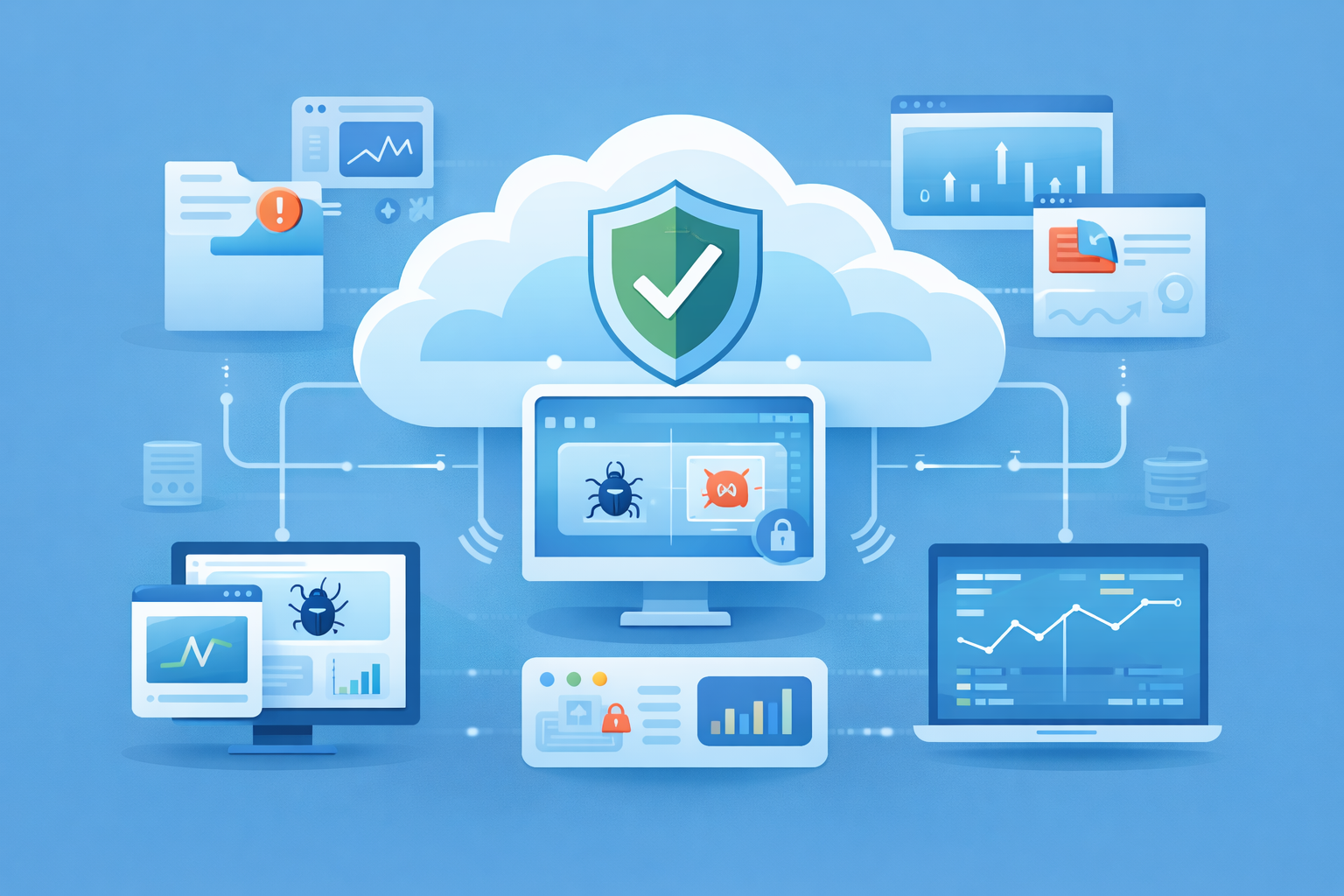
A cloud-based sandbox improves your security by giving you a safe, isolated place in the cloud to detonate suspicious files and watch what they actually do.
Instead of gambling with unknown attachments, URLs, or executables on your own network, you hand them to this sealed environment and study their behavior from a distance.
That means you can catch zero-days, stealthy ransomware, and custom malware even when there’s no known signature yet.
You’re not just blocking threats, you’re learning from them, turning every attempt into intelligence. Keep reading to see how this approach can reshape your entire defense strategy.
Key Takeaways
- Isolates and analyzes threats in real-time, preventing malware from spreading to your live network and endpoints.
- Scales effortlessly with cloud infrastructure, handling massive volumes of suspicious files without costly hardware investments.
- Reduces operational costs and false positives, freeing your security team to focus on genuine incidents.
Beyond the Firewall: The Isolated Reality of Modern Defense
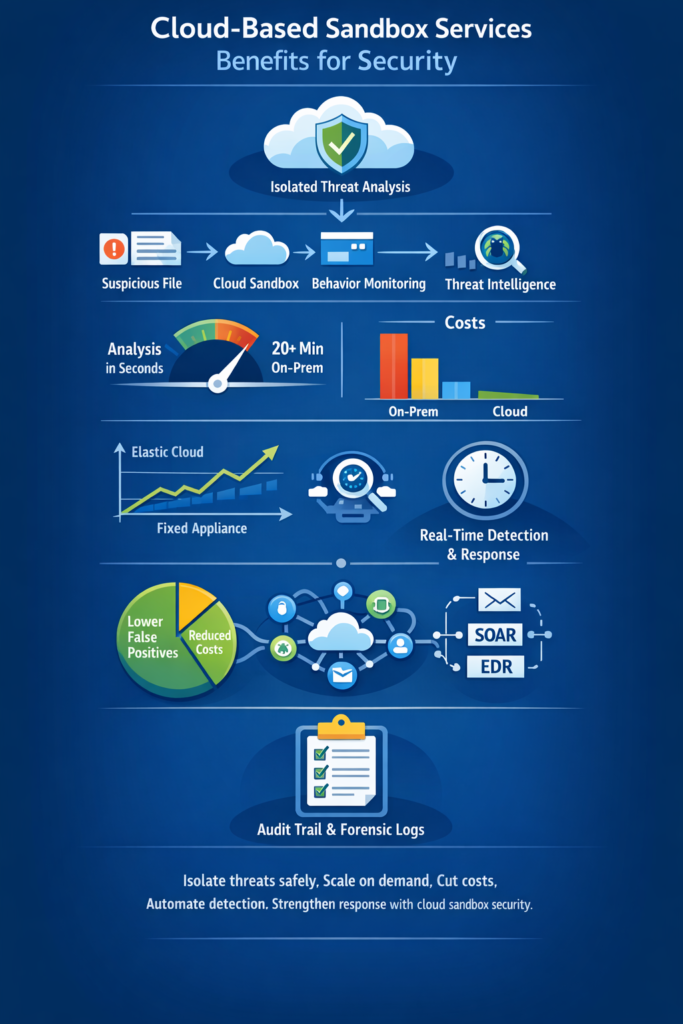
Traditional on-prem analysis often involves delays of 20+ minutes due to resource limits, while cloud versions complete in seconds. Not in some polished lab with glass walls and humming racks, but on a beat‑up laptop in a cramped office, the fan whining like it was about to lift off the desk [1].
The analyst was picking apart a fresh phishing campaign, watching each process spin up and die while the local virtual machine dragged its feet.
Twenty long minutes passed before the malware finished its dance, and what we got back wasn’t insight, it was chaos, logs stacked on logs, traces of behavior with no clear story, just noise we had to wrestle into meaning. Now that same kind of analysis plays out in the cloud.
The sandbox spins up fast, runs clean, and tears everything down when it is done. What used to feel like a slow autopsy now feels more like live commentary.
The output isn’t just raw data, it reads like a narrative: where the malware came from, what it tried to do, what it touched, and how it tried to hide. This change isn’t only about shaving off minutes.
It rewrites the scale and sharpens the picture. For anyone tasked with defending a network, cloud‑based sandbox services are no longer some optional add‑on you turn to in a pinch. They’ve become part of the natural progression of defense, a response to attackers who already live in:
- Distributed, global infrastructure
- Elastic compute they can spin up and burn down at will
- Environments that shift faster than on‑prem teams can patch
The battlefield moved to the cloud first. Defense is just catching up.
The Core Benefit: A Contained Digital Battlefield
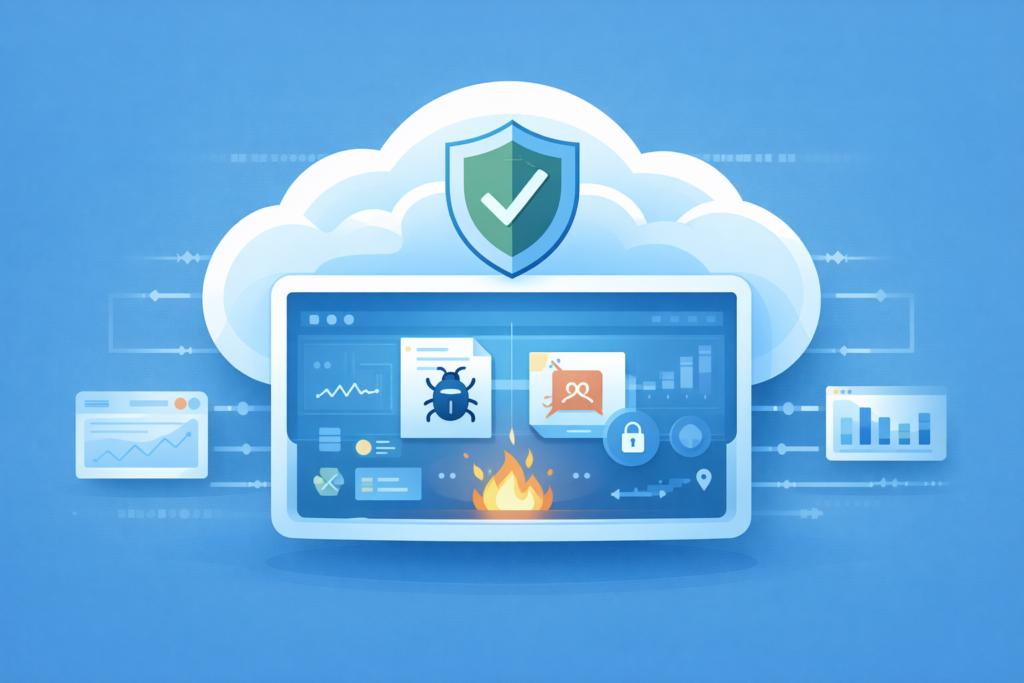
Think of a cloud sandbox as a high-security biocontainment lab, but for software. Its fundamental purpose is isolation.
When you submit a suspicious email attachment, a downloaded file, or even a dubious URL, the service spins up a disposable virtual environment in the cloud.
This environment mimics a real operating system, with simulated network connections and user interactions. The file is executed there, and its every action is monitored.
Does it try to contact a known command-and-control server? Does it start encrypting dummy files? Does it attempt to exploit a software vulnerability? This dynamic malware analysis is the heart of modern threat detection.
The beauty of the cloud here is its purity. The environment is pristine for every test, and it’s physically and logically separated from your corporate network. Nothing that happens in the sandbox can escape it.
This means you can safely analyze the most dangerous ransomware or worms without a single heartbeat of worry about infection.
Cloud segmentation adds inherent safety, complementing on-prem control for hybrid needs. The cloud’s inherent segmentation is a built-in layer of safety.
- Safe Detonation: Execute potentially malicious code with zero risk to your actual endpoints or data centers.
- Behavioral Profiling: Observe malware actions like registry changes, network calls, and file system manipulations in real-time.
- Threat Intelligence Generation: Automatically extract indicators of compromise (IOCs) like malicious IPs and file hashes for immediate blocking.
This process shines a light on threats that are designed to be invisible. Signature based antivirus looks for known bad patterns, like recognizing a burglar by a specific tattoo.
A sandbox, however, doesn’t care about the tattoo. It watches what the person does. If they’re jimmying a window at 2 AM, that’s the behavior that gets flagged.
This is how you catch zero day malware and advanced persistent threats that have never been seen before. They might have no signature, but they still have to act to achieve their goal, and those actions are their undoing in a monitored sandbox.
Operational Agility: Scaling Security on Demand
Credits: Enterprise Management 360
We still think the most honest metric in a SOC isn’t alerts per day, it’s how often someone quietly mutters at the screen when the queue spikes. Volume never lets up, it just changes shape.
For a Security Operations Center team, scale isn’t a nice‑to‑have problem, it’s the daily grind. Phishing runs can dump thousands of attachments into your systems in under an hour. A traditional, appliance‑based sandbox has hard edges you can’t wish away. It can:
- Only run a set number of analyses at once
- Build up a backlog during heavy campaigns
- Introduce minutes or even hours of delay while samples wait their turn
In security, every extra minute where a malicious file sits unread is another chance for it to land, execute, and spread. Time isn’t just money here, time is data leaking or systems getting owned.
A cloud‑based sandbox cuts through that bottleneck. Because the compute lives in elastic infrastructure, capacity isn’t fixed in the same way.
When the SOC suddenly needs to process a wave of suspicious files, the environment can scale up, run them in parallel, then shrink back down when the rush is over.
You’re not buying and maintaining hardware built for the worst day of the year. You’re paying for the actual load, when you have it.
That elasticity doesn’t just change speed, it changes how the tooling fits into the rest of the stack, making it an essential component of modern sandboxing for malware analysis.
Cloud sandboxes usually sit behind APIs, which means they plug naturally into everything else that already speaks API: email gateways, SOAR platforms, EDR tools, even custom scripts a single engineer hacked together on a quiet Friday. So you start to see patterns like:
- An email security gateway flags a suspicious attachment.
- It automatically ships the file to the cloud sandbox, no analyst needed.
- The sandbox detonates the sample, tracks behavior, and produces a verdict in minutes.
- That verdict feeds right back into the system: quarantining similar messages, blocking related hashes, or updating policies on the fly.
That tight loop turns a small, stretched SOC into something that punches above its weight. The humans step in where judgment is needed, not where a workflow could easily operate on rails.
There’s another angle that matters just as much: noise. Behavioral analysis reduces alert fatigue by providing context beyond static scans.
Static analysis tools are notorious for lighting up on software that’s weird but harmless, installers, internal tools, custom scripts. Each one becomes a ticket, a task, and a distraction.
Behavioral analysis in a sandbox gives you more shade and less binary thinking. It doesn’t just say, “This file connects to the network.” It can say:
- It connects to known, legitimate update servers.
- It isn’t trying to inject itself into other processes.
- It isn’t dropping new executables into sensitive directories.
- It isn’t reaching out to command‑and‑control infrastructure or sketchy IP ranges.
That context filters out a huge amount of junk. The alerts that do bubble up carry more weight, because they’re based on how the file acted, not just how it looked. Analysts spend more time on real incidents and less time proving a benign installer is, again, benign.
And under all of this, the cloud model quietly handles the hard parts, virtualization layers, image maintenance, hardware lifecycle, scaling strategies.
The SOC doesn’t have to babysit the platform. They just use it, then get back to the actual work: understanding what the adversary is doing, and stopping it before it turns into someone’s worst day.
The Financial and Strategic Calculus
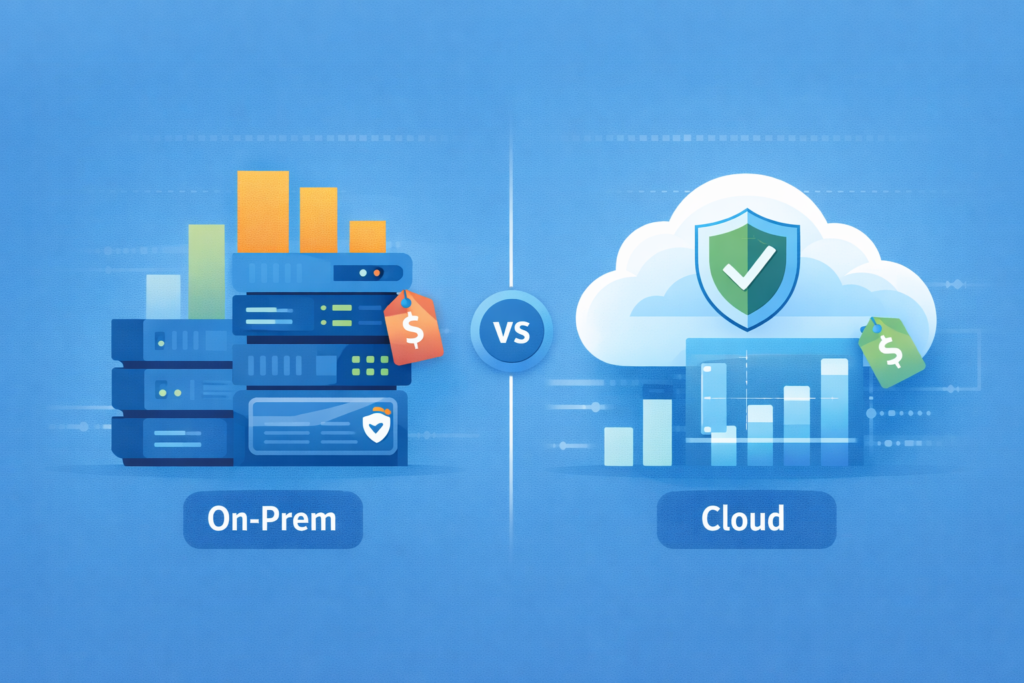
Money has a way of cutting through theory, especially in security, where every request competes with something more visible.
An on‑premises sandbox starts its life as a capital expense. You buy the appliance, it lands in a rack, and the meter quietly starts running. You pay for:
- The hardware itself
- Maintenance and support contracts
- Power and cooling
- Data center space
- Periodic refreshes when threats get heavier and the box starts to feel slow [2].
The hardware depreciates while the threat landscape keeps speeding up. Every few years you end up back at the same point: justifying another big purchase so the sandbox can keep pace.
A cloud‑based sandbox flips that model into an operating expense. You move from “buy a big box” to “pay for a service”:
- Predictable monthly or yearly subscription
- No physical hardware to acquire or host
- Updates, scaling, and resilience handled by the provider
- Capacity that grows or shrinks with your actual usage
That shift lowers the entry bar in a real way. A mid‑sized company that would never sign off on a six‑figure malware analysis lab can subscribe to a cloud sandbox that runs at an enterprise level. They get:
- Advanced detection and behavioral analysis
- Access to current images and threat intelligence
- The ability to handle spikes in volume without new hardware
And the savings aren’t only about the invoice. You also gain back:
- Time from IT staff who no longer maintain and troubleshoot specialized appliances
- Focus from security engineers who spend more time on analysis and less on platform care
- Risk reduction from faster, higher‑fidelity detections and automated workflows
Strategically, that flexibility opens some useful doors. Security teams can:
- Prototype new detection rules or policies safely inside the sandbox
- Test how different configurations respond to emerging threats
- Let developers run pre‑deployment checks for unexpected behaviors or vulnerabilities
You stop treating sandboxing as a rare, specialist tool and start using it as a routine part of how you ship and defend.
Compliance adds another layer to the math. Frameworks like GDPR, HIPAA, and industry‑specific rules in finance or healthcare expect two things at once: protection of data and proof that you investigate and respond to incidents.
A well‑designed cloud sandbox helps on both fronts by generating detailed forensic records for every analysis, including:
- Process activity and file system changes
- Network connections attempted, with destinations
- Data access patterns and any exfiltration attempts (inside a controlled, dummy environment)
- Timestamps and execution context
Those logs become an audit trail. They show that when a suspicious file appears, you can reconstruct what it tried to do and how you contained it.
For a compliance officer or an auditor, that’s tangible evidence: reports that demonstrate ongoing monitoring, structured investigation, and concrete steps taken to neutralize threats.
So the calculus isn’t just “cloud versus box.” It’s a mix of cost, time, risk, and proof, how you pay, how you work, and how you show that you’re actually doing the work.
| Factor | On-Prem Sandbox | Cloud Based Sandbox Services |
| Cost Model | High upfront hardware investment | Predictable subscription model |
| Scalability | Limited by appliance capacity | Elastic cloud infrastructure |
| Maintenance | Requires internal support team | Managed by service provider |
| Deployment Speed | Slower to upgrade or expand | Rapid scaling and updates |
| Incident Response | Capacity can bottleneck during attacks | Parallel analysis at high volume |
Making the Right Choice for Your Environment
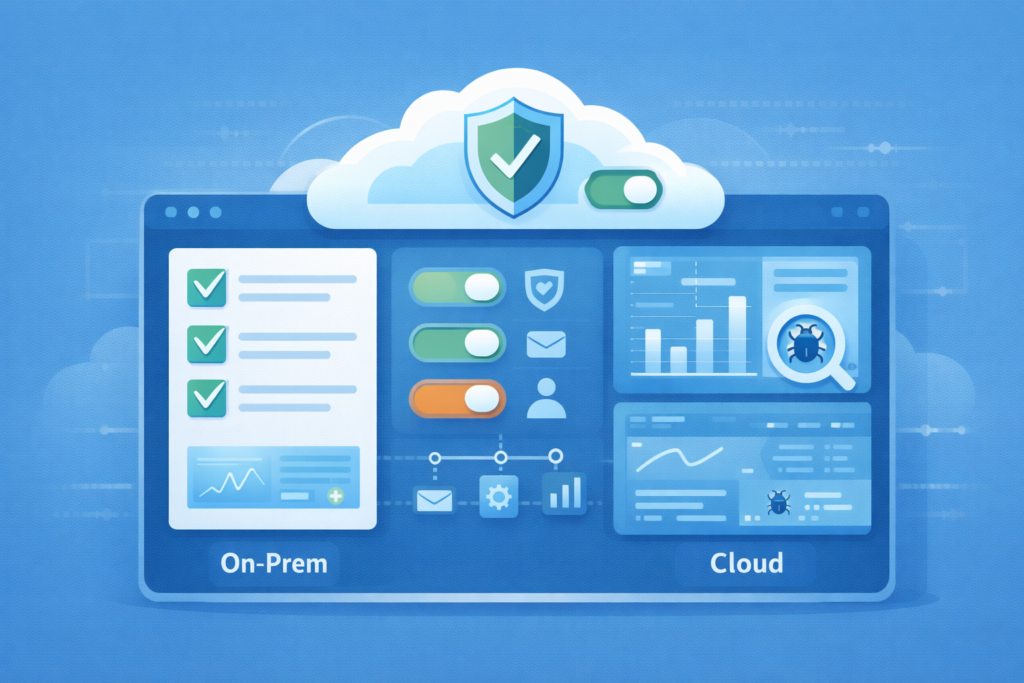
So how do you pick a provider? It’s not just about ticking a box that says “has sandbox.” You need to align the service with your specific needs. First, consider the balance between detection depth and speed.
Some sandboxes perform a quicker, more superficial analysis ideal for high volume email filtering. Others offer deeper, more prolonged emulation that might catch sophisticated malware that delays its malicious payload.
You need to know which trade off suits your primary use case, is it blocking phishing at the gateway, or doing deep dive malware research for threat hunting?
Integration is non negotiable. The best cloud sandbox is a lonely island if it doesn’t connect to your other tools. You need to check its API capabilities.
Can it receive files automatically from your email gateway, your secure web gateway, and your endpoint detection and response (EDR) platform? Can it send verdicts back to those systems to automate containment? This interoperability is what creates a cohesive security architecture rather than a collection of disjointed point solutions.
The sandbox should feed threat intelligence into your SIEM, enriching the data your analysts see. Finally, look at the output. The analysis report is the deliverable.
A good report is more than a “malicious” or “clean” label, it should clearly explain how malware sandboxing works, providing actionable insights and behavioral context. It should be a narrative.
It should show you the behavioral chain of events, list the extracted IOCs in a format ready for your blocklists, and perhaps even assign a threat name or link to a known adversary group. The reporting interface should allow your threat hunters to pivot on the data, to search for other files that contacted the same malicious domain or used a similar exploitation technique.
The analytics behind the scenes, increasingly powered by AI to spot subtle anomalous behaviors, are what turn raw data into actionable security intelligence.
Your Next Layer of Defense
The landscape of threats is no longer a static list of known viruses. It’s a dynamic, evolving ecosystem of targeted malware, fileless attacks, and zero day exploits that move at the speed of the internet.
Defending against this requires a shift in mindset, from purely preventative to intelligently investigative. A cloud based sandbox service benefits your organization by providing that investigative layer without the complexity and cost of building it yourself.
It gives you a safe place to ask the dangerous question, “What does this thing actually do?” and get a clear, immediate answer. It turns the opaque into the obvious, the unknown into the understood.
Start by evaluating a single workflow. Take your email security. See if your current solution can integrate with a cloud sandbox service for attachment analysis.
Run a pilot, measure the reduction in false positives, and clock the speed of new threat identification. The practical advice is to not think of it as a wholesale replacement, but as a powerful new module in your security stack.
Let it handle the dirty work of detonation and behavioral profiling, freeing your team to interpret, strategize, and respond.
In the end, the goal isn’t just to have a sandbox, it’s to have a more resilient, informed, and proactive security posture. That’s the tangible outcome that makes the move not just smart, but essential.
FAQ
How does a cloud based sandbox security platform actually protect my network?
A cloud based sandbox security platform protects your network by detonating suspicious files and URLs inside a sandboxed execution environment that is fully isolated from production systems.
This remote malware detonation keeps malicious code away from endpoints while behavior based malware detection monitors activity in real time. You gain detailed visibility and reporting, but every risk remains contained within a secure cloud malware testing environment.
What practical cloud sandboxing benefits will my security team experience first?
Your security team will immediately notice faster analysis and more accurate decisions. A cloud based security sandbox scales automatically during large phishing or malware campaigns, so suspicious files do not wait in long queues.
Sandbox malware behavior analytics and sandbox IOC extraction cloud capabilities provide clear evidence of malicious behavior. Automated threat sandboxing tools also reduce repetitive manual work and help analysts respond more confidently.
How is a malware sandbox service different from traditional antivirus protection?
A malware sandbox service differs from traditional antivirus because it analyzes behavior rather than relying only on known signatures.
In a sandbox malware analysis cloud environment, files execute safely inside a virtual malware lab cloud while monitoring tools observe encryption attempts, persistence changes, and network activity.
Features such as sandbox command and control detection help identify zero day malware sandbox threats and advanced persistent threat sandbox techniques.
Can a cloud threat detection sandbox support active cybersecurity incident response?
Yes. A cloud incident response sandbox allows analysts to safely investigate malicious files during an active cybersecurity incident without exposing production systems.
The platform supports sandboxed threat validation, sandbox forensic analysis cloud workflows, and detailed sandbox memory analysis cloud reporting.
Because it operates as a scalable malware sandbox, investigations continue without interruption, which helps SOC sandbox tools cloud users make faster, evidence-based response decisions.
Is cloud sandboxing valuable for long term security improvement and threat hunting?
Cloud sandboxing significantly improves long term security maturity. Security teams use sandbox threat hunting cloud platforms to study attacker techniques and develop better defenses.
Features such as sandbox behavioral profiling, sandbox continuous threat analysis, and sandbox malware lifecycle analysis convert every detonation into actionable intelligence.
This strengthens enterprise sandbox solution strategies and supports ongoing threat mitigation sandbox cloud planning across the entire environment.
How Cloud-Based Sandboxing Strengthens Your Security Posture
Cloud-based sandboxing reshapes defense by isolating risk, revealing real behavior, and scaling at the pace of modern attacks.
Instead of guessing from signatures, you see intent in a sealed environment and feed that intelligence straight into your controls. The result is fewer false positives, faster response, and stronger proof of due diligence.
As threats grow more evasive and distributed, this investigative layer becomes the difference between reacting late and staying confidently ahead of emerging threats. Learn more about how cloud sandboxing strengthens your threat detection here.
References
- https://www.loadview-testing.com/blog/on-premises-vs-cloud-based-solutions-performance-testing-requirements/
- https://lenovopress.lenovo.com/lp2225.pdf