
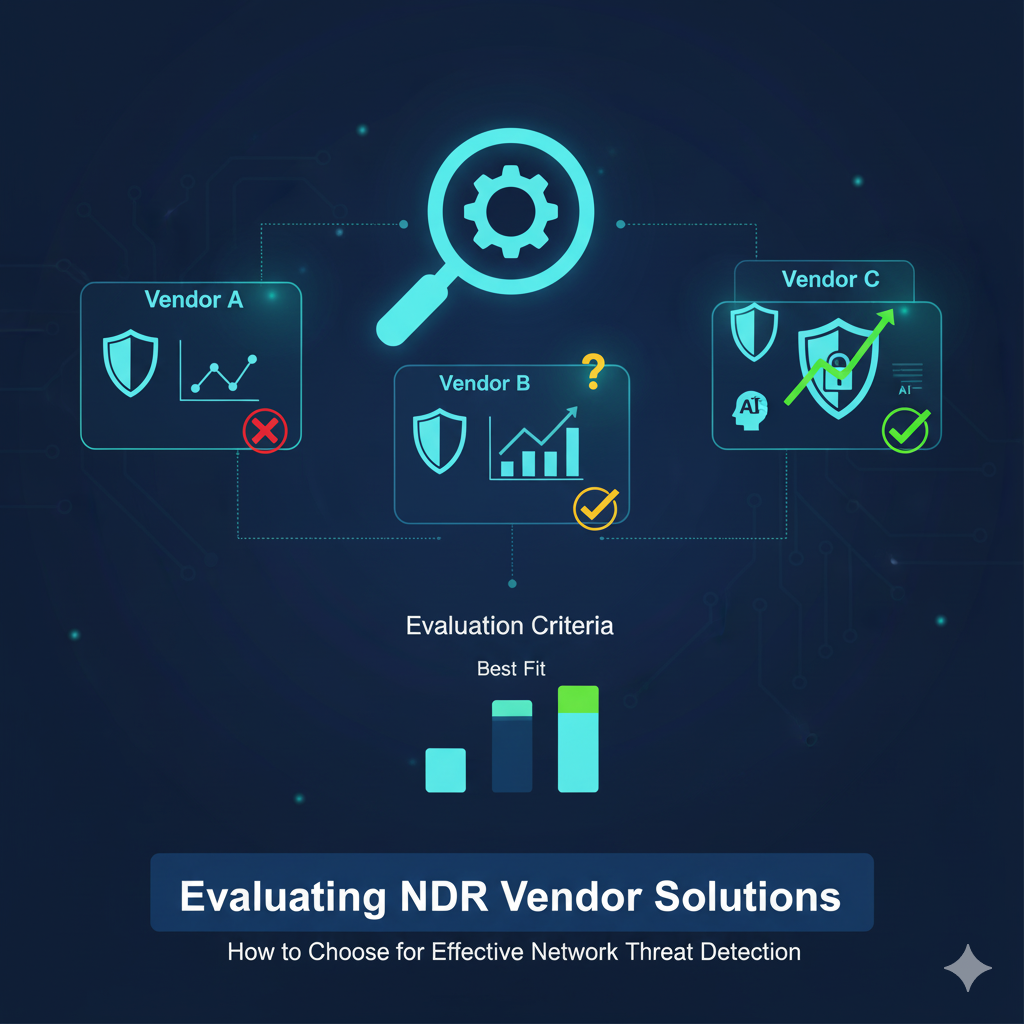
Evaluating NDR vendor solutions means looking beyond marketing claims to assess how well each platform suits your network’s unique needs. Network Threat Detection has always been our first line of defense, and finding the right NDR tool is crucial for uncovering hidden threats and reducing alert fatigue.
We’ve seen firsthand how some solutions fall short on visibility or generate too many false positives, bogging down security teams.
To avoid these pitfalls, understanding key criteria like behavioral analytics, integration, and automation is essential. Keep reading to learn what matters most when picking an NDR vendor and how to align your choice with your security goals.
Key Takeaway
- Deep network visibility and bidirectional monitoring are critical for detecting advanced threats.
- Machine learning and behavioral analytics improve detection accuracy and reduce false positives.
- Integration with existing tools and automation capabilities streamline incident response.
Deep Visibility and Bidirectional Monitoring: The Cornerstone of NDR

Getting a clear picture of your network traffic is the first step in evaluating any NDR vendor. NDR solutions that claim comprehensive traffic visibility don’t just scan incoming data.
They monitor both north-south (external to internal) and east-west (internal lateral movement) traffic, which is crucial for spotting attackers moving sideways within your network.
We’ve found that vendors supporting hybrid environments,where cloud and on-premises systems coexist,offer strategic deployment of sensors to capture metadata and payloads thoroughly. Without this, blind spots remain, allowing advanced threats to slip through unnoticed.
Look for solutions that provide:
- Full-spectrum traffic monitoring
- Support for cloud, on-prem, and hybrid networks
- Deep packet inspection capabilities
A vendor’s ability to deliver this visibility often distinguishes a basic tool from a robust NDR platform. This kind of monitoring is the foundation upon which other features, like anomaly detection, rely.
Behavioral Analytics and Machine Learning: The Heart of Detection Accuracy
Traditional signature-based detection has its limits. We’ve witnessed the frustrations when zero-day exploits or insider threats evade detection because they don’t match known patterns.
That’s where behavioral analytics come into play, providing a layer of intelligence that watches for anomalies in network behavior (1).
Leading NDR vendors embed machine learning models that continuously adapt to your network’s normal baseline. This adaptive approach helps spot subtle deviations that might signal an attack. What’s more, advanced platforms reduce false positives,a common bane for security teams,by correlating alerts and prioritizing threats based on context.
In practice, this means fewer distractions and faster identification of genuine risks. We rely on vendors whose solutions have proven false positive reduction of over 40%, enabling analysts to focus on real incidents rather than chasing phantom alarms.
Integration and Automation: Streamlining Incident Response
Source: Andrew Constantine
No NDR tool operates in isolation. We’ve learned that integration capabilities with existing security infrastructure,like SIEMs, EDRs, and threat intelligence platforms,are vital. This connectivity allows for richer context during investigations and smoother workflows.
Automation features also make a big difference. From isolating compromised devices to triggering remediation workflows, automated responses can cut down mean time to respond significantly.
Vendors offering flexible automation balanced with manual investigation options tend to empower security teams rather than replace them.
Modern Network Detection and Response (NDR) solutions enable seamless integration with SIEMs, EDRs, and other SOC tools, ensuring alerts are correlated automatically and responses are executed faster across the entire security stack.
Essential integration and automation features include:
- SOC tool compatibility
- Alert correlation and prioritization
- Response workflow automation
The best platforms also support compliance reporting, which eases regulatory burdens and provides transparency into security posture.
Scalability and Deployment Flexibility: Preparing for Growth

Networks are growing more complex and data volumes keep rising. We’ve seen environments where scalability is a make-or-break factor for NDR solutions. Vendors that allow scaling across hybrid and multi-tenant setups without performance loss usually win out.
Deployment flexibility matters too. Some organizations prefer cloud-native solutions, while others need on-premises or hybrid options due to data privacy or operational requirements. Evaluating vendor support for these deployment models early on saves headaches later.
Vendor Reliability and Support: More Than Just Technology
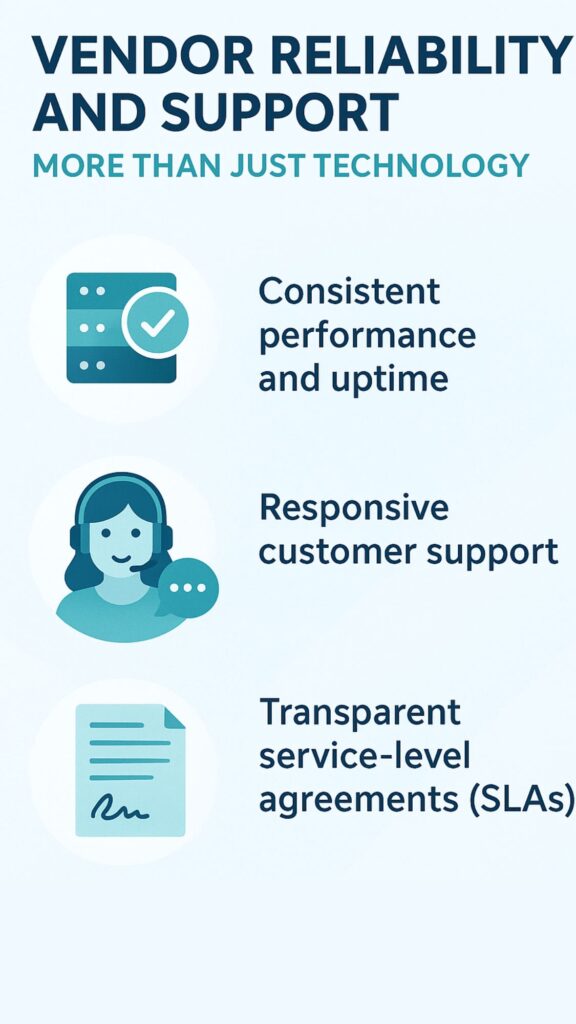
Choosing an NDR vendor isn’t just about features. Reliability, customer support, and reputation weigh heavily in the decision. We’ve encountered scenarios where technical glitches or slow support responses undermined otherwise capable tools.
Look for vendors with solid certifications, market presence, and positive case studies. Trial evaluations and proof-of-concept tests help validate whether a solution lives up to its promises in your environment.
Understanding NDR Evaluation Metrics: What Really Counts?
When evaluating NDR vendor solutions, understanding the metrics behind detection and response capabilities is crucial. It’s easy to get lost in buzzwords like AI-driven or signature-less detection. But what really matters is how well a solution performs in your environment.
Detection accuracy is often measured by true positive rates,how often the system correctly identifies threats,and false positive rates,the number of benign events mistakenly flagged as malicious. We’ve seen vendors touting near-perfect detection that, on closer inspection, generate a flood of false positives. That wastes analysts’ time and leads to alert fatigue.
False negative rates are equally important. These represent threats the system misses entirely. A low false negative rate indicates robust coverage of evolving threats, including zero-day attacks and insider threats.
Latency in detection and response also plays a big role. We’ve experienced situations where delays of even a few minutes can mean the difference between containment and a major breach. Leading NDR solutions reduce detection latency and speed up mean time to respond (MTTR) by integrating with automation and orchestration platforms.
Understanding the benefits of using NDR tools can help teams measure detection performance more effectively, ensuring they balance accuracy with efficiency while minimizing alert fatigue.
The Role of Behavioral Profiling and Anomaly Detection in NDR
Behavioral profiling is more than just a buzzword. It’s a practical approach that helps security teams spot activity that deviates from established norms.
For example, if a user suddenly accesses unusual files or a device starts sending an abnormal amount of traffic, behavioral analytics can flag these as potential threats.
Anomaly detection, powered by machine learning, helps identify these outliers without relying on predefined signatures. This is vital for catching sophisticated attacks that don’t match known patterns.
From our experience, vendors offering customizable rules and anomaly scoring provide greater flexibility. This allows organizations to tune the system to their unique risk profiles and reduce noise.
Integration with Endpoint and Cloud Security: Closing the Gaps
Modern networks are no longer confined to traditional boundaries. Endpoint devices and cloud services form significant parts of the attack surface. Effective NDR solutions integrate tightly with endpoint detection and response (EDR) tools and cloud security platforms.
This integration extends visibility and enables richer threat intelligence. For instance, if the NDR platform detects suspicious network behavior, it can trigger endpoint isolation or initiate cloud workload investigations automatically.
For organizations operating in multi-cloud or hybrid infrastructures, NDR for cloud environment monitoring ensures that security teams maintain full visibility across cloud workloads, enabling early detection of suspicious activities often missed by traditional tools.
We’ve found that vendors supporting hybrid environment monitoring and encrypted traffic analysis offer a more complete security posture.
Encrypted traffic, in particular, poses challenges because traditional inspection methods can’t see inside without affecting performance or privacy. The best NDR tools employ metadata analysis and AI to detect threats even in encrypted flows.
Compliance Reporting and Regulatory Considerations
Many organizations operate under strict regulatory frameworks like HIPAA, PCI-DSS, or GDPR. Choosing an NDR vendor that supports compliance reporting can simplify audits and demonstrate due diligence.
We’ve seen security teams struggle when their tools don’t capture the right logs or generate reports aligned with compliance requirements. Features such as detailed logging capabilities, customizable reports, and automated compliance checks are invaluable.
Don’t overlook vendor certifications and adherence to industry standards. These often reflect a vendor’s commitment to security and reliability.
The User Experience: Dashboards, Alert Management, and Analyst Tools
An NDR solution might be powerful, but if it’s difficult to use, it won’t get the job done. We’ve worked with teams frustrated by cluttered dashboards or poor alert management workflows.
Good vendors invest in user experience by providing intuitive, customizable dashboards that highlight priority alerts and key trends. Their platforms enable analysts to drill down into alerts quickly, correlate events, and document investigations efficiently (2).
Look for features like alert prioritization, case management, and forensic capabilities. These help streamline SOC operations and reduce investigation times.
Pricing Models and Vendor Ecosystem
Budget constraints are real. NDR pricing varies widely, often based on factors like network size, data volume, and feature sets. We suggest evaluating pricing models carefully,not just upfront costs but ongoing expenses for updates, support, and scaling.
Also consider the vendor’s ecosystem. Partnerships with other security vendors or integrations with popular SOC tools can enhance overall effectiveness.
Trial Evaluations and Proof of Concept: The Final Step
Nothing beats hands-on experience. Before committing, conduct trial evaluations or proof of concept tests with shortlisted NDR vendors. This allows your team to assess how the solution performs in your environment, how easy it is to deploy, and how well it integrates with your security stack.
We’ve found that real-world testing often reveals gaps or strengths not obvious from datasheets or demos. Use these tests to verify detection rates, false positive handling, and response times.
Wrapping Up Evaluating NDR Vendor Solutions
Evaluating NDR vendor solutions is a task that demands attention to detail and a clear understanding of your network’s needs.
Network Threat Detection remains the foundation of a strong security posture, and the right NDR solution can amplify its effectiveness by bringing deep visibility, intelligent detection, and efficient response.
We recommend focusing on vendors who provide comprehensive traffic monitoring, robust machine learning capabilities, and seamless integration with your existing tools.
FAQs
What is the primary purpose of an NDR solution?
An NDR (Network Detection and Response) solution aims to detect, analyze, and respond to network-based threats in real time.
It monitors network traffic for suspicious activities, including lateral movement and zero-day attacks, using advanced analytics like machine learning and behavioral profiling.
The goal is to reduce blind spots, minimize false positives, and accelerate incident response, helping security teams protect complex environments including on-premises, cloud, and hybrid networks more effectively.
How important is bidirectional monitoring in NDR solutions?
Bidirectional monitoring is crucial because it tracks both north-south traffic (between external and internal networks) and east-west traffic (lateral movement within the network). Many attacks spread sideways once inside a network.
Without east-west visibility, threats can go undetected. Vendors offering comprehensive bidirectional monitoring provide better detection of stealthy attackers moving laterally, helping prevent breaches from escalating and giving security teams a full picture of network activity.
What role does machine learning play in NDR platforms?
Machine learning enables NDR platforms to establish a baseline of normal network behavior and detect anomalies that deviate from this baseline. Unlike signature-based detection, it adapts to new and evolving threats, including zero-day exploits.
This reduces false positives by filtering out benign anomalies and improves detection accuracy. Continuous learning helps the system stay effective as threats grow more sophisticated and networks change, keeping security teams informed about truly suspicious activity.
How do NDR solutions reduce false positives?
NDR platforms reduce false positives by correlating alerts, using contextual data and behavioral analytics to prioritize genuine threats. Machine learning models refine detection over time, distinguishing between normal network fluctuations and malicious activity.
This alert tuning helps avoid overwhelming analysts with noise, allowing them to focus on real incidents. Effective false positive management improves SOC efficiency and reduces alert fatigue, which is a common challenge with traditional detection tools.
Can NDR solutions integrate with existing security tools?
Yes, integration is a key feature. NDR solutions often connect with SIEMs, EDRs, threat intelligence platforms, and security orchestration tools. This integration enriches alerts with additional context, enabling faster and more informed investigations.
It also supports automated response workflows, like isolating endpoints or blocking malicious traffic, streamlining incident handling. When selecting an NDR vendor, ensure their platform supports compatibility with your existing security stack to maximize efficiency.
What deployment options are available for NDR platforms?
NDR platforms offer various deployment models: cloud-native, on-premises, or hybrid. Cloud-native solutions provide scalability and easier updates but may raise data privacy concerns. On-premises deployments offer greater control, often preferred in regulated industries. Hybrid models combine both, supporting complex infrastructures.
Choosing the right deployment depends on your organization’s architecture, compliance needs, and operational preferences. Flexibility in deployment is an important evaluation criterion.
How does NDR improve incident response times?
NDR platforms accelerate incident response by providing real-time monitoring, automated alert correlation, and integrated response capabilities. Automated workflows can isolate affected devices or trigger remediation actions faster than manual methods.
By reducing false positives and prioritizing alerts, analysts focus on critical threats promptly. These efficiencies lower the mean time to detect (MTTD) and mean time to respond (MTTR), helping contain threats before they cause significant damage.
What kind of network visibility should an effective NDR provide?
Effective NDR solutions offer deep visibility across all network environments, including on-premises, cloud, and hybrid setups. They capture detailed metadata and perform deep packet inspection to analyze payloads.
Visibility should encompass all traffic directions, device types, and encrypted flows where possible. Without comprehensive visibility, attackers find blind spots to exploit. Vendors that deliver end-to-end traffic monitoring enable better detection of both external and internal threats.
How do NDR tools handle encrypted traffic analysis?
Encrypted traffic analysis is challenging because payloads are hidden. Leading NDR tools use metadata analysis, machine learning, and behavioral profiling to detect suspicious patterns without decrypting content. They monitor traffic flow characteristics like volume, timing, and endpoints.
This approach maintains privacy while identifying encrypted threats such as command-and-control communications or data exfiltration. Vendors supporting encrypted traffic analysis provide a significant advantage in today’s security landscape.
Why is user experience important in choosing an NDR vendor?
User experience impacts how effectively security teams can operate. A clear, intuitive dashboard helps analysts quickly prioritize alerts, investigate incidents, and manage cases. Poor usability slows response times and leads to mistakes or missed threats. Features like
Conclusion
Pay close attention to false positive rates, detection latency, and automation features. Don’t forget to factor in scalability, deployment options, and vendor support.
Testing solutions in your environment before deciding ensures you pick a tool that truly fits. Remember, the goal is to empower your security team with actionable insights, reduce noise, and speed up threat response,not just add complexity.
By methodically evaluating NDR vendors with these considerations in mind, you’re setting up your organization to detect threats earlier and respond faster, strengthening your network’s resilience against evolving cyber risks.
To see how advanced threat modeling and automated risk analysis can elevate your defenses, explore NetworkThreatDetection.com, a platform built to help cybersecurity teams identify vulnerabilities, visualize attack paths, and stay one step ahead of emerging threats.
References
- https://medium.com/@RocketMeUpCybersecurity/using-behavioral-analytics-to-identify-anomalous-user-activity-6788db431f71
- https://medium.com/@introvertdeveloper7/the-complete-guide-to-cybersecurity-incident-response-from-detection-to-recovery-83ff73aa43e0