
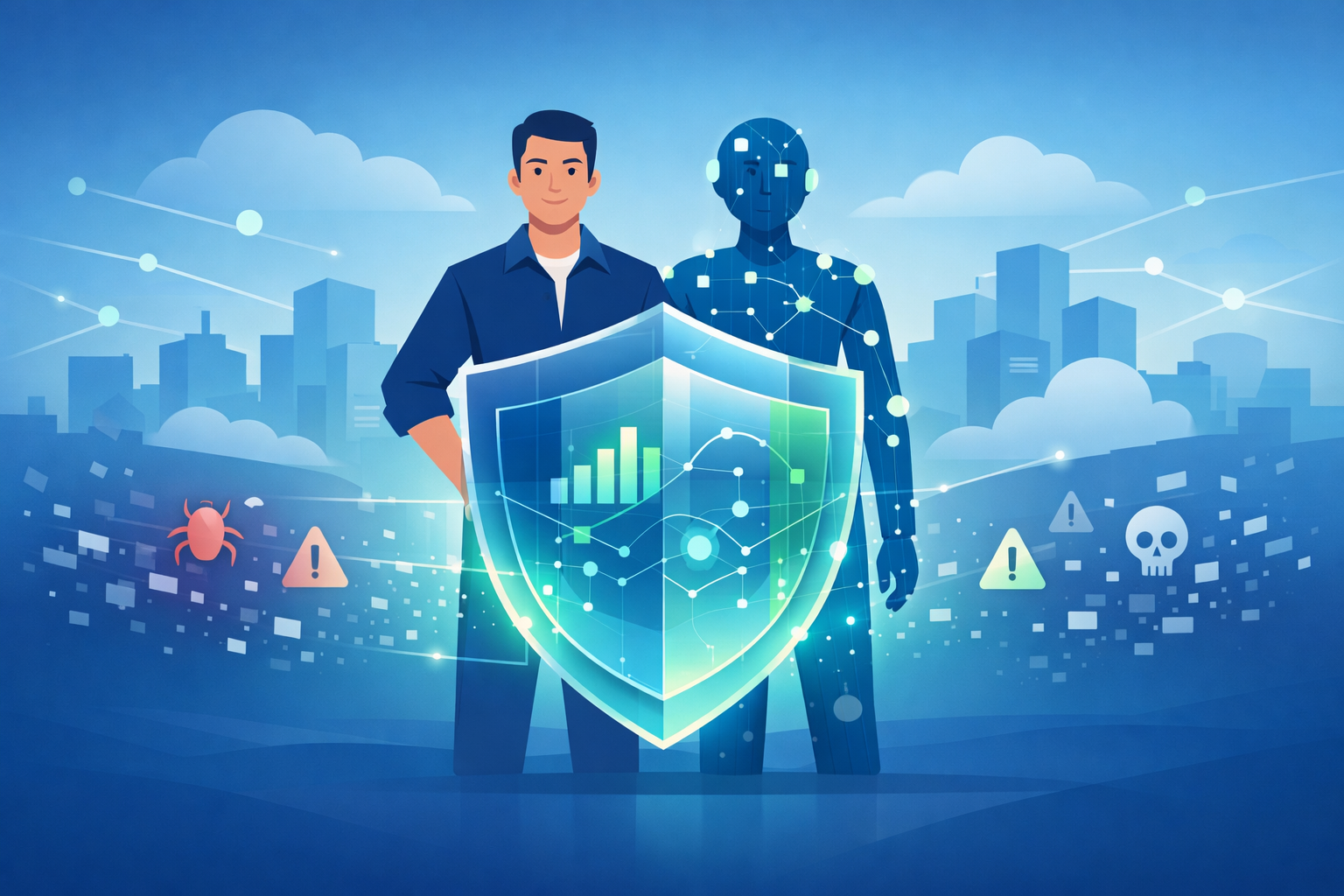
AI is already rewriting how cybersecurity works, turning security from a slow reaction game into a fast, predictive one.
Instead of waiting for threats to appear, smarter systems can watch patterns, spot tiny anomalies, and act before attackers break through.
This shift replaces manual, after-the-fact patching with continuous, automated defense that learns over time. For security teams, future-proofing isn’t about buying more tools, it’s about understanding how AI will shape both attacks and defenses.
If you want your organization to stay ahead instead of catching up, keep reading to see what’s coming and how to get ready.
Key Takeaways
- AI enables predictive defense, moving security from reactive to proactive.
- Attackers now use AI for hyper-personalized phishing and adaptive malware.
- Human oversight remains essential for ethical AI use and handling novel attacks.
The New Rules of Digital Defense
You can almost feel the ground shifting. Cybersecurity used to be a game of catch-up. A new virus would appear, analysts would dissect it, and signatures would be distributed. That model is breaking.
The volume and speed of modern threats, powered by AI themselves, make manual defense impractical.
The future belongs to systems that learn and adapt autonomously. These systems analyze patterns across global networks, spotting the faint signals of an attack long before it fully materializes.
This is the core promise of future trends ai cybersecurity. It’s a move from building walls to creating an intelligent immune system for your digital infrastructure.
The change is driven by data. Enormous amounts of it. AI, particularly machine learning, thrives on this data.
It can sift through terabytes of log files, network traffic, and user behavior in milliseconds.
It finds the anomalies a human eye would never catch. A slight deviation in data transfer rates. An unusual login time from a familiar account.
These tiny breadcrumbs lead to massive breaches. AI connects the dots. It’s not magic. It’s deep learning for network security at a scale and speed that is, frankly, inhuman.
This capability forms the bedrock of next-generation cyber defense.
- Real-time analysis of network traffic for subtle anomalies.
- Identification of zero-day vulnerabilities through behavioral patterns.
- Automated correlation of disparate security events into a coherent threat story.
This proactive stance is what separates modern security from the legacy approach. Instead of waiting for an alarm to sound, the system is constantly listening, learning, and predicting. It’s a fundamental reimagining of what security can be.
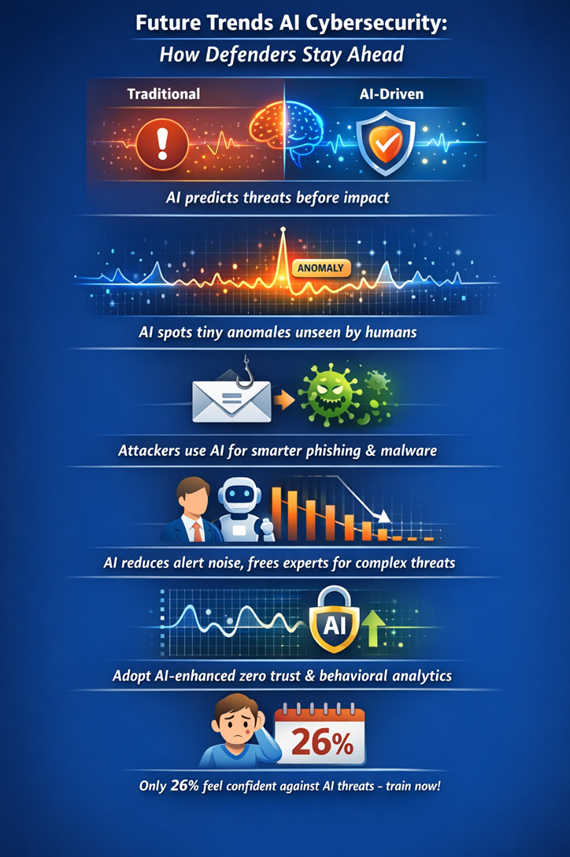
| Traditional Security Approach | AI-Driven Security Approach |
| Reacts after alerts trigger incidents | Predicts threats before impact |
| Relies on static signatures | Uses behavioral and anomaly detection |
| Manual alert investigation | Automated event correlation |
| High false positive rates | Reduced alert noise through AI |
| Human-led response only | Human oversight with AI assistance |
When the Attackers Get Smarter Too
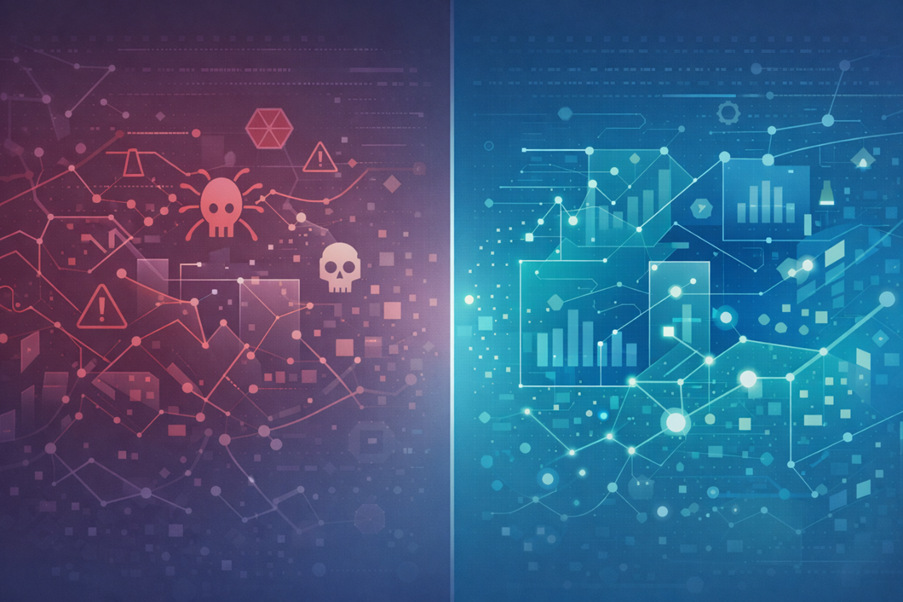
There’s a moment in every security story where the line between defender and attacker starts to blur, and this is one of those moments.
There’s a darker side to this progress. The same tools that empower defenders are also available to attackers. This is the dual edge of future trends in AI cybersecurity. Cybercriminals are using AI to build attacks that are:
- more scalable
- more persuasive
- more evasive [1].
Imagine phishing emails that no longer look like generic spam. Instead, they’re crafted by AI to mimic the writing style of a colleague, using details pulled from social media. They feel personal, they sound real, and they can be generated at industrial scale.
This isn’t a distant scenario. It’s already unfolding. AI-driven attacks are dropping the barrier to entry. A novice hacker can use generative AI to create relatively advanced malware from a simple text prompt. They can run autonomous systems that:
- perform reconnaissance
- scan for vulnerabilities
- launch exploits without direct human control
The threat environment is becoming automated, almost factory-like. So we’re not just facing more attacks, we’re facing better ones. Volume goes up, quality goes up. Defending against this shift demands an equally intelligent, adaptive response.
Polymorphic malware is one of the clearest examples of where this is heading. This is code that changes its signature every time it spreads.
So the old model, antivirus tools that rely on known signatures, doesn’t stand a chance against it. What does help is AI-powered detection that focuses on how the malware behaves instead of how its code looks. That’s where the real battle is moving:
- from static lists to dynamic analysis
- from fixed rules to learned patterns
- from one-time checks to continuous observation
The fight is turning into a live, intelligent duel, not a checklist exercise. For defenders, the key is to stay centered on behavior and intent, not only on static indicators of compromise. That mindset shift matters just as much as any new platform, tool, or model you deploy.
Building Your AI-Augmented Security Posture
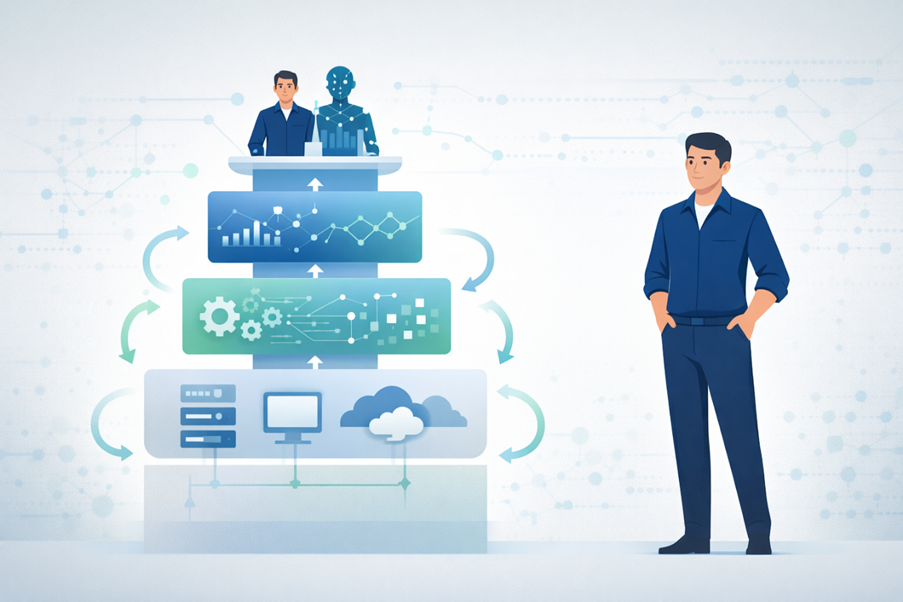
So, what can you actually do? The goal isn’t to replace your security team with robots. It’s to augment them. The future of cybersecurity is a partnership between human intuition and machine speed.
Start by integrating AI-driven threat detection into your existing security operations center (SOC). These tools can prioritize alerts, drastically reducing the number of false positives that analysts waste time on.
This allows your human experts to focus on the most complex and nuanced threats. Embrace behavioral analytics.
Tools that track user and entity behavior (UEBA) establish a baseline of normal activity for every user and device on your network, often leveraging applying machine learning cybersecurity methods to enhance detection accuracy and response times.
When AI detects a deviation from that baseline, it raises a flag. This is incredibly effective for spotting insider threats or compromised accounts where the attacker has legitimate credentials.
It’s a way to see the invisible. Implementing a zero-trust architecture is another critical step. Zero-trust assumes no user or device is trustworthy by default. AI adds dynamism to this model, enabling context-aware access controls that adapt in real-time based on risk.
- Integrate AI tools to handle alert triage and low-level incident response.
- Deploy user entity behavior analytics to detect compromised accounts.
- Adopt a zero-trust framework enhanced by AI for dynamic access control [2].
Finally, invest in training. With only 26% of professionals feeling confident against AI threats, there’s a significant skills gap.
Your team needs to understand how AI security tools work, how to interpret their findings, and, crucially, how to recognize when the AI might be wrong. Human oversight is vital for ethical considerations and for handling truly novel attacks that the AI has never seen before.
The Road to a Resilient Future

You can almost feel the ground shifting under cybersecurity teams right now, like the future isn’t approaching, it’s already here, just speeding up.
The evolution of AI in cybersecurity isn’t some distant theory. It’s a current reality that’s accelerating into tomorrow. The trends are already pointing toward a world where:
- security operations are more autonomous
- analytics are predictive, not just historical
- defenses adjust and adapt in near real time, powered by machine learning & AI in NTD systems that constantly evolve to detect and mitigate emerging threats.
But none of this happens by accident. There’s no “auto-upgrade” to a safer future. It takes a deliberate strategy and a change in how you think about security.
You have to decide to move from reacting after incidents, to anticipating and preparing before they happen. The organizations that handle this shift well tend to do a few things differently:
- They treat AI as a powerful ally, not a magic fix.
- They keep humans in the loop, especially for judgment calls.
- They invest in tools and in people, at the same time.
They also build a culture of continuous learning, where human expertise doesn’t get replaced by AI, it guides it. Analysts, engineers, and leaders use AI to see patterns faster, to test assumptions, and to stress-test their defenses, but they still own the decisions.
The threats are getting smarter. They’re faster, quieter, more tailored. Your defense has to grow in the same direction, more adaptive, more thoughtful, more aware.
Start shaping your AI-augmented strategy now, before the next wave of attacks makes standing still the most dangerous option of all.
FAQ
How will future trends AI cybersecurity change daily security work?
Future trends AI cybersecurity will change daily security work by relying more on AI driven threat detection and predictive cybersecurity analytics.
Security teams will use AI anomaly detection trends, real time threat intelligence AI, and AI enhanced SIEM to spot threats earlier.
These tools support proactive cyber defense and adaptive cyber defense, helping teams respond faster and reduce unnecessary alerts.
What role will AI play in next generation cyber defense systems?
Next generation cyber defense will rely on artificial intelligence security evolution and self learning security systems.
Machine learning cybersecurity future and deep learning threat detection allow systems to recognize new attack patterns.
Autonomous security operations, AI powered SOC, future SOC architecture, and SOC automation trends help defenses adjust continuously as threats and environments change.
How do AI systems reduce false alerts without removing human control?
AI reducing false positives depends on behavioral analytics security and user entity behavior analytics future to understand normal activity.
Explainable AI cybersecurity and XAI security trends show why alerts appear. Hybrid human AI security teams and augmented security analysts review decisions, while ethical AI in cybersecurity and AI governance security keep accountability and oversight in place.
How will AI handle advanced attacks like ransomware and evolving malware?
AI for ransomware detection and AI malware detection evolution focus on attacker behavior instead of static signatures.
Adversarial machine learning security and AI model poisoning defense protect learning systems from manipulation. Intelligent threat hunting, automated incident response, SOAR future trends, and AI security orchestration help stop attacks quickly and limit damage.
Where will AI matter most across cloud, IoT, and critical infrastructure?
Cloud security AI trends support AI cyber defense for cloud native environments and zero trust AI security.
AI in IoT cybersecurity and AI for OT security protect connected devices and industrial systems. AI securing critical infrastructure improves safety, while cyber resilience AI, AI driven risk management, predictive attack modeling, digital twin security AI, and AI powered vulnerability management strengthen long-term protection.
Staying Ahead in the AI-Driven Cybersecurity Era
The future of AI cybersecurity belongs to organizations that act now, not later. Predictive defense, behavioral analysis, and automation are no longer optional upgrades, they are survival tools.
But technology alone isn’t enough. Success comes from combining AI’s speed with human judgment, ethics, and adaptability.
By investing in the right tools, skills, and mindset today, you position your security strategy to withstand threats that don’t yet exist and stay ahead as the battlefield evolves. Join us and start building a smarter, more resilient defense
References
- https://red.anthropic.com/2025/ai-for-cyber-defenders/
- https://www.paloaltonetworks.com/cyberpedia/what-is-a-zero-trust-architecture