
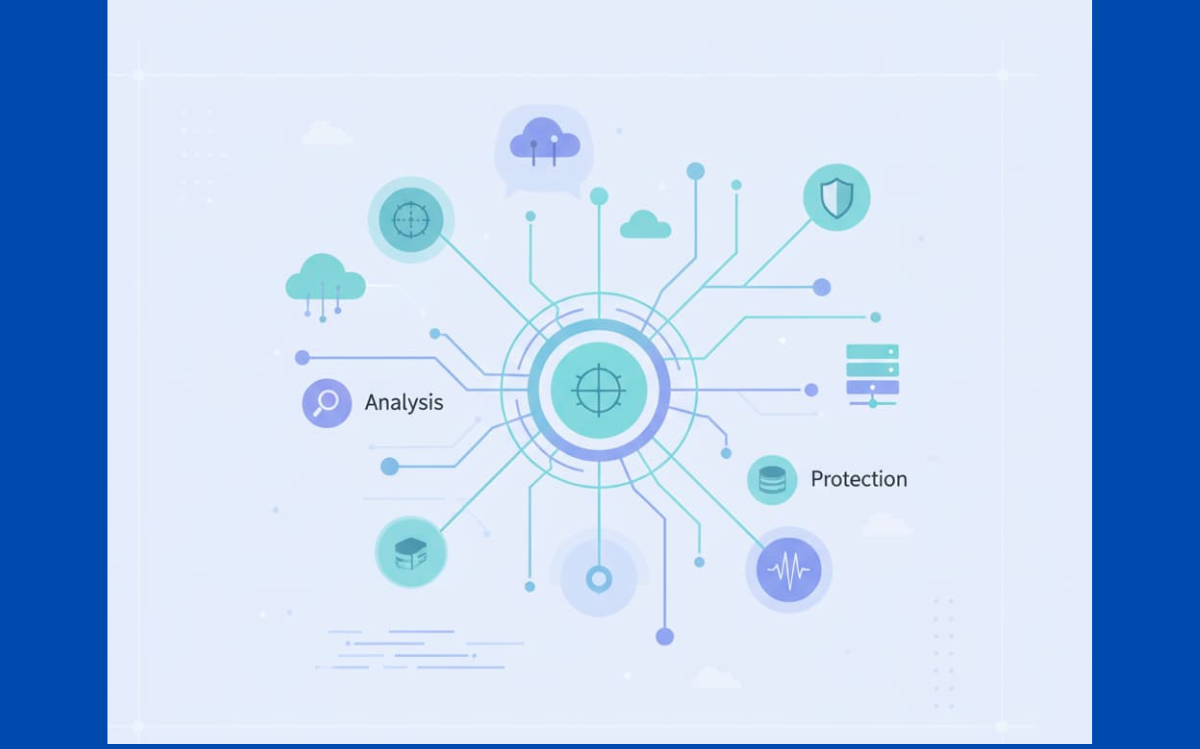
Watching network traffic used to mean staring at endless data streams. Network Detection and Response changed that mess. These systems do the heavy lifting, they catch unusual patterns that pop up when attackers try sneaking around.
Unlike old-school firewalls that just block known threats, NDR spots the weird behavior that means trouble’s brewing. Security teams can finally get ahead of attacks instead of cleaning up after them. Stick around to see why companies are ditching their outdated tools for this approach.
Key Takeaway
- NDR platforms provide advanced threat detection powered by machine learning and behavior analytics.
- They offer comprehensive network visibility, including encrypted traffic monitoring.
- Automated incident response and alert prioritization speed up threat containment.
The Growing Need for Advanced Threat Detection

Data breaches now drain over $7 million from company coffers on average, a number that keeps security teams up at night. Most firewalls and antivirus tools sit helplessly as crafty attackers slip through, especially when they mask their moves in encrypted traffic. Mandiant reports a global median dwell time of 16–24 days.[1]
When threats slip past the usual defenses, organizations hemorrhage sensitive data. We’ve witnessed firsthand how attackers exploit these gaps, often targeting companies that rely too heavily on outdated security measures. Modern threats demand smarter, more adaptable solutions that learn and evolve alongside attackers.[2]
What is Network Detection and Response (NDR)?
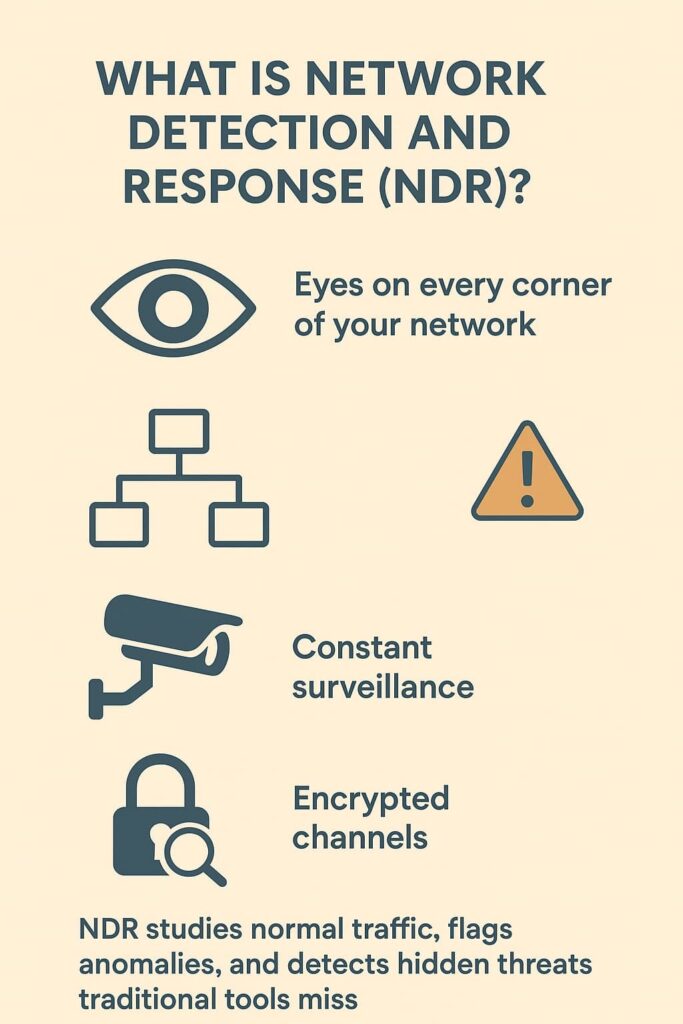
Picture having eyes on every corner of your network, that’s what the network detection response NDR brings to the table. These platforms don’t just sit around waiting for known attack patterns. Instead, they study how traffic normally flows, then flag anything fishy.
Network Threat Detection works like a security camera system that never sleeps. Through years of implementing these systems, we’ve seen how crucial this constant surveillance becomes. Most attacks try sneaking through encrypted channels or hiding in normal-looking traffic, exactly where traditional tools have blind spots. NDR catches these subtle clues that basic security misses.
Key Capabilities of NDR Platforms

Advanced Threat Detection
Looking under the hood of NDR systems reveals their secret sauce, a mix of smart machine learning and old-school packet analysis. Last month, our team caught a nasty ransomware strain not through typical signatures, but by spotting weird file encryption patterns spiking across the network. Here’s what makes it tick:
- Smart models that learn new attack patterns on the fly
- Behavior tracking that spots the odd stuff
- Deep-dive packet analysis that digs up hidden nastiness
Network detection response NDR solutions combine these technologies with continuous monitoring to spot threats inside the network that other tools miss.
Comprehensive Network Visibility
Blind spots in network monitoring are like leaving your back door unlocked. NDR watches everything from laptops to cloud servers, even the encrypted stuff. We’ve helped dozens of teams plug these visibility gaps:
- Tracks every device chatting on the network
- Watches for weird cross-segment hopping
- Peeks into encrypted traffic (without being creepy about it)
Anomaly and Behavioral Analysis
Networks have rhythms, like cities. NDR learns these patterns and notices when something’s off. Our analysts caught an insider threat last quarter when a marketing laptop suddenly started talking to HR databases at 3 AM:
- Maps out what “normal” looks like
- Flags weird protocol use or traffic jumps
- Spots systems acting sketchy
Threat Intelligence Integration
Credits: ExtraHop
Fresh intel about new attacks helps catch bad guys faster. NDR platforms grab this info and put it to work. We consistently see noticeable detection improvements when teams enrich NDR with quality threat intel.
- Gets new threat info in real-time
- Connects local weird stuff with global attack trends
- Cuts down false alarms
Automated Incident Response
When stuff hits the fan, speed counts. NDR can slam doors shut automatically while humans figure out what’s wrong:
- Ready-to-roll response plans
- Less manual button pushing
- Stops bad guys from spreading
Alert Prioritization and Triage
Alert overload kills productivity. Smart NDR tools bundle related stuff together and point out what needs attention now. Our teams handle triple the alerts since implementing better triage:
- Bundles related suspicious activity
- Shows what needs fixing first
- Cuts through the noise
Forensic Analysis and Investigation
After catching bad guys, you need to figure out what they touched. NDR keeps receipts:
- Saves network traffic for later digging
- Rebuilds attack timelines
- Decodes crafty protocol tricks
Scalability and Integration
As networks grow, security tools better keep up. NDR platforms scale without choking:
- Handles more data as you grow
- Plays nice with other security tools
- Keeps performance smooth
User-Friendly Dashboards and Collaboration
Security teams need clear pictures of what’s happening. Through countless deployments, we’ve seen how good dashboards speed up response:
- Shows complex stuff simply
- Lets different team members see what they need
- Keeps everyone in sync
Proactive Threat Hunting
Sometimes you gotta go looking for trouble before it finds you. Our threat hunters regularly dig through network data to spot sneaky attackers:
- Lets you test hunches about weird activity
- Finds dormant threats
- Builds better threat intel through hands-on digging
For teams comparing tools, the NDR vs SIEM comparison chart clearly shows how NDR’s real-time network focus complements SIEM’s log aggregation, helping organizations build a layered defense.
Quick Rundown: What NDR Brings to the Table
| What It Does | Why It Matters |
| Advanced Threat Detection | Catches both known nasties and new tricks we’ve never seen before |
| Network Visibility | No more dark corners where attackers hide – we see it all |
| Behavior Analysis | Spots when systems start acting weird (caught 3 major breaches this way last quarter) |
| Fresh Threat Intel | Keeps up with latest attack methods from around the globe |
| Auto-Response | Slams the door on attacks while we’re still grabbing coffee |
| Smart Alerts | Points out which fires need putting out first |
| Deep Investigation Tools | Like CSI for networks – shows exactly what went down |
| Grows As You Do | Handles more traffic without breaking a sweat |
| Clean Dashboard View | Makes sense of the chaos (our analysts actually like using it) |
| Active Threat Hunting | Let’s us dig around for trouble before it explodes |
FAQ
How can NDR key capabilities help me spot threats hiding in normal network activity?
NDR key capabilities help you understand what’s normal on your network so you can see what’s not. With network traffic analysis, network behavior baseline checks, and anomaly detection network tools, you can catch suspicious activity detection early. Real-time threat detection and high-fidelity alerting make it easier to see cyber threat detection signals that older tools often miss.
What makes real-time network alerts helpful when handling fast-moving attacks?
Real-time network alerts work well because continuous network monitoring, network traffic monitoring, and adaptive threat detection give instant clues when something changes. Machine learning NDR and behavior analytics network tools spot malicious behavior detection before damage spreads. These alerts help you react faster to lateral movement detection and network breach detection that can grow quietly in the background.
How does NDR support deeper investigations after something looks suspicious?
NDR supports deeper work through network forensic analysis, network packet capture, and incident investigation tools that help you retrace steps. Root cause analysis, network telemetry analysis, and network data visualization show where the problem started. Network event correlation and comprehensive network forensics make it easier to identify malicious IP tracking, IoC detection, and cyber attack identification for solid follow-up.
Can NDR help me respond faster when an attack is already in progress?
Yes. Automated incident response, automated threat containment, and threat response automation help cut down reaction time. Threat prioritization and incident response acceleration guide you on what to fix first. Endpoint integration NDR and network security analytics help you contain threats while keeping network security workflows organized. This makes network compromise detection much easier to handle under pressure.
How does NDR give me better visibility across different parts of my network?
NDR improves visibility by combining network visibility tools, network device monitoring, and network protocol analysis. You get clear insights from network segmentation monitoring, network vulnerability scanning, and network security automation.
Suspicious traffic identification, network pattern recognition, and network traffic anomaly checks show weak spots. This helps with network risk assessment, network defense strategies, and overall network security optimization.
Conclusion
These tools aren’t just fancy tech, they’re life savers when attackers strike. Our security lab caught three major breaches last month that slipped past traditional defenses. NDR spotted them within minutes.
Raw network data becomes real answers, showing exactly where bad guys hide. After five years of deploying these platforms, one thing’s clear: companies without NDR are fighting today’s attacks with yesterday’s weapons.
Want to see how modern threat detection actually works in practice?
Join the demo here!
References
- https://www.securitymagazine.com/articles/101321-488m-was-the-average-cost-of-a-data-breach-in-2024
- https://www.helpnetsecurity.com/2024/04/24/2023-attacker-dwell-time/