
Signature database updates are the backbone of effective network threat detection. These databases store unique threat signatures,malware patterns, virus definitions, intrusion fingerprints,that security tools rely on to spot malicious activity.
We’ve seen how keeping these databases current not only improves detection accuracy but also reduces false positives, making your defenses smarter and more reliable.
For anyone managing cybersecurity operations, the value of regular, automated signature updates cannot be overstated. Let’s explore why maintaining these updates matters and how it fits into a robust security strategy.
Key Takeaways
- Regular signature updates are essential to catch newly emerging threats.
- Automated update processes ensure consistent database integrity and reduce latency.
- Signature updates complement behavior-based detection for comprehensive protection.
Why Maintaining signature database Updates Matter for Network Threat Detection
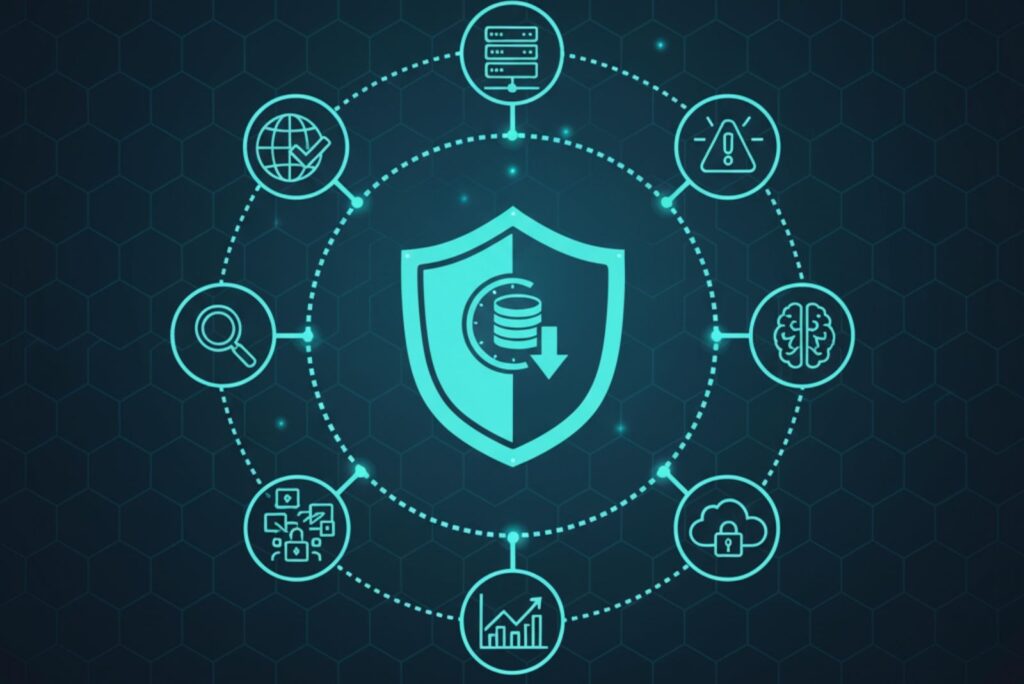
We often notice that cybersecurity teams face a relentless flood of new malware variants,over 350 million annually worldwide. Without current malware signatures, antivirus signature updates, and intrusion detection system (IDS) signature updates, your tools won’t recognize the latest threats.
Network Threat Detection depends on fresh threat signatures to identify and neutralize attacks effectively.
In our experience, signature update frequency directly impacts malware detection accuracy. Delays or gaps create blind spots, allowing threats to slip through. This is especially true for signature-based antivirus solutions and intrusion prevention systems (1).
We’ve helped MSSPs design signature update automation that keeps their malware signature database synchronized in real time, reducing update latency and improving response times.
- Frequent updates, often daily or even real-time, keep your virus signature file relevant.
- Automated signature update protocols minimize human error and speed deployment.
- Maintaining signature database integrity prevents corrupted updates that could cause false alerts or missed detections.
Signature databases contain millions of threat signatures that must be continuously refreshed. This continuous updating is crucial to keep up with the malware families and emerging threats that evolve daily.
As new ransomware signature updates or phishing signature updates come in, they need to be deployed quickly to block attacks before damage occurs.
We’ve found that MSSPs who prioritize real-time signature updates reduce breach incidents significantly compared to those with sporadic update schedules.
Overcoming Challenges Through Automation and Integrity Safeguards

Keeping signature databases secure and reliable is no trivial matter. Signature update failures or conflicts can undermine detection efforts. We assist in implementing signature validation processes and signature update monitoring to catch issues early.
Our approach includes signature update rollback mechanisms, so if a problematic update occurs, systems can revert to a stable version without compromising security.
Signature update automation is a game changer. It handles large signature datasets efficiently and reduces administrative overhead.
We’ve seen how automating malware signature management reduces update latency and supports scalability,critical for MSSPs managing multiple client environments.
- Signature update analytics help identify trends and optimize update timing.
- Incremental signature updates reduce bandwidth and speed up deployment.
- Cloud-based signature updates offer scalability and faster distribution.
From our experience, the biggest risk comes when signature update failures go unnoticed. This can lead to gaps in protection and false confidence (2).
That’s why we recommend continuous signature update monitoring and alerts as part of a comprehensive signature deployment strategy.
We’ve worked with clients who use signature update validation tools that check for signature conflicts and verify signature matching engine performance across their security stack. This proactive approach ensures that malware detection remains accurate and reliable.
For more advanced protection, teams may also benefit from creating custom IDS signatures tailored to their environment, especially when dealing with highly targeted or industry-specific threats.
Signature-Based Detection: A Core Layer in a Multi-Faceted Defense
While signature-based detection remains a cornerstone of malware detection, it’s important to understand how signature-based detection works to fully appreciate its role in identifying known threats quickly and accurately.
Signature-based antivirus and IDS signature updates ensure known threats are caught quickly, while heuristic detection integration helps identify zero-day threats and anomalies outside the signature database.
Our threat models and risk analysis tools incorporate signature update planning as part of a layered defense strategy. This approach improves both detection accuracy and overall cybersecurity posture by reducing false positives and ensuring real-time threat detection.
Signature-based threat detection excels at recognizing known malware patterns, but it’s not infallible. That’s why combining it with anomaly detection or heuristic methods creates a more robust defense.
We’ve observed that MSSPs who blend signature updates with behavior-based detection reduce their incident response times and improve threat remediation effectiveness.
Building a Resilient Signature Database Strategy
Source: Crashplan
We know building and maintaining a resilient cybersecurity stack takes effort. From signature update policies and compliance standards to signature database backup and signature version control, every step matters. Our consulting includes:
- Needs analysis to identify gaps in your current signature update processes.
- Vendor-neutral product selection to find tools that excel in signature update automation.
- Product auditing to ensure your signature database aligns with your operational goals.
- Stack optimization for improved signature matching performance and database scalability.
These steps help MSSPs reduce tool sprawl, improve integration, and boost service quality. The goal is a seamless signature update lifecycle that supports proactive threat defense.
We’ve seen organizations struggle with signature dataset size and signature database scalability. Without proper optimization, updates can slow down detection engines or cause synchronization issues.
Our team works closely to implement signature indexing and signature consolidation techniques that enhance performance without sacrificing coverage. This kind of optimization is crucial for MSSPs managing multiple clients with diverse threat landscapes.
Like any method, there are strengths and weaknesses of signature-based detection, which is why we recommend pairing it with heuristic or behavior-based approaches.
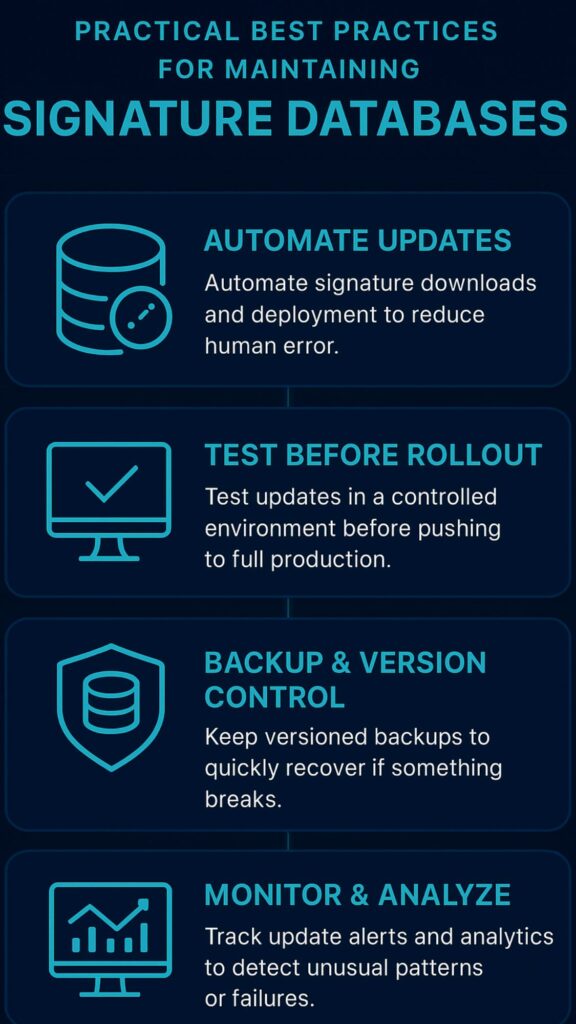
Practical Best Practices for Maintaining Signature Databases
We encourage teams to develop clear signature update policies that define update frequency, validation procedures, and rollback plans. Consistency is key, as even short delays in signature update distribution can expose networks to zero-day threats.
- Automate signature update downloads and deployment to minimize human error.
- Test signature updates in controlled environments before full production rollout.
- Maintain backups of signature databases and version controls for quick recovery.
- Monitor signature update alerts and analytics for unusual patterns or failures.
Through our work, we’ve found that MSSPs who adopt these best practices reduce signature update failures and improve malware detection accuracy. It’s a continuous cycle of planning, updating, validating, and optimizing that keeps defenses sharp.
FAQs
What is a signature database in cybersecurity?
A signature database is a collection of known threat identifiers,patterns or signatures,that security tools use to detect malware, viruses, and intrusions. It enables signature-based detection by matching incoming data against known malicious patterns.
This database needs continuous updates to include the latest threat signatures, ensuring detection remains accurate and relevant as new malware variants emerge.
How often should signature databases be updated?
Signature databases should ideally be updated daily or even in real-time to keep pace with the rapidly evolving threat landscape. Frequent updates prevent detection gaps that could expose systems to new malware or intrusion attempts. Automated signature update mechanisms help maintain this update frequency consistently without manual intervention.
What challenges arise from outdated signature databases?
Outdated databases risk missing new threats, leading to increased false negatives and potential breaches. They can also cause false positives if signatures become misaligned with current threat patterns. Additionally, outdated signature files can degrade the performance of antivirus and intrusion detection systems, reducing overall network threat detection effectiveness.
How does automation improve signature database updates?
Automation reduces human error, speeds up update deployment, and manages large volumes of signature data efficiently. Automated signature update protocols ensure consistent synchronization across endpoints and security devices, lowering update latency and maintaining database integrity.
This scalability is vital for MSSPs managing multiple clients.
Why is signature database integrity important?
Maintaining the integrity of the signature database ensures updates are authentic, complete, and free from corruption. Compromised or corrupted databases can cause detection failures or false alerts, undermining trust in your security systems. Integrity safeguards like signature validation and update rollback mechanisms protect against these risks.
Can signature-based detection identify zero-day threats?
Signature-based detection primarily identifies known threats through patterns. Zero-day threats, which are unknown or new, often evade this method. However, when combined with behavior-based or heuristic detection, signature updates help form a layered defense that improves zero-day threat identification.
What role does signature update testing play?
Testing signature updates in controlled environments helps detect conflicts, performance impacts, or false positives before full deployment. This process ensures the update will not disrupt existing security operations and maintains malware detection accuracy. Testing also supports signature update rollback if issues arise.
How do MSSPs benefit from expert consulting on signature updates?
Expert consulting helps MSSPs streamline signature update processes, reduce tool sprawl, and align signature databases with business goals. Consultants provide vendor-neutral advice on product selection, auditing, and stack optimization, ensuring efficient signature update automation and integration for improved service quality.
What is incremental signature updating?
Incremental updating delivers only changes since the last update rather than the full database. This method reduces bandwidth usage, speeds up deployment, and minimizes disruption. Incremental updates are especially useful for large signature datasets common in modern cybersecurity environments.
How does signature update monitoring improve security?
Monitoring tracks the status and success of signature updates, generating alerts for failures or anomalies. Early detection of update issues allows prompt remediation, preventing exposure to new threats. Monitoring also provides analytics to optimize update schedules and maintain high malware detection accuracy.
Strengthen Your Network Threat Detection with Expert Guidance
Maintaining comprehensive, timely signature database updates is indispensable for effective network security. Ourselves, we’ve seen how organizations that prioritize signature update automation and integrity safeguards dramatically improve malware detection rates and reduce breach risks.
If your MSSP or security team seeks to enhance signature database synchronization, automate update workflows, and improve visibility into update health, expert consulting can help.
We offer vendor-neutral guidance, tailored to your unique service models and operational maturity. With over 15 years of experience and thousands of successful projects, our team can help you build a tech stack aligned with your goals.
Explore how we can help you optimize your signature update strategy and strengthen network threat detection by scheduling a free consultation today.
References
- https://medium.com/@okanyildiz1994/mastering-advanced-evasion-techniques-an-in-depth-guide-to-understanding-and-mitigating-ab0732676317
- https://medium.com/@adnanmasood/ai-use-case-compass-manufacturing-smart-factories-zero-downtime-c8a72067fc3f