
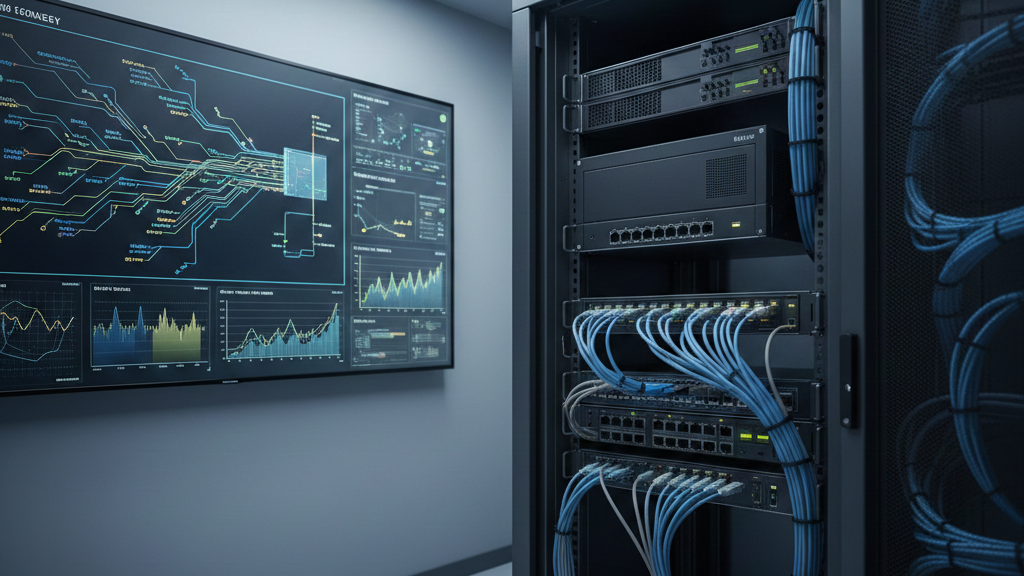
Software tools can miss critical data during a traffic spike. A network recorder appliance features won’t. It’s built to capture every single packet at full speed, no drops. This hardware witness holds the raw, unedited truth of your network’s activity.
That evidence is crucial for investigating a security breach, diagnosing a crippling outage, or proving compliance. When you need answers, you get the complete record, not fragments. The features inside transform this from a simple logger into your primary investigative tool. See what those features are.
Why Network Recorder Appliances Change Investigations
- Guaranteed Evidence: Hardware-accelerated capture ensures zero packet loss, creating a forensically sound record of all network activity.
- Instantaneous Investigation: Real-time indexing and metadata extraction let you find specific events across terabytes of data in seconds.
- Proactive Defense: Integrated analytics and intelligent filtering turn passive recording into an active tool for network threat detection and performance baselining.
When a Network Recorder Appliance Reveals the Full Story
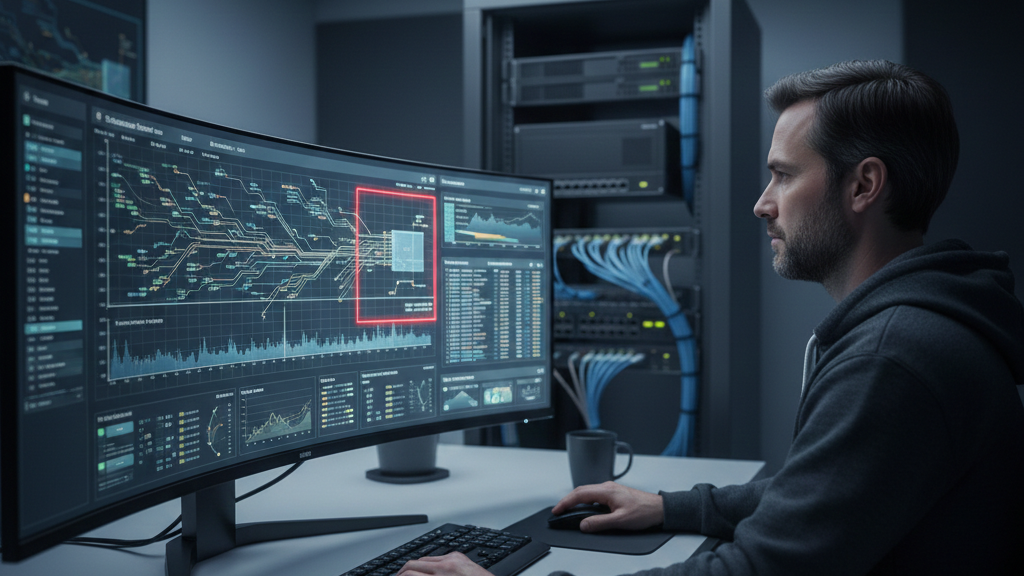
We first used a network recorder in a tight data center. It was a humming 1U box next to our main switch. We were tracking a latency spike our usual tools couldn’t see. We used the recorder’s timeline, found the exact two minutes, and replayed the traffic.
“Every user and device has to communicate over the network, so with NDR, you have an appliance silently recording a copy of all of that traffic. Notably, the network provides security teams with the highest fidelity data source for early threat detection and forensic investigation. The network can’t be compromised or disabled by attackers the way logs and endpoint agents can. It’s an immutable source of truth.” – ExtraHop
The problem was a misconfigured app flooding a queue. The appliance showed us the whole picture, organized and ready to search. That’s the real change, from guessing to knowing.
The key is lossless capture. Software on a normal server drops packets when traffic surges. The CPU gets overwhelmed. Our appliances use specialized hardware to avoid this. Data goes straight from the network to fast storage without stopping.
They handle full speeds of 10, 40, or 100 gigabits. This gives you a perfect record, which is often required for compliance in finance or healthcare. This complete truth is what makes our threat models and risk analysis work. We don’t base security on fragments. We see everything.
The Hardware That Never Blinks
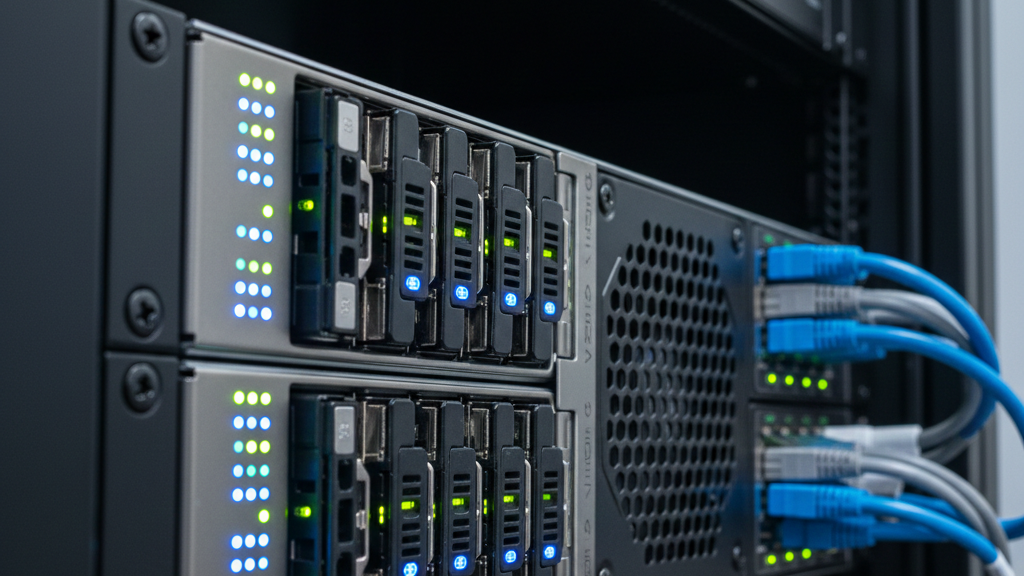
We build these boxes to run 24/7. You need constant reliability under real load, not just a peak benchmark. Our interfaces use multi-port SFP+ or QSFP28 to aggregate traffic from several taps or SPAN ports.
Timestamping happens in hardware with nanosecond precision. This is non-negotiable. Reconstructing a security breach or a jittery call requires the exact event sequence, down to the microsecond. We’ve seen investigations fail without it.
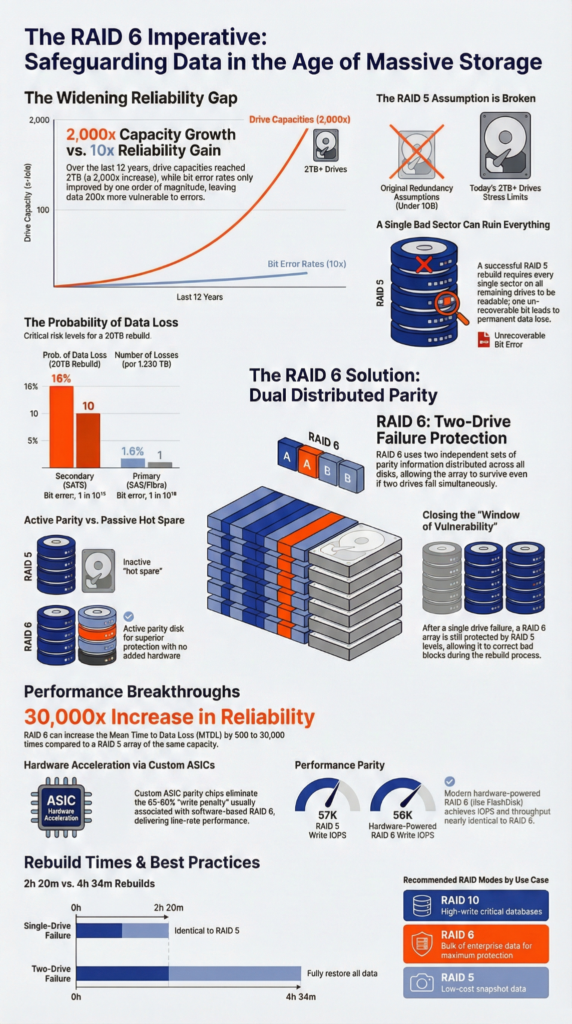
The storage makes it professional. It’s about write speed, redundancy, and integrity. Our models use RAID-configured NVMe or SSD arrays for the massive IOPS needed for non-stop recording.
We implement RAID-6 so a drive failure doesn’t destroy your evidence. Drives are hot-swappable for zero-downtime maintenance. The system uses a FIFO ring buffer, overwriting old data per your retention policy so you never manually run out of space.
This precise, uninterrupted data feed is what powers our threat models. We can’t analyze risks with broken timelines. Our tools need the complete story.
From Raw Data to Real Answers
Recording every packet is just the first step. What really matters is finding the right information when something goes wrong. We’ve seen teams struggle with huge amounts of traffic where simple questions took hours to answer. With real-time indexing, they can now search network activity in seconds and quickly understand what happened.
“Full packet capture provides a network defender an after-the-fact investigative capability that other security tools cannot provide. Additionally, full packet capture allows for retrospection: replaying old traffic through new detection signatures. Retrospection can be used to determine if exploitation occurred before a detection signature or before a patch is released.” – SANS Institute
This makes everyday work easier:
- Track traffic from a specific IP or application
- Replay incidents to see the exact cause
- Spot unusual behavior as it happens
As visibility improves, security gets stronger too. Since all traffic is already captured, teams can detect threats in real time instead of after damage is done. We support this with our own threat models and risk analysis tools to help identify risks early.
For performance issues, teams can also review sessions to find delays, errors, and misconfigurations with clear evidence instead of guesswork.
Building Your Own Versus Buying Purpose-Built
This question comes up a lot, especially in technical forums and cost-focused teams: can we just build our own recorder? In theory, yes. We’ve seen setups using powerful servers, fast network cards, and large storage arrays work in small labs or low-traffic environments. But once traffic scales and uptime matters, purpose-built appliances almost always perform better. The difference isn’t just raw hardware, it’s how everything is engineered to work together reliably.
In real-world use, DIY systems often hit CPU bottlenecks and disk slowdowns above 10 Gbps. Tuning the operating system, capture software, and storage becomes a full-time job. With appliances, those problems are already solved.
| Aspect | DIY Server Build | Purpose-Built Network Recorder Appliance |
| Packet Capture Reliability | Packet drops during traffic spikes | Zero-loss hardware-accelerated capture |
| Performance at High Speeds | Struggles above 10 Gbps | Designed for 10–100+ Gbps continuously |
| System Optimization | Manual tuning required | Fully optimized hardware and software |
| Maintenance | You handle failures and updates | Hot-swappable drives and health monitoring |
| Long-Term Cost | Often grows unexpectedly | Predictable and support-backed |
They include redundant power, hardware health monitoring, and interfaces designed specifically for continuous capture. Many teams also discover that building a stable DIY solution costs far more than expected.
The Evolving Role in Your Security Stack
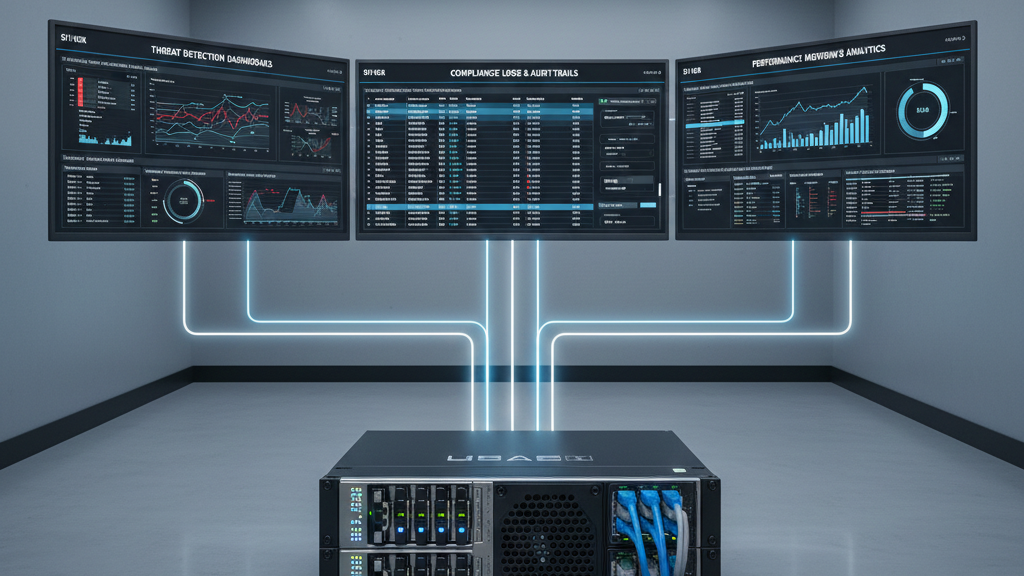
Over time, we’ve seen network recorder appliances grow into far more than capture tools. They become the foundation of network visibility. When alerts fire or outages happen, they provide the exact evidence of what occurred instead of assumptions.
They also support compliance, remote investigations, and long-term analysis. With built-in resiliency like battery backup and redundant components, recording continues even during disruptions. In practice, this turns network history into a dependable security asset rather than just stored data.
FAQ
How do network recorder appliance features improve video storage and reliability?
Network recorder appliance features use high-density storage, RAID storage, and hard drive mirroring to protect video streams from data loss. These recording solutions manage storage space efficiently while supporting multi-channel recording from network cameras and IP cameras.
With field-replaceable hard drives and redundant power supplies, appliances keep surveillance systems running even during hardware failures or power disruptions.
What role do PoE ports play in modern network recorder appliance features?
PoE ports allow network recorder appliances to power IP cameras directly through network cables using Power over Ethernet. This removes the need for separate power sources and simplifies security camera system installation.
PoE NVR systems support seamless integration with network cameras, reduce wiring complexity, and ensure stable video recording solutions across the local network.
How do AI-powered alerts enhance network recorder appliance security features?
AI-powered alerts use video analytics, face detection, motion detection, and license plate recognition to identify suspicious activity in real time. These smart detection tools monitor video streams continuously and send motion activated push notifications to security teams.
This helps reduce manual monitoring, improves response times, and strengthens end-to-end security for physical surveillance environments.
Can network recorder appliance features support remote viewing and disaster recovery?
Yes, most network video appliances include remote access and remote viewing through web management UI or smartphone security camera apps. They also support hybrid cloud capability, cloud storage backups, and local storage for disaster recovery.
This ensures video surveillance recording remains accessible even during system failures, network outages, or physical damage.
Final Analysis on Network Recorder Appliances
The value of a network recorder is the truth it holds. In a world of complex threats and outages, the ability to go back and see exactly what happened isn’t optional. The right appliance gives you that power without compromise, silently waiting for the moment you need answers.
This complete historical record is the perfect foundation for our proactive threat analysis. It turns your network’s past into your security team’s greatest asset.
See how this data powers proactive threat models.
References
- https://www.extrahop.com/blog/what-is-network-detection-and-response-NDR
- https://www.giac.org/paper/gcia/9924/implementing-full-packet-capture/130794