
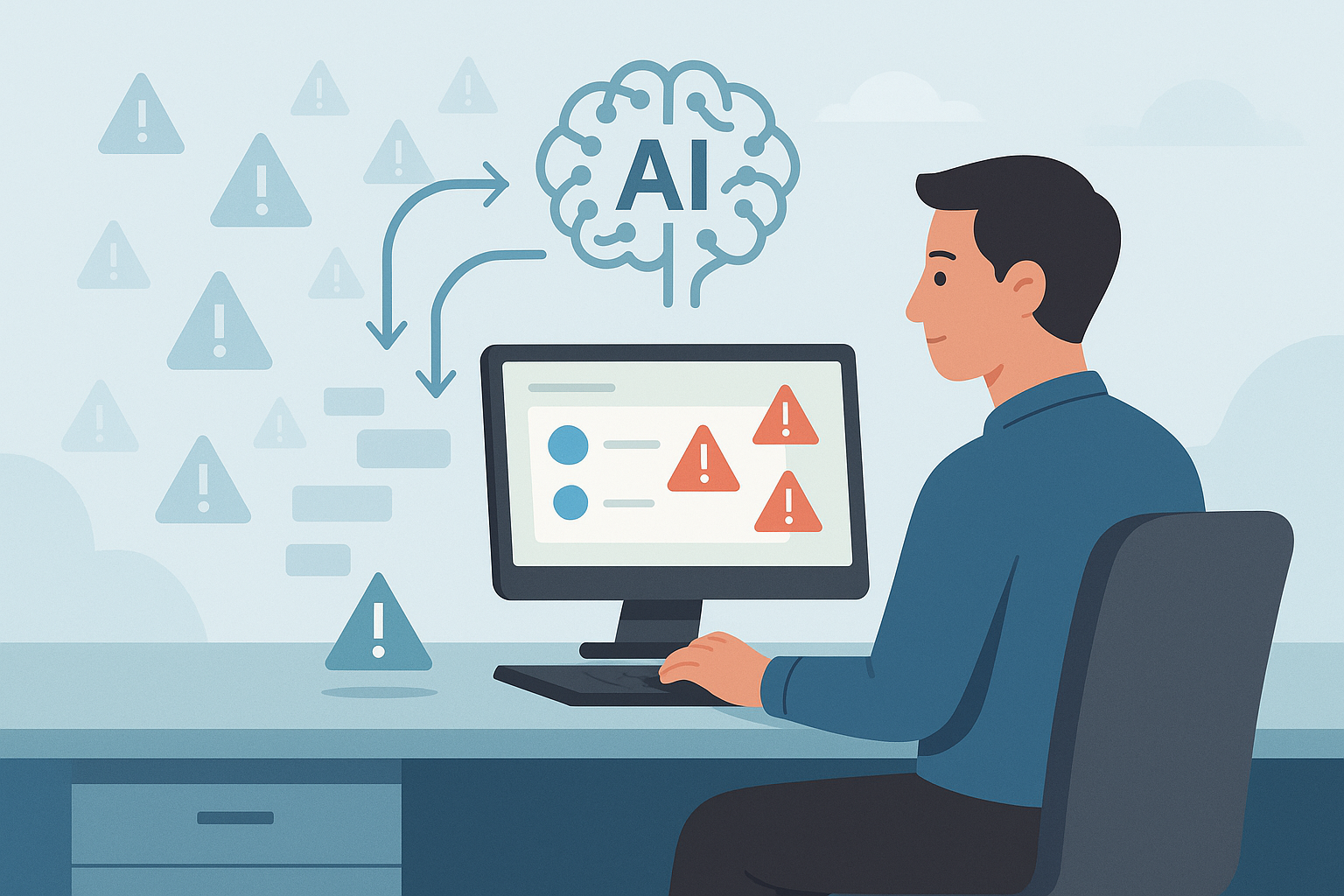
AI helps security teams cut through noisy alerts by learning what real risk looks like, not just what trips a rule.
Instead of flooding analysts with every minor trigger, it studies patterns in your environment, then flags only the behavior that actually seems suspicious.
So harmless spikes, routine changes, and odd-but-normal activity don’t derail your day. The focus shifts from chasing false positives to spotting real attacks earlier, with better context around each alert.
Keep reading to see how this works in practice and how you can start bringing this kind of intelligence into your own SOC.
Key Takeaways
- AI establishes dynamic behavioral baselines, moving beyond rigid, rule-based systems.
- Contextual analysis and adaptive thresholds filter out benign activity automatically.
- Integration with SIEM and SOAR automates triage, freeing analysts for critical work.
The Exhausting Toll of Constant False Alarms
Imagine a fire alarm that goes off every time someone makes toast. You’d soon stop paying attention. That’s the reality for many security analysts buried under false positives.
They spend hours, sometimes the majority of their shift, investigating alerts that turn out to be nothing. This wasted effort has a real cost [1].
It’s not just about time. The psychological toll, the alert fatigue, is immense. When every alert looks like a potential crisis, your team becomes desensitized.
The risk isn’t just wasted effort, it’s the one real threat that gets ignored amid the noise. Some studies suggest over 70% of alerts are false positives, a staggering drain on resources and morale.
How AI Learns What’s Normal and What’s Not
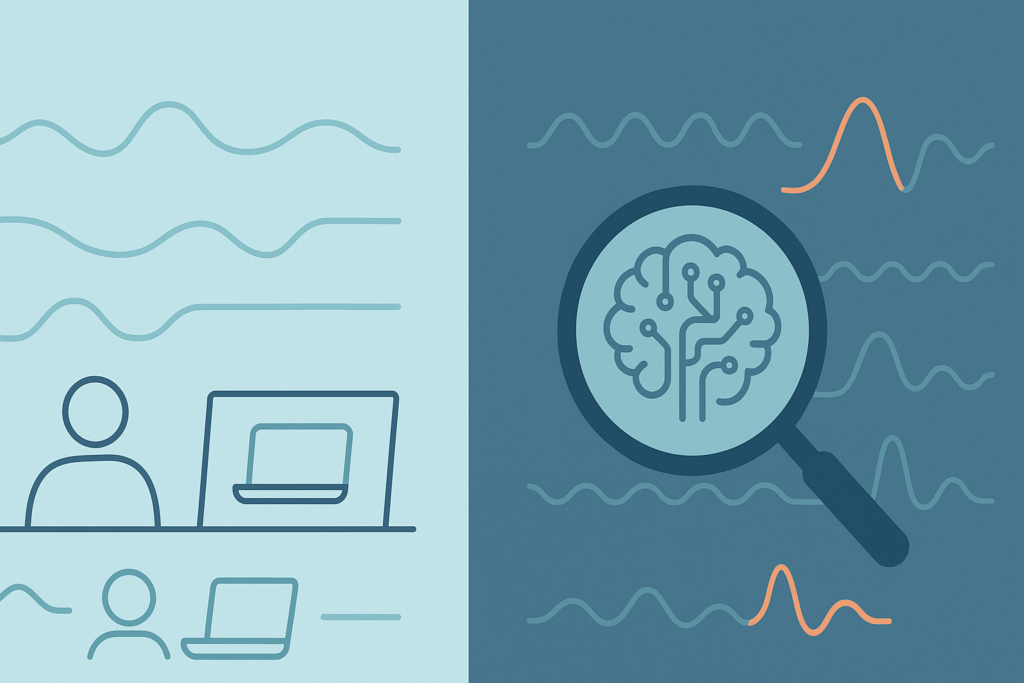
The core of AI’s power lies in its ability to understand context. Traditional rules are binary. A login from a new country is flagged, period.
But what if that employee is on a sales trip they logged in the system? AI can incorporate that context, correlating data from HR systems, travel calendars, and past behavior.
It builds a baseline of normal activity for every user and system. This isn’t a static snapshot. It’s a living model that adapts.
End-of-quarter financial activity might cause a spike in database access, which would trigger a standard rule. An AI model learns this pattern, recognizing it as legitimate business fluctuation, not a threat.
Underlined: This continuous learning and adaptive behavior are key features of supervised learning threat detection, where AI evolves by incorporating analyst feedback and environmental changes.
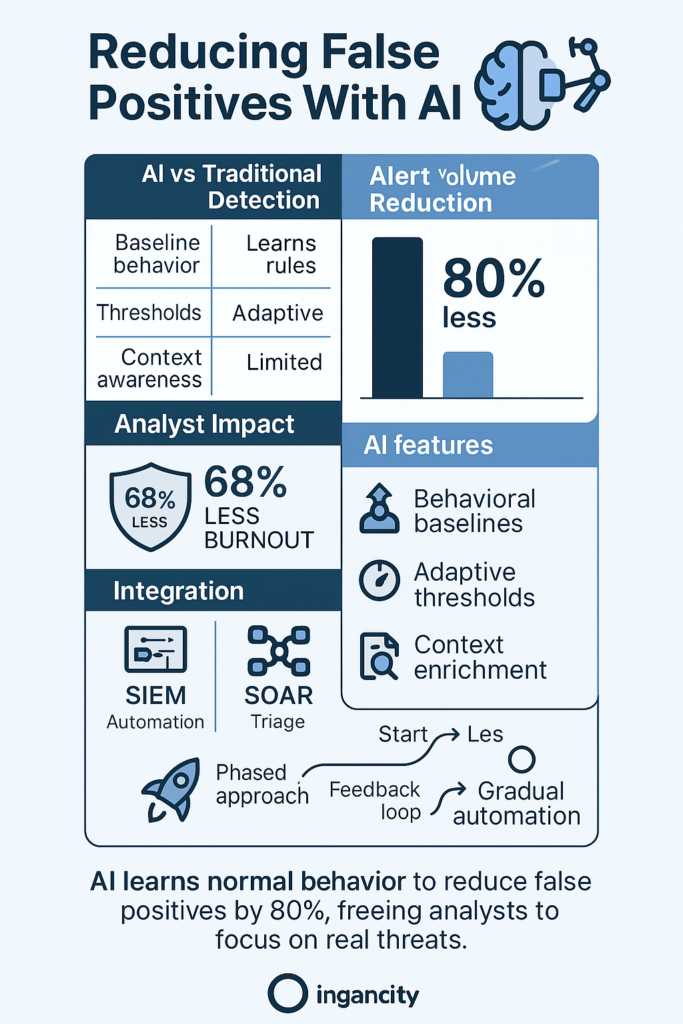
- Behavioral Baselines: ML models continuously learn typical patterns for users, devices, and networks.
- Adaptive Thresholds: Alert triggers adjust dynamically based on real-time feedback and broader threat intelligence.
- Context Enrichment: Factors like time of day, resource sensitivity, and sequence of actions create a risk score.
This approach is fundamentally different. It’s less about finding a needle in a haystack and more about understanding the composition of the haystack itself. The anomalies that stand out are the ones that truly warrant a closer look.
| Aspect | Traditional Rule-Based Detection | AI-Driven Detection |
| Baseline behavior | Fixed and manually defined | Continuously learned from real activity |
| Alert thresholds | Static thresholds | Adaptive thresholds based on context |
| Handling normal spikes | Often flagged as alerts | Recognized as expected behavior |
| Context awareness | Limited or none | Uses user, device, and timing context |
| False positive rate | High in dynamic environments | Significantly reduced over time |
Integrating Intelligence into Your Security Stack
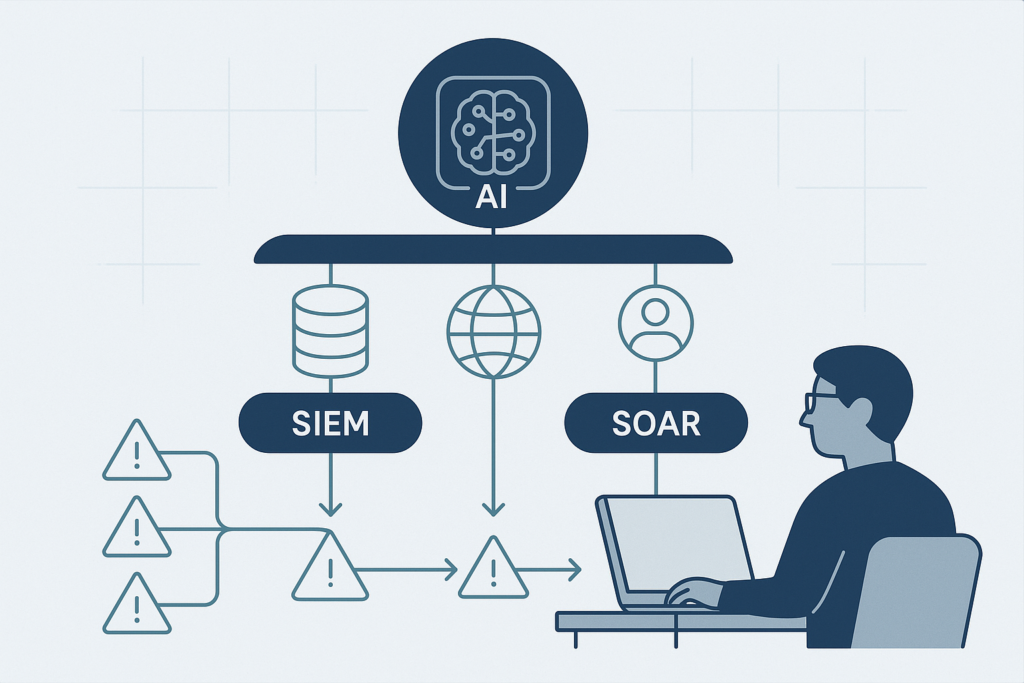
This intelligence gets its real power when woven into the tools you already use, like your SIEM (Security Information and Event Management) system.
A traditional SIEM relies heavily on rules written by humans. It’s good, but it can’t see the nuances an AI model can. By enhancing your SIEM with AI, you move from detecting known-bad patterns to identifying suspicious behaviors based on learned baselines.
The next level is automation through SOAR (Security Orchestration, Automation, and Response). Here, AI doesn’t just find the signal, it helps manage it.
Low-risk alerts, those with a low confidence score from the AI model, can be automatically triaged or even suppressed.
Underlined: This is a prime example of how integrating machine learning & AI in NTD strengthens your security stack by automating alert triage and reducing analyst workload.
Case studies show up to 92% reductions in authentication false positives just by implementing this kind of intelligent filtering. This frees your human analysts to focus on the high-fidelity alerts that actually matter.
Predictive analytics take it a step further. By analyzing trends and correlating weak signals, AI can sometimes anticipate a threat before it fully materializes. This proactive stance is the ultimate goal, shifting the balance from reacting to alerts to preventing incidents.
A Practical Path to a Quieter SOC
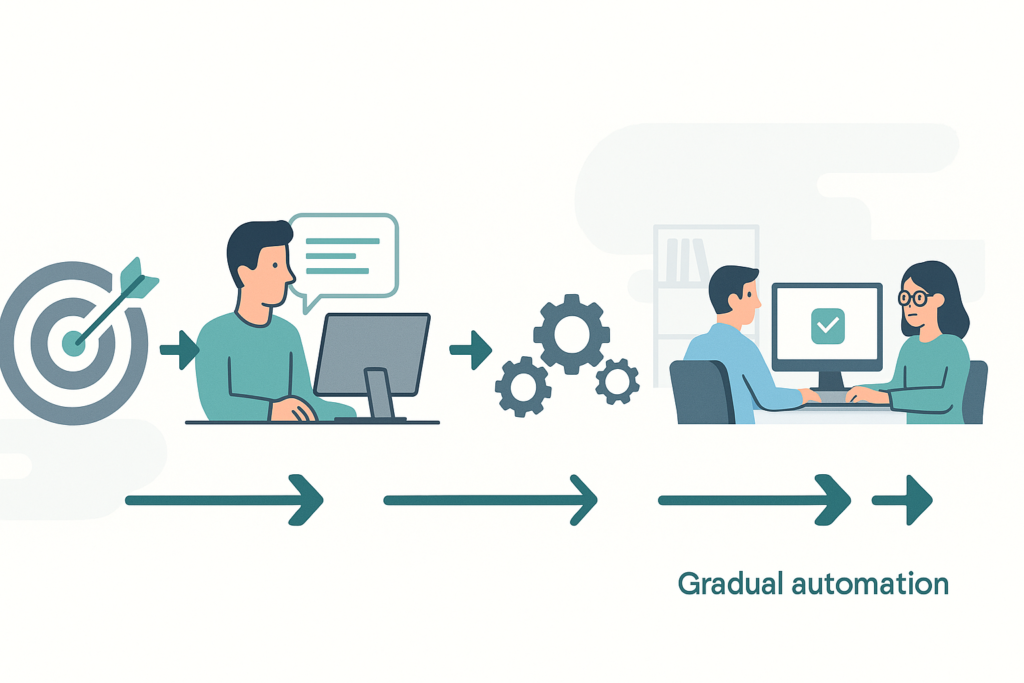
Some of the most meaningful changes in a SOC don’t come from big, dramatic shifts, they come from small, focused moves that actually stick. You don’t need to rebuild your entire operation in one go.
A phased approach usually lands better with both people and tools. Start with one well-defined project instead of trying to fix every alert at once:
- Pick a high-risk, high-noise area (like privileged user access or external logins).
- Apply supervised learning to that narrow use case.
- Feed the model real outcomes from analyst investigations [2].
Your analysts’ feedback, their tickets, notes, and final calls on alerts, becomes the fuel that sharpens the model.
This feedback loop is the difference between a static tool and a system that actually learns your environment. In the first month, seeing a 15–20% drop in false positives for that specific use case is a reasonable expectation, not a stretch goal.
From there, context becomes the next lever. Integration isn’t just a technical detail, it’s how the AI makes smarter choices. You can:
- Connect the AI-driven system with identity management platforms.
- Pull in data about user roles and access patterns.
- Tie in device security posture and asset sensitivity.
So when a user connects to a sensitive financial server from a new device, the system doesn’t just scream “new login.” It can weigh:
- Who the user is and what they usually access.
- How secure the device appears to be.
- How sensitive that server is compared with others.
All of that rolls up into a single, prioritized risk score, instead of a flood of separate alerts that each demand attention.
Automation comes last, not first. The goal isn’t to flip a switch and let the system auto-close everything. A slower ramp builds trust:
- Start with AI-generated recommendations for analysts.
- Let your team review, accept, or override those suggestions.
- Watch how often the model aligns with human judgment.
As accuracy improves and your analysts grow comfortable with the pattern of decisions, you can begin to automate more of the triage flow for low-risk events, while keeping humans squarely in charge of sensitive or ambiguous cases.
This kind of measured rollout quiets the SOC without trading away control, giving your team space to focus on the real threats rather than the loudest alerts.
The Tangible Results of an AI-Assisted Team
The outcome isn’t just a theoretical improvement. Organizations report drops in alert volume of 80% or more. That’s not just a number on a dashboard.
It’s time given back to your team. Time that can be spent on threat hunting, improving security posture, and investigating genuine incidents with greater depth. True incidents are resolved up to 4.5 times faster because they’re not lost in the clutter.
Perhaps the most significant benefit is human. Analyst burnout decreases dramatically, by as much as 68% in some cases. Job satisfaction and retention improve.
Your security team stops being alert janitors and starts being cybersecurity professionals. They can do the complex, rewarding work they were hired for. AI acts as a force multiplier, handling the tedious work of sifting through noise so your experts can focus on the signal.
Underlined: This shift from manual noise filtering to intelligent action exemplifies the benefits of leveraging deep learning for network security as an AI assistant in cybersecurity operations.
Making the Shift to Smarter Security
Reducing false positives with AI isn’t some far-off dream, it’s already within reach. Modern systems can learn the unique rhythm of your environment, use deeper context, and work alongside the tools that already anchor your security stack. The shift doesn’t have to be dramatic or risky. It usually starts small and grows from there:
- Pick a narrow use case first, like triaging noisy alerts.
- Let your team guide and refine the models based on real incidents.
- Expand only when you trust the results and understand the limits.
Done well, this kind of AI support leads to a security operation that’s more efficient and steadier under pressure. Your analysts deal with fewer distractions, spend less time chasing harmless alarms, and keep their attention on threats that actually move the needle. A simple first move:
- Identify your noisiest alert source.
- Map out what “real” versus “false” looks like in that stream.
- Test how AI can filter, cluster, or prioritize those alerts.
From there, you’re not just adding another tool, you’re reshaping how your team spends its time, so the work matches the risk.
FAQ
How does AI-driven false positive reduction work in daily security operations?
AI-driven false positive reduction works by building baseline behavior modeling through continuous learning security systems.
It uses behavioral analytics security, contextual threat analysis, and multi-source telemetry analysis to understand normal activity.
ML-based threat scoring, dynamic thresholding security, and confidence-based alerting then reduce false alerts in cybersecurity without disrupting legitimate user behavior.
Can machine learning reduce alert fatigue without missing real attacks?
False positive mitigation using machine learning reduces alert fatigue reduction by combining supervised learning alert filtering with unsupervised anomaly validation.
Hybrid ML security models apply risk-based alerting, precision threat detection, and probabilistic threat modeling.
This process produces high-fidelity alerts through intelligent alert prioritization and real-time alert scoring, while still detecting genuine threats.
How does context help reduce noise in security alerts?
Context-aware security analytics improves detection by adding AI-enhanced threat context such as user role, time, device, and asset sensitivity.
Event correlation engines use threat signal enrichment and smart correlation rules to link related events.
This approach enables noise reduction in security alerts, security alert deduplication, and trust scoring security events for clearer decisions.
How do AI security models remain accurate as behavior changes?
AI systems stay accurate through security model retraining, machine learning model tuning security, and drift-aware detection models.
Adaptive security models rely on feedback loop SOC automation and analyst-in-the-loop AI to refine decisions.
This process supports adaptive detection thresholds, AI-driven IDS optimization, and UEBA false positive reduction as environments evolve.
How does AI improve SIEM and SOC performance beyond filtering alerts?
AI SIEM optimization improves AI-powered SOC efficiency by enabling automated alert classification and AI-powered incident triage.
False positive suppression techniques increase security automation accuracy. Feature importance security models and interpretable ML for SOC support explainable AI security alerts, allowing machine-assisted security operations with high-precision cybersecurity analytics.
From Alert Noise to Actionable Signal
False positives don’t just waste time, they weaken security. AI offers a proven way out by learning normal behavior, applying context, and prioritizing risk with far greater precision than static rules ever could.
When integrated thoughtfully with SIEM, SOAR, and analyst feedback, AI transforms the SOC into a calmer, more proactive operation. Start small, build trust, and scale intelligently. See how Network Threat Detection helps reduce false positives and sharpen real threat visibility.
References
- https://www.contrastsecurity.com/hubfs/The-Truth-About-AppSec-False-Positives_White%20Paper_06042020_Final.pdf
- https://arxiv.org/abs/2206.03585