

Network security teams rely on pattern matching to catch threats, just like cops matching fingerprints at a crime scene. The system keeps a running list of malware signatures, strings of code that mark the bad stuff. When something matches, red flags go up.
But here’s the catch: change a few lines of that malicious code, and it might slip right through. New threats? They won’t show up on any watchlist yet. Some attackers even build their code to dodge these checks entirely. Ready to dig deeper into making this security tool actually useful? Let’s go.
Key Takeaways
- Signature-based detection is fast and accurate for known threats but struggles with new, unknown attacks.
- Regular updates and tuning of the signature database are essential to maintain detection reliability.
- Complementary methods like anomaly detection help cover gaps signature-based systems leave open.
How Signature Based Detection Works
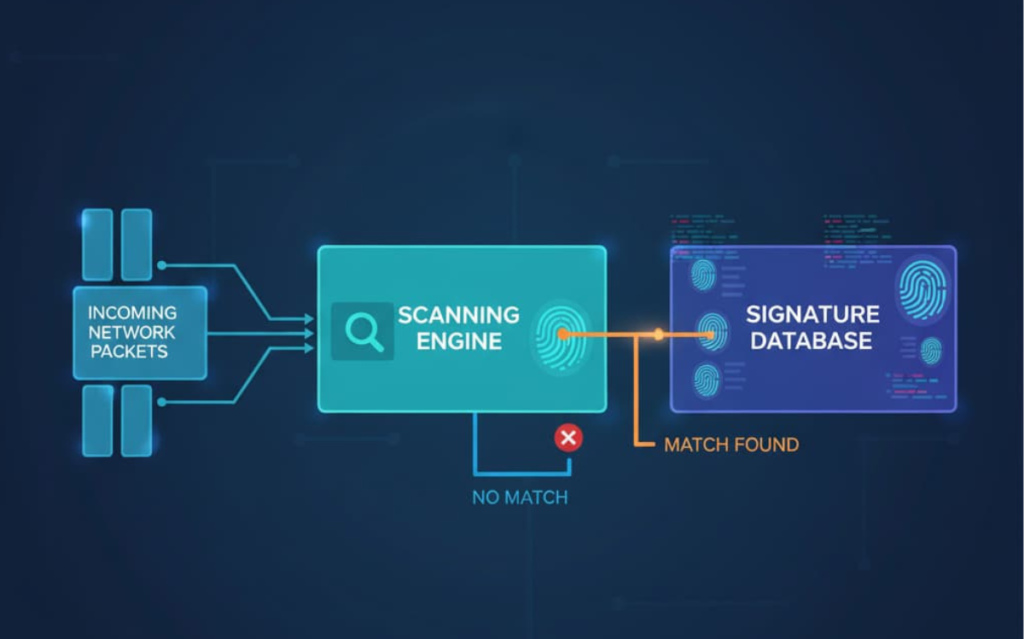
Every day, we scan mountains of data hunting for digital fingerprints left by malware. These “signatures” aren’t random, they’re specific patterns our systems recognize from past threats. NTD technologies methods explained, picture a customs officer checking passports against a watch list. That’s basically what happens when traffic hits an intrusion detection system (IDS).
The scanning happens fast, because it has to. Network defenders can’t afford delays when malware’s knocking at the door. Our detection engines run through their signature matching, comparing suspicious files against a massive database of known bad code. When something clicks, the system jumps into action.
Here’s what makes it tick:
- Teams pull unique patterns from captured malware samples
- These signatures get stored and shared in threat databases
- Live traffic gets checked against these patterns
- Systems block or alert when they spot matches
Working with SOC teams across different industries, we’ve seen how critical speed becomes when you’re processing terabytes of traffic. Signature detection just works – it’s predictable, reliable, and doesn’t bog down the network.
Pros and Cons of Signature Detection
After years in the trenches, we’ve learned exactly where signature detection shines and where it falls short. Our clients rely on it because it’s precise and battle-tested.
The good stuff:
- Catches known threats without crying wolf
- Keeps up with heavy network traffic
- Built on decades of real-world experience
- Regular signature updates from the security community
But let’s be real, it’s not perfect. New threats slip through until someone adds their signature to the database. Smart attackers mess with their code to dodge detection. We’ve watched malware evolve, using tricks like polymorphism to hide its tracks.
Security teams know better than to put all their eggs in one basket. That’s why most of our deployments pair signature detection with behavior analysis. One catches the known stuff, the other spots weird activity that might signal something new.[1]
Creating Custom IDS Signatures
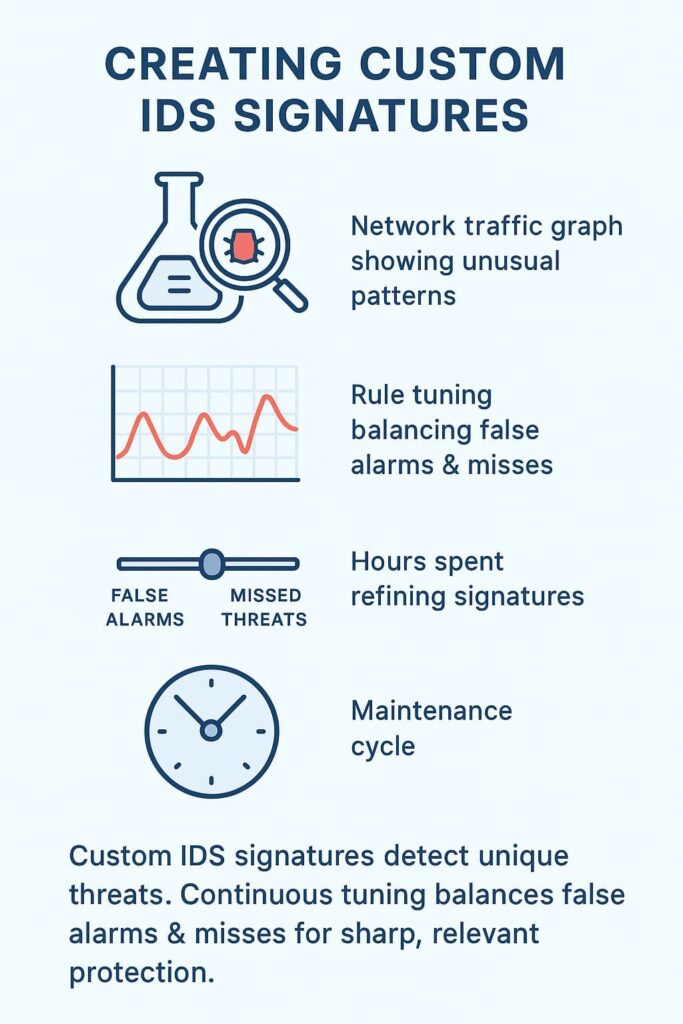
When off the shelf solutions miss the mark, we roll up our sleeves and build custom signatures. Maybe there’s a specific threat targeting your industry, or unusual traffic patterns that spell trouble for your network.
The process starts in our lab. We grab suspicious files or capture odd network behavior, then dig in to find what makes it unique. Those distinct patterns become new detection rules. But writing signatures is more art than science, too loose and you’ll drown in false alarms, too strict and threats slip by.
Our analysts spend countless hours fine tuning these rules. We’ve learned the hard way that signature maintenance never stops. Old rules need updates, thresholds need tweaking, and sometimes you just have to trash signatures that cause more trouble than they’re worth. This constant refinement keeps our detection sharp and relevant.
Maintaining Signature Database Updates
The malware landscape shifts daily, and our signature databases must keep pace. Like changing passwords or updating apps, fresh signatures are critical for catching new threats. We’ve seen firsthand how outdated databases leave blind spots that hackers love to exploit.
Our security teams run updates on a tight schedule – usually daily, sometimes more if there’s an urgent threat. But it’s not just about dumping new signatures into the system. Each update needs careful handling to avoid bogging down detection or triggering false alarms.[2]
Key maintenance tasks we handle:
- Testing new signatures before they go live
- Tweaking detection rules for our clients’ environments
- Cleaning out old signatures that just create noise
- Balancing update frequency with system performance
Limitations Against Zero-Day Threats
Here’s the hard truth about zero-days, you can’t detect what you’ve never seen. These attacks exploit fresh vulnerabilities, catching everyone off guard. We’ve watched sophisticated attackers slip past signature detection by morphing their code or encrypting the nasty bits.
Think of it like trying to catch a criminal with no prior record. There’s no mugshot, no fingerprints, nothing to match against. That’s why we never let clients rely on signatures alone. Our threat detection combines multiple approaches, signatures catch the known stuff while behavior monitoring spots the weird activity that might signal something new.
Detecting Known Malware Signatures
Credits: SecurityFirstCorp
For all its blind spots with zero-days, signature detection nails it when spotting known threats. These signatures work like DNA evidence at a crime scene – when you find a match, you know exactly what you’re dealing with.
The system churns through network traffic, comparing everything against its database of bad code. Clean matches trigger instant alerts. We’ve fine-tuned this process over years of deployment, cutting down false alarms that waste analysts’ time.
Our detection engines handle this heavy lifting 24/7, flagging matches with high precision. That reliability makes signature detection a cornerstone of network defense, not the whole wall, but definitely the foundation.
Signature Evasion Techniques Used by Attackers
We’ve watched attackers get creative over the years, pulling tricks to dodge signature detection. Some of these techniques are pretty clever – frustrating, but clever.
Take polymorphic malware, it’s like a virus that puts on a new disguise every time it spreads. Each copy looks different to our scanners, but does the same damage. Other attackers scramble their code into gibberish or split it into harmless-looking chunks that only become dangerous when reassembled.
Common evasion tricks we face:
- Code that rewrites itself on every run
- Malware wrapped in layers of nonsense code
- Encrypted payloads that hide the bad stuff
- Malicious code split into innocent-looking pieces
Compensating Controls for Signatures
No single security tool catches everything, that’s just reality. Our defense strategy layers different approaches to cover each other’s blind spots.
We’ve built a toolkit that goes beyond simple signature matching:
- Watching how programs actually behave, not just what they look like
- Flagging network traffic that doesn’t fit normal patterns
- Testing suspicious files in isolated environments
- Looking for sketchy behavior traits instead of exact matches
These layers work together. When signature detection misses something sneaky, behavioral analysis often catches it acting suspicious. It’s not perfect, but it makes attackers work a lot harder to cause trouble.
Tuning Signature-Based Alerts

Alert fatigue is real, we’ve seen good analysts burn out from chasing too many false alarms. Getting the balance right takes constant attention.
Our tuning process focuses on:
- Setting the right alert thresholds for each client
- Building safe-lists for legitimate traffic
- Ranking alerts by actual threat level
- Dumping or fixing signatures that cry wolf
Every environment’s different, so we adjust these settings based on what we see in the field. The goal’s simple: catch real threats without drowning in noise. It’s like tuning an instrument, you keep tweaking until it sounds just right.
FAQ
What makes signature-based detection work in a real network?
Signature-based detection works by comparing files or network traffic against a signature database filled with IDS signatures, malware signatures, and cyberattack signatures. The signature matching process looks for a malware fingerprint or malware pattern recognition that signals known threat detection. This method is simple to understand, but it needs steady signature updates to stay useful.
How do false positives happen in an intrusion detection system?
False positives often appear when IDS alert systems rely on broad signature rule sets or noisy signature scanning. A tight signature rule may still misread normal network traffic analysis as a threat signature. Good signature tuning, signature accuracy checks, and compensating controls help reduce mistakes, but some signature-based alerts will still trigger by accident.
Why can zero-day threats slip past signature-based defense?
Zero-day threats can bypass a signature-based intrusion detection setup because no malware signature or threat signature analysis exists yet. The system depends on signature extraction and signature creation from older attacks. Without that data, signature limitations show up. Blending signature and anomaly combined methods or behavioral detection can help when signature evasion happens.
How do teams keep signature performance strong over time?
Teams improve signature performance by doing regular signature update schedules, signature maintenance, and signature calibration. They also monitor signature detection speed, signature performance metrics, and signature detection efficiency to catch gaps. Good signature management, along with signature accuracy enhancement and signature alert tuning, helps an intrusion prevention setup stay responsive.
When should you use custom IDS signatures?
Custom IDS signatures help when built-in signature detection software misses local risks. They’re useful for unique network security needs, signature architecture changes, or signature detection challenges. Custom rules strengthen signature coverage, support signature-based attack detection, and fix signature false negatives. They also help when signature-based system pros cons show limits in standard rule sets.
Conclusion
Network defense isn’t rocket science, catch what you know, watch for what you don’t. Signature detection nails the known threats fast, like a cop spotting a familiar face. But new attacks slip through these nets daily. We’ve learned to layer our defenses: sharp signature rules, behavior monitoring, and constant database updates.
No single tool catches everything, but mix them right and you’ve got a solid shield. That’s what keeps networks running while attackers scramble.
If you want to strengthen your defenses with real-time threat modeling, automated risk insights, and continuously updated intelligence, explore what NetworkThreatDetection.com can do for your team. Try it here!
References
- https://www.mdpi.com/2076-3417/12/2/852
- https://arxiv.org/abs/2307.07023