

Modern network security lives inside the payload, not just in the packet headers. Attackers hide malicious code, commands, and data exfiltration inside traffic that looks completely normal on the surface, so traditional header-only checks often fall short.
Real protection means inspecting what’s actually being sent and received, using pattern matching, protocol awareness, behavioral baselines, and AI-driven anomaly detection to flag what signatures miss.
When you treat the payload as the real battlefield, you start catching subtle threats long before they trigger an alert. Keep reading to see how these inspection techniques work and where to apply them in your network.
Key Takeaway
- Payload inspection moves beyond headers to analyze the actual data content for hidden threats.
- Encryption and zero-day attacks are the biggest hurdles plus resource demands on high-volume networks, requiring advanced behavioral analysis.
- A layered approach combining signatures, heuristics, and machine learning offers the best protection.
The Evolving Threat Landscape
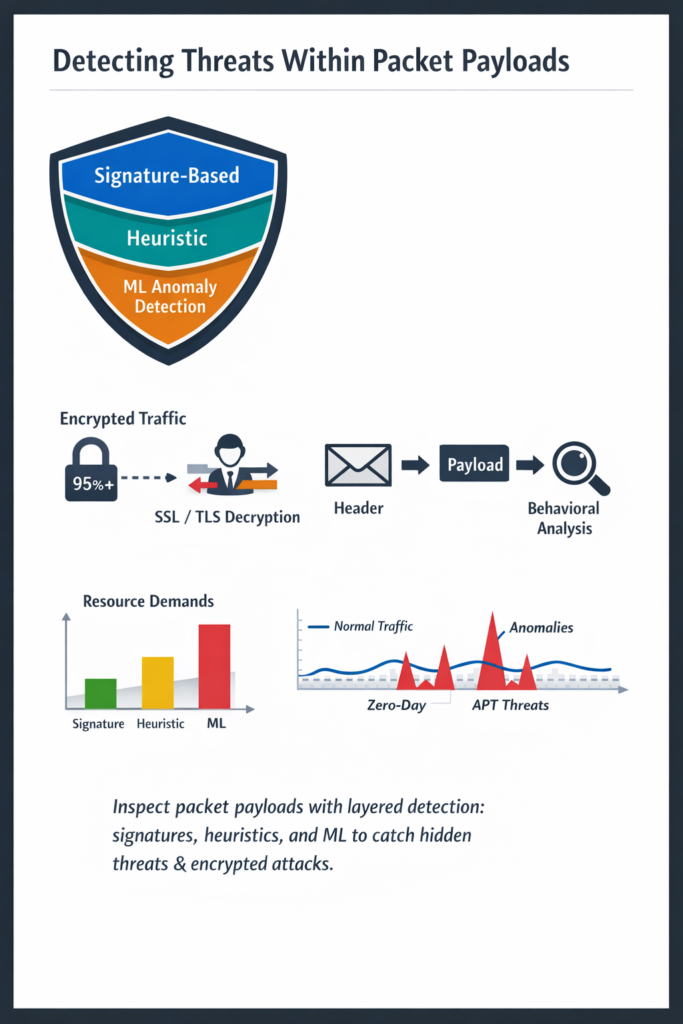
Attackers have gotten smarter. They know you’re watching the borders, so they disguise their malicious code as legitimate cargo. Think of it like a smuggler hiding contraband inside a shipment of legal goods.
The shipping label looks fine, but the contents are dangerous. This shift makes payload inspection not just an advanced feature, but a fundamental necessity. The perimeter is porous. The threat is already inside the conversation, waiting to be activated.
Basic firewalls act like border guards checking passports. They look at the header information, source, destination, port. But they don’t open the suitcase.
Deep packet inspection is the customs agent who unpacks everything, looking for prohibited items. Without this level of scrutiny, ransomware, data exfiltration attempts, and command-and-control communications slip right through. The network’s own traffic becomes its greatest vulnerability.
- Signature-Based Detection: This is the foundation. It’s like having a most-wanted list. The system scans the payload data byte-by-byte, looking for unique patterns, or signatures, of known malware. It’s highly accurate for threats we already know about.
- Anomaly-Based Detection: This is more behavioral. It learns what “normal” traffic looks like for your network. A sudden, massive upload of data from a single workstation, or a DNS query for an impossibly long subdomain, triggers an alert. It’s crucial for spotting novel, zero-day attacks.
The challenge is that these methods require significant resources. Reassembling fragmented packets to see the whole picture takes computational power. And then there’s the elephant in the room: encryption.
When Encryption Blinds Your Defenses

Modern encryption, like TLS 1.3, is a double-edged sword. It protects user privacy, but it also creates a perfect hiding spot for threats.
Your inspection tools are left staring at an impenetrable wall of ciphertext. The payload is there, but it’s scrambled. This is a major problem. Over 95% of web traffic is now encrypted (HTTPS/TLS), providing a free cloak for malicious activity.
To see inside, you essentially have to break the chain of trust. This is done through a technique called SSL/TLS decryption.
The security appliance acts as a man-in-the-middle. It terminates the encrypted session from the client, inspects the now-clear text payload, and then re-encrypts it to send to the destination server.
It’s effective, but it comes with a cost, especially in terms of the benefits of deep packet inspection in encrypted environments.
To see inside, you essentially have to break the chain of trust. This is done through a technique called SSL/TLS decryption.
The security appliance acts as a man-in-the-middle. It terminates the encrypted session from the client, inspects the now-clear text payload, and then re-encrypts it to send to the destination server. It’s effective, but it comes with a cost.
The decryption process is computationally expensive, introducing latency that can slow down legitimate business applications.
There are also serious privacy and compliance considerations. Inspecting employee traffic that may contain sensitive personal data requires clear policies and legal review.
Many organizations simply choose to bypass inspection for certain categories of sensitive traffic, a decision that creates blind spots attackers can exploit.
The Rise of the Machines in Payload Analysis
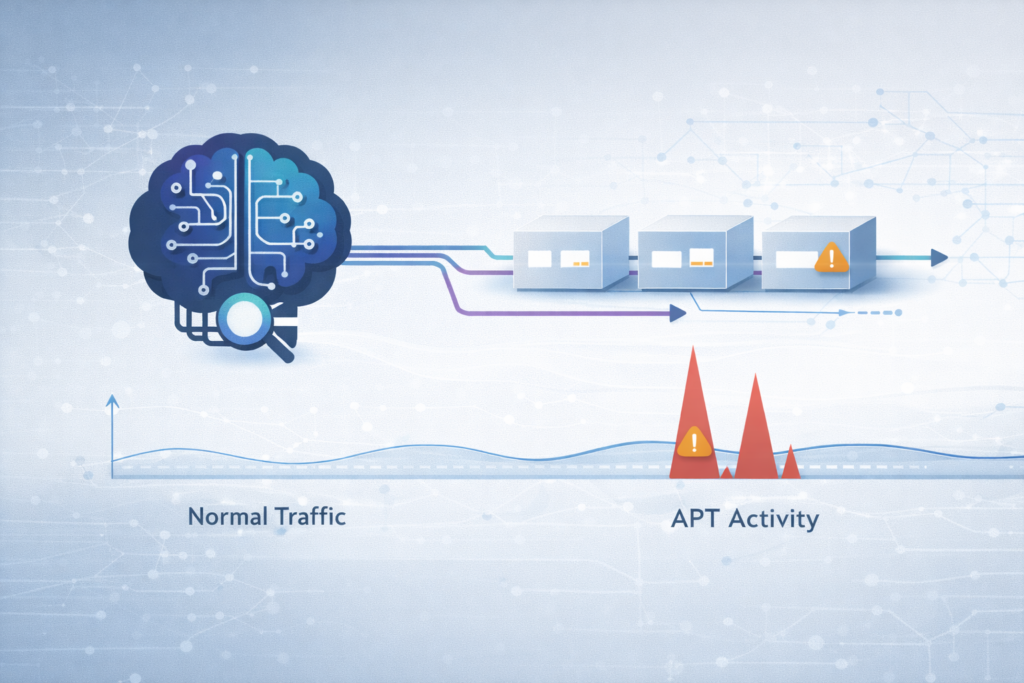
This is where machine learning changes the game. Instead of just looking for known bad things, ML models learn what good looks like.
They analyze vast amounts of network traffic to establish a baseline of normal behavior. They don’t need a signature to spot something fishy; they just know when something is out of place.
For instance, a model might learn that a particular server usually sends out HTTP requests of a certain size at a regular pace.
If that server suddenly starts sending tiny, rapid-fire requests to a new domain, the ML system flags it. This is incredibly powerful for detecting advanced persistent threats (APTs) that operate slowly and stealthily over long periods.
Many modern solutions use a hybrid approach combining ai assistant-powered anomaly detection with signatures.
For instance, a model might learn that a particular server usually sends out HTTP requests of a certain size at a regular pace.
If that server suddenly starts sending tiny, rapid-fire requests to a new domain, the ML system flags it. This is incredibly powerful for detecting advanced persistent threats (APTs) that operate slowly and stealthily over long periods.
They leave a subtle trail that pattern matching would miss, but a behavioral model can catch. These models can also analyze sequences.
They don’t just look at one packet in isolation. They look at the flow of conversation between two hosts.
A single DNS packet might be harmless, but a sequence of DNS queries that follows the pattern of a known data exfiltration technique is a major red flag. This context-aware analysis is key to defeating living-off-the-land attacks, where hackers use built-in system tools for their malicious purposes.
A Practical Look at the Toolbox
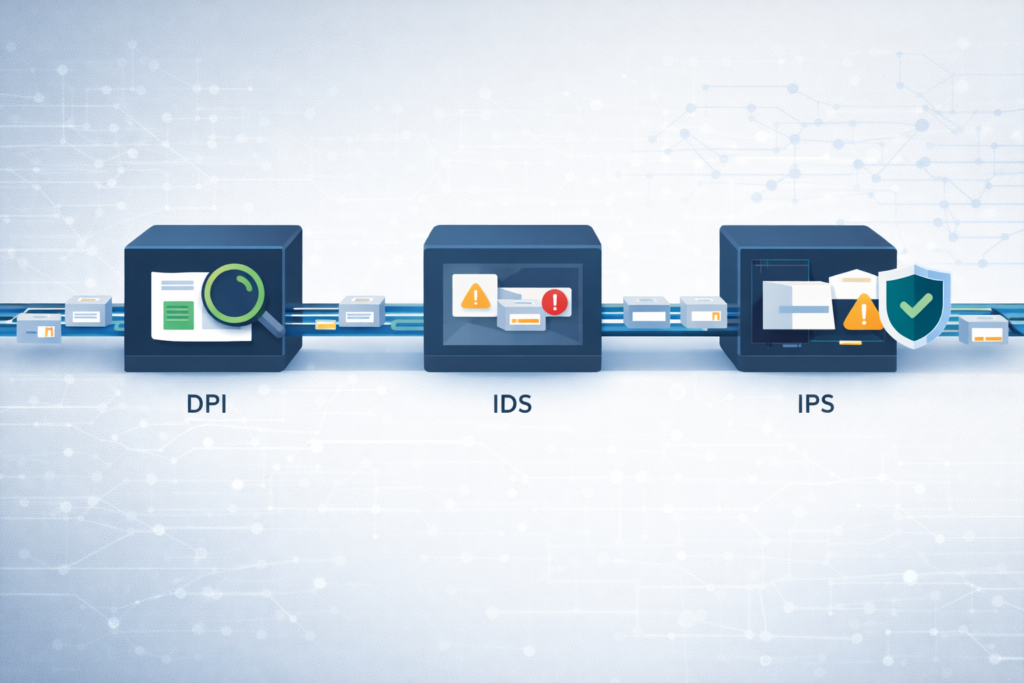
So what does this look like in practice? You’re not building these systems from scratch. You’re deploying and configuring them. Next-Generation Firewalls (NGFWs) and Intrusion Prevention Systems (IPS) are the workhorses.
They integrate DPI, signature databases, and increasingly, ML-powered anomaly detection into a single platform [1].
The choice of tool depends heavily on your goal. If you’re primarily concerned with known malware and enforcing acceptable use policies, a strong signature-based DPI system is your best bet.
It’s precise and relatively straightforward. For a Security Operations Center (SOC) focused on threat hunting and catching advanced attackers, an ML-driven approach is essential. It’s the difference between a bouncer checking IDs and a detective profiling suspicious behavior.
Many modern solutions use a hybrid approach. They use signatures for speed and efficiency on the bulk of traffic, and then route more complex or unusual traffic to a heuristic or ML-based engine for deeper analysis.
This layered defense ensures you’re covered for both the common threats and the sophisticated, targeted attacks.
- DPI & Signatures: Best for known threats, high-performance networks.
- Protocol Analysis: Ideal for finding misconfigurations and vulnerability exploitation.
- ML Anomaly Detection: Essential for zero-days, APTs, and behavioral threats.
| Tool Type | Primary Function | Payload Inspection Focus |
| Deep Packet Inspection (DPI) | Inspect packet contents inline | Malware payloads, protocol misuse |
| Intrusion Detection System (IDS) | Detect suspicious payload behavior | Anomaly detection, alerting |
| Intrusion Prevention System (IPS) | Block malicious payloads in real time | Exploit attempts, command-and-control traffic |
| ML-Based Analysis Engines | Identify abnormal payload patterns | Zero-day attacks, APT activity |
Sharpening Your Payload Detection Strategy
Catching threats inside packet payloads feels less like theory now and more like routine triage. The danger isn’t floating at the edges anymore, it’s tucked inside the data you move every second.
If an organization says it cares about security but never inspects payloads, it’s basically driving at night with the headlights off. Attackers already know this, and they’re counting on you to look away. A plan that leans on what worked last year is going to break against what shows up next week [2].
The smarter move is to lean into balance. Use the raw speed and precision of signature-based detection, but pair it with machine learning that can flag behavior that signatures haven’t caught up to yet.
Don’t ignore encrypted traffic just because it’s hard; set a clear, documented SSL inspection policy that weighs security against privacy and legal rules instead of pretending the problem doesn’t exist.
One engine, one box, one vendor will not “solve” payload inspection for you. The goal is to build a layered system where:
- Fast signature checks catch the obvious and known patterns
- Behavioral and ML-based tools notice odd or rare activity
- Context from endpoints and identity fills in the gaps
From there, you work backward. Start by auditing what you already have in place.
- Can you inspect traffic at key choke points, or only at the edge?
- Do you log enough data to investigate alerts after the fact?
- Are you blind to certain protocols or destinations?
If you can’t reliably see into your traffic, at least where policy allows it, you’re guessing, not defending. That’s the moment to dig deeper, adjust your controls, and reshape your payload detection strategy so it matches the threats that are actually out there, not the ones you wish you had.
FAQ
How does deep packet inspection differ from basic network traffic inspection?
Deep packet inspection examines packet payload analysis at the application layer instead of stopping at headers. It uses protocol decoding, payload pattern matching, and content-aware security to understand what the data actually contains.
Basic network traffic inspection checks addresses and ports only, while deep traffic analysis enables malicious payload detection, exploit detection, and network-based malware detection across live traffic flows.
How can encrypted traffic analysis detect threats without exposing sensitive data?
Encrypted traffic analysis identifies threats by examining encrypted payload visibility signals rather than raw content.
Methods include SSL/TLS decryption inspection where policy allows, along with behavioral payload analysis, payload entropy analysis, and protocol anomaly detection.
These techniques evaluate packet size, timing, flow sequence, and command and control payloads to detect data exfiltration and evasion techniques while respecting privacy requirements.
What methods help reduce false positives in payload-based intrusion detection?
Reducing false positives requires combining signature-based detection, anomaly-based detection, and heuristic analysis.
Signatures identify known malware payload analysis patterns, while behavioral payload analysis establishes normal traffic baselines.
Protocol compliance checking and regex-based payload inspection narrow alerts. Adding network forensics context and structured threat hunting in payloads improves accuracy and reduces unnecessary investigations.
How does real-time packet inspection support zero-day and APT detection?
Real-time packet inspection analyzes traffic inline using application layer inspection and protocol anomaly detection.
This approach supports zero-day payload detection and advanced persistent threat detection by identifying unusual traffic sequences, payload obfuscation detection, and polymorphic malware detection.
Continuous inspection allows defenders to detect suspicious behavior during active communication instead of relying on delayed, signature-only alerts.
Which payload inspection areas matter most for everyday enterprise traffic?
Enterprise environments benefit most from web payload inspection, email payload scanning, and file transfer payload analysis.
HTTP payload analysis, DNS payload inspection, and SMB payload analysis expose exploit kit activity, malicious script delivery, and data exfiltration attempts. Focusing on these common protocols provides broad threat coverage without requiring full inspection of all network traffic.
Seeing Inside the Traffic That Matters
Detecting threats within packet payloads is no longer optional; it’s central to modern network defense. Attackers hide inside normal traffic, exploit encryption, and move slowly to avoid notice.
Effective protection comes from layering fast signature checks with behavioral and machine learning analysis, guided by clear inspection policies.
When you can see, analyze, and contextualize payload data where it matters, you stop reacting to breaches and start preventing them before damage is done.
Ready to strengthen your payload visibility and detection strategy? Join us here to explore how modern network threat detection can help you uncover what’s hiding inside your traffic.
References
- https://www.paloaltonetworks.com/cyberpedia/what-is-a-next-generation-firewall-ngfw
- https://www.recordedfuture.com/research/h1-2025-malware-and-vulnerability-trends