

DPI is struggling because encryption has changed the rules of network security. When you look at a modern traffic graph, most of what you see is unreadable to traditional inspection tools, even if the lines look busy and full.
The same cryptography that protects users and businesses also turns into a shelter where threats can move quietly, away from direct scrutiny. Since DPI depends on reading packet contents, encryption creates a hard wall, not just a small hurdle.
The stakes are high, and the blind spots are real, so keep reading to see exactly where and why DPI falls short.
Key Takeaways
- DPI is largely blind to threats hidden within encrypted payloads.
- Decrypting traffic for inspection creates major performance and scalability problems.
- Modern security requires a shift to metadata and behavioral analysis.
The Unseen Payload
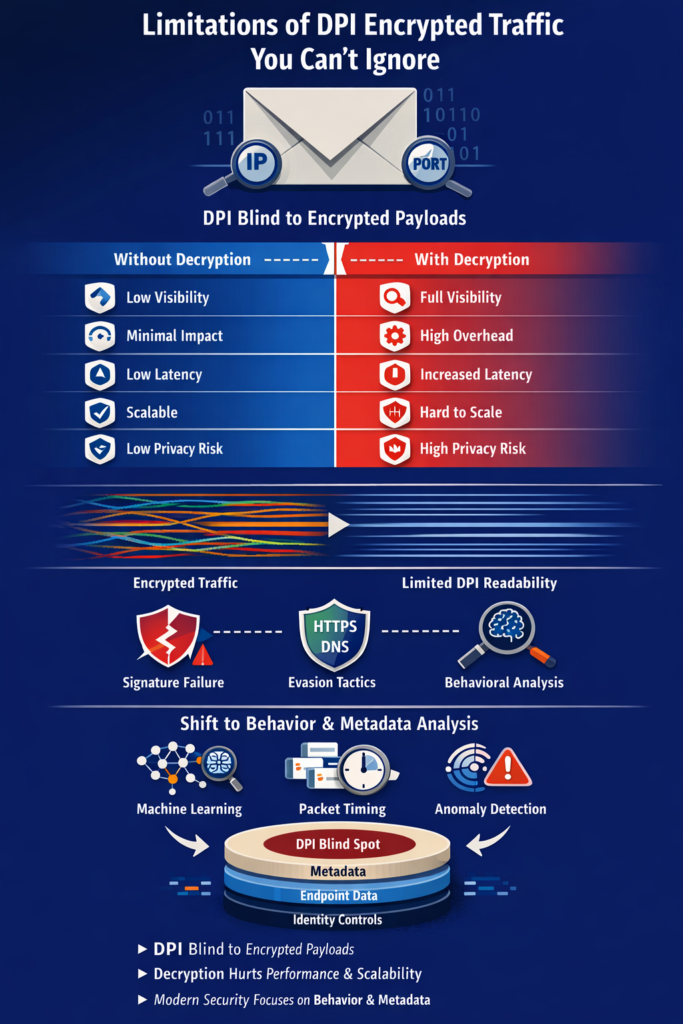
Imagine a sealed envelope. You can see who sent it and who it’s addressed to. You can feel its weight. But you cannot read the letter inside without breaking the seal.
This is the exact predicament of Deep Packet Inspection with encrypted traffic. Protocols like TLS 1.3 and the ubiquitous HTTPS act as that near-unbreakable seal on payloads, though headers/metadata remain partially visible.
The DPI appliance sits at a network choke point, watching packets fly by. It can analyze the headers, the metadata. Source IP, destination IP, port numbers, packet size, timing.
But the actual content, the payload where malware, command and control signals, or exfiltrated data would reside, is scrambled. It’s just ciphertext.
This renders signature-based detection, a core function of traditional DPI, almost useless against attacks that tunnel through encrypted channels.
Understanding how DPI examines network traffic is crucial because it shows why relying solely on content inspection is no longer enough. Ransomware, for instance, often communicates with its master server over HTTPS, looking just like any other secure web session.
- Content Blindness: The primary limitation is the inability to analyze packet content.
- Evasion Haven: Encrypted channels provide a safe passage for malicious activity.
- Signature Failure: Known-threat signatures are ineffective against obscured payloads.
This shift isn’t a minor trend. It’s the new normal. The push for privacy and security means encryption is everywhere, creating a vast landscape that DPI simply cannot map.
The Heavy Cost of Peeking Inside
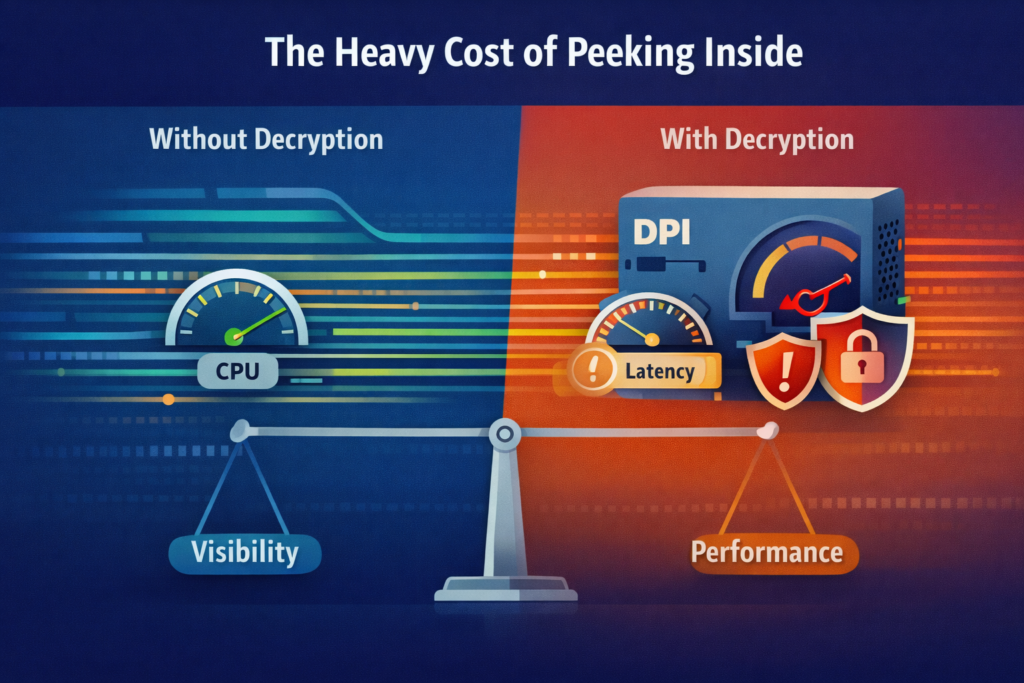
So, what if you just decrypt the traffic first? This seems like a logical workaround, but it introduces a whole new set of problems centered on performance and overhead.
SSL/TLS inspection requires the DPI device to act as a man-in-the-middle. It terminates the encrypted session from the user, inspects the decrypted content, and then re-encrypts it to send it, though this exposes data temporarily and raises privacy risks to the destination.
This process is computationally expensive. It requires significant processing power and memory. For a small network, the impact might be manageable.
But in a large enterprise with thousands of employees and massive data flows, the performance hit is substantial.
This is a perfect example of the challenges faced when deploying deep packet inspection benefits at scale, where performance tradeoffs become a critical factor.
Latency increases, slowing down legitimate business applications. User experience degrades. The hardware needed to perform decryption at scale becomes incredibly costly.
Furthermore, this approach struggles with scalability in modern, distributed environments. With cloud applications, remote workers, and mobile devices, traffic doesn’t flow through a single, easy-to-monitor choke point anymore.
Trying to decrypt and inspect all this scattered traffic is practically impossible. The resource drain forces organizations to limit decryption to specific, high-priority segments, inevitably creating blind spots elsewhere in the network.
| Area | Without Decryption | With Decryption |
| Threat visibility | Limited to metadata | Full payload access |
| Performance impact | Minimal | High CPU and memory usage |
| Network latency | Low | Increased latency |
| Scalability | Easier to scale | Difficult at enterprise scale |
| Privacy and compliance risk | Low | High due to data exposure |
| Operational complexity | Moderate | High due to key management |
When DPI Gets It Wrong
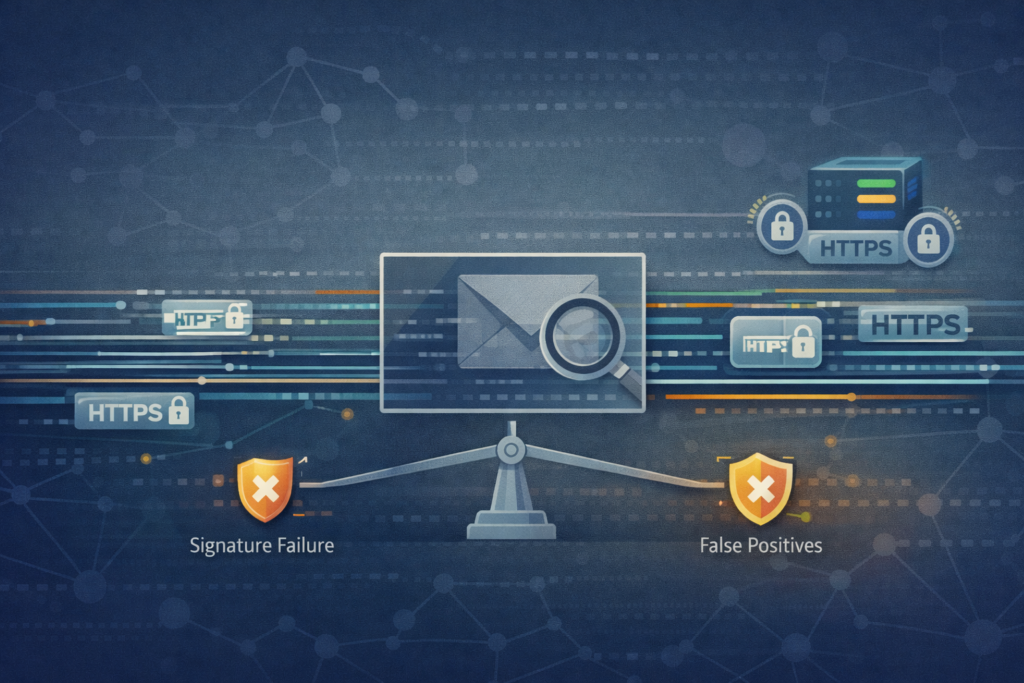
Even if you overcome the performance barrier, DPI’s detection capabilities are inherently limited by its design. It excels at finding what it already knows.
It relies on databases of known malicious signatures. But what about a zero-day attack, a novel piece of malware that has no known signature? Traditional signature-based DPI will likely miss zero-days, especially encrypted, especially if it’s camouflaged within encrypted traffic [1].
This leads to a rise in both false negatives and false positives. A false negative is when a threat slips through undetected.
A false positive is when benign traffic is mistakenly flagged as malicious. Without the context provided by the payload, DPI is forced to make judgments based on metadata alone.
An encrypted flow to an unfamiliar server might look suspicious, but it could just be a new, legitimate cloud service. This lack of context makes accurate policy enforcement difficult. The problem is compounded by sophisticated evasion techniques.
Attackers can use methods like packet fragmentation or DNS over HTTPS (DoH) to further obscure their activities, bypassing even the limited metadata analysis that DPI can perform. The tool is left guessing, and in cybersecurity, guessing isn’t a sustainable strategy.
A New Way of Seeing
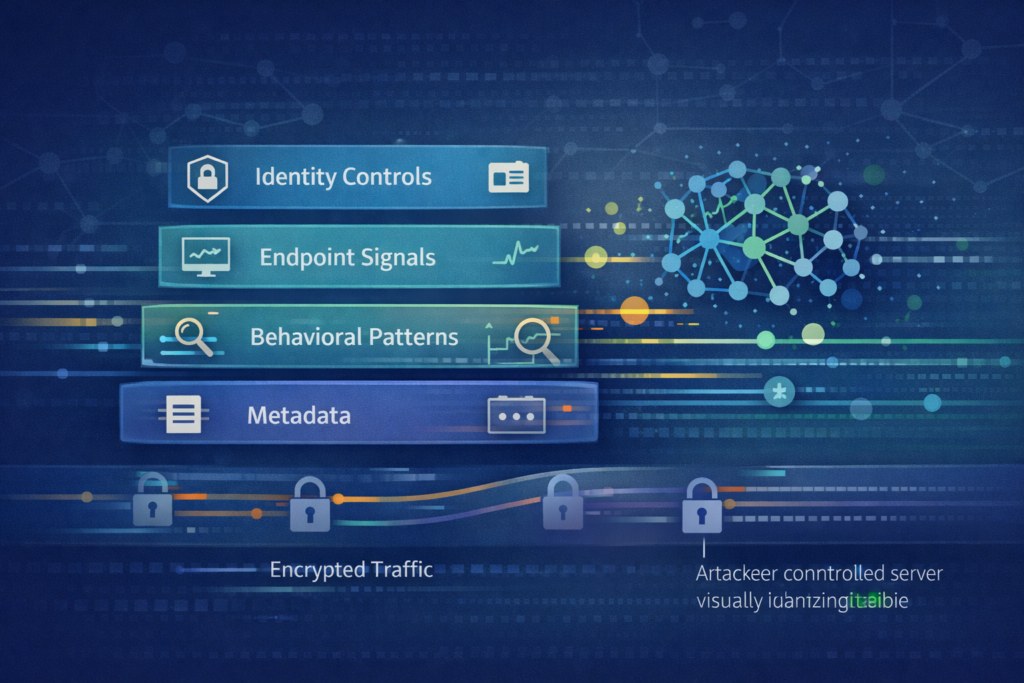
The limitations of DPI don’t mean we surrender to the encrypted void. It means we need to adopt new strategies that work within the reality of encryption.
The focus shifts from reading content to analyzing behavior. This is where Encrypted Traffic Intelligence (ETI) and advanced metadata analysis come into play [2].
Instead of trying to break the encryption, these approaches learn from the patterns of the traffic itself. They analyze the sequence of packets, the timing between them, the sizes, and the destinations.
Even without reading the content, certain patterns are telltale signs of malicious activity. For example, a consistent, low-volume flow of encrypted packets to a server in a known malicious IP range at odd hours could indicate a command-and-control channel.
- Behavioral Clues: Machine learning algorithms identify anomalies in traffic flow patterns.
- Metadata Richness: Source, destination, packet size, and timing provide critical context.
- Proactive Detection: This method can potentially identify unknown threats based on behavior.
This isn’t a silver bullet replacement. It’s a complementary layer. The most effective modern security postures accept that payload inspection is often off the table.
They combine tools that analyze network behavior, endpoint data, and cloud security logs to create a composite picture. It’s about building a mosaic of evidence rather than relying on a single, all-seeing eye.
Building a Post-DPI Security Mindset
The stretch where DPI could carry network security on its back is gone, and encryption pushed it off the stage. The limitations aren’t cosmetic, they’re baked into how the technology works.
When payloads are opaque, when decryption crushes performance, and when new threats slip past static rules, DPI on its own just can’t keep up. That doesn’t mean the technology “failed,” it just means the internet grew in a different direction.
So the goal has shifted. You’re no longer trying to claw back full visibility from encrypted traffic, because that fight is against math itself.
Instead, the smarter move is to focus on signals that survive encryption and use them well. You build security around patterns, context, and behavior, not just content.
This modern approach reflects how deep packet inspection DPI uses in conjunction with behavioral analytics and metadata inspection can create a more resilient security posture. A modern, post-DPI mindset leans on layers that actually work with encryption:
- Behavioral analysis across users, hosts, and services
- Rich metadata inspection (SNI, JA3/JA4, flow timing, DNS, URLs, headers)
- Endpoint and workload monitoring on devices that see traffic in the clear
- Identity-aware controls tied to users, devices, and applications
When you start evaluating tools, don’t just ask what they can decrypt. Ask what they can infer.
- Can they correlate flows, identities, and endpoints?
- Can they spot anomalies in encrypted traffic patterns?
- Can they surface signals from EDR, NDR, and IAM together?
The mindset shift is simple but sharp: stop trying to break the dark, and start getting very good at reading its edges. Choose tools and designs based on how well they can “see the unseen” in encrypted environments, not on how hard they try to rewind the past.
FAQ
Why does DPI struggle to inspect encrypted traffic effectively?
Deep packet inspection struggles because encrypted traffic inspection limitations prevent access to packet payloads.
Modern encryption creates a lack of payload visibility, which forces DPI to rely on headers and traffic metadata only.
This encrypted payload analysis difficulty creates deep packet inspection blind spots, lowers DPI accuracy on encrypted traffic, and leaves encrypted network traffic monitoring gaps attackers can exploit.
How does TLS 1.3 make DPI inspection harder?
TLS 1.3 inspection limitations reduce observable data during encrypted sessions. Perfect forward secrecy and frequent session key rotation prevent reliable SSL interception and increase TLS encryption DPI challenges.
This shifts DPI versus end to end encryption firmly in favor of encryption, increasing false negatives in encrypted sessions and limiting DPI’s ability to detect unknown threats.
What performance risks come with decrypting encrypted traffic for DPI?
Decrypting traffic creates DPI encrypted traffic performance overhead that affects network speed and stability. The computational cost of decryption increases latency from SSL inspection and degrades user experience.
DPI scalability with encrypted traffic becomes difficult due to key management complexity, operational overhead, and added risks from man in the middle inspection techniques.
Can DPI detect malware hidden inside encrypted traffic?
Encrypted malware detection limits significantly reduce DPI effectiveness. HTTPS traffic visibility issues and encrypted command and control evasion allow malicious traffic to appear legitimate.
DPI relies on traffic metadata, which creates encrypted traffic anomaly detection gaps and makes encrypted phishing detection and data loss prevention in encrypted traffic unreliable.
Why do privacy and compliance rules restrict DPI decryption?
Privacy concerns around DPI decryption and regulatory constraints on traffic decryption limit inspection practices. SSL encryption DPI limits, certificate pinning bypass techniques, and compliance risks related to personal data exposure restrict full decryption.
These constraints reduce threat visibility for DPI, especially in cloud, zero trust, and encrypted application environments.
Security After Visibility Ends
Encryption didn’t weaken network security, it exposed outdated assumptions behind DPI. When most traffic is opaque, visibility must come from patterns, context, and correlation, not payloads.
A resilient security strategy accepts encrypted blind spots and compensates with behavioral analytics, rich metadata, endpoint signals, and identity awareness.
Organizations that adapt won’t chase decryption at any cost; they’ll detect threats by understanding how systems behave, even when content stays hidden. This shift defines modern network defense. Take the next step toward visibility in encrypted environments. Join Network Threat Detection.
References
- https://arxiv.org/pdf/2102.08411
- https://www.darkreading.com/cyber-risk/encrypted-traffic-inference-an-alternative-to-enterprise-network-traffic-decryption