

Next generation intrusion prevention systems (NGIPS) have reshaped how organizations defend their networks. These systems go well beyond traditional IPS by combining AI, machine learning, and advanced analytics to spot threats that would otherwise slip through.
From our experience at Network Threat Detection, integrating NGIPS capabilities with real-time threat modeling and automated risk analysis gives security teams unmatched visibility and control.
If you want to know the Next Generation IPS NGIPS Features, keep reading.
Key Takeaways
- NGIPS leverage AI-driven heuristic and behavioral analysis for superior threat detection.
- Real-time contextual awareness and threat intelligence integration empower faster, smarter responses.
- Centralized management and scalable architectures reduce operational burden while boosting protection.
Why Next Generation IPS Are Vital in Today’s Cybersecurity Landscape

The cyber threat landscape doesn’t wait.Attackers constantly evolve their techniques, and traditional intrusion prevention systems often struggle to keep pace, learning how intrusion prevention systems work helps explain why NGIPS’ multi-layered detection is so effective.
NGIPS address this gap by combining multiple detection methods, including signature-based, heuristic, and behavioral analytics. This multi-layered approach lets them catch zero-day exploits and advanced persistent threats that conventional IPS might miss.
We’ve seen firsthand how this shift improves detection rates. NGIPS don’t just rely on known attack signatures but use AI to analyze traffic patterns and user behaviors.
This reduces false alarms significantly, so security teams can focus on real threats. Our platform supplements NGIPS with tailored threat models that simulate attacker tactics and map vulnerabilities, enhancing defense readiness.
- AI-powered detection identifies unknown threats.
- Behavioral analysis spots anomalies in network traffic.
- Signature updates from global threat intelligence keep protections current.
Core NGIPS Features That Change the Game
AI and Heuristic Analysis Combined
Using artificial intelligence in IPS is no longer optional; it’s essential. NGIPS apply machine learning models that learn how legitimate network traffic looks and flag deviations that hint at malicious activity (1). That means attacks hiding under the radar , like zero-day threats or fileless malware , can be caught early.
This AI layer works alongside traditional signature-based detection. While signatures find known threats quickly, heuristics and behavioral analytics fill in the gaps.
In our experience working with security teams, this combination slashes the number of false positives, preventing alert fatigue.
NGIPS apply machine learning models that learn how legitimate network traffic looks and flag deviations, building on core IPS functionality to catch even sophisticated or fileless attacks.
Comprehensive Threat Protection
NGIPS don’t just stop at detecting intrusion attempts. They cover a wide attack surface including buffer overflow attacks, worms, spyware, and unauthorized data exfiltration. We’ve noticed that many organizations underestimate the threat of subtle data leakage, but a solid NGIPS flags these incidents in real time.
The technology also integrates advanced malware protection and sandboxing capabilities. Suspicious files can be isolated and analyzed without risking network safety. This automated remediation speeds up incident handling and reduces manual workload.
Real-Time Contextual Awareness
Understanding the “who,” “what,” and “where” of network activity is critical. NGIPS provide granular visibility into applications, users, operating systems, and vulnerabilities. For example, knowing that a particular user is accessing sensitive systems unusually can trigger faster investigation.
We build on this by enriching alerts with contextual intelligence from frameworks like MITRE ATT&CK. This helps security operations centers (SOCs) prioritize threats based on potential impact, not just severity scores.
Scalability and Performance
One common complaint about legacy IPS was their tendency to bottleneck network traffic. NGIPS balance high throughput with low latency thanks to optimized architectures, like single-pass packet inspection. Whether deployed on-premises, in the cloud, or hybrid environments, they scale smoothly.
From our perspective, scalability means fewer blind spots and better coverage across all network segments. It also means security teams don’t have to compromise between speed and protection.
How NGIPS Enhance Operational Efficiency
Centralized Policy Management and Automation
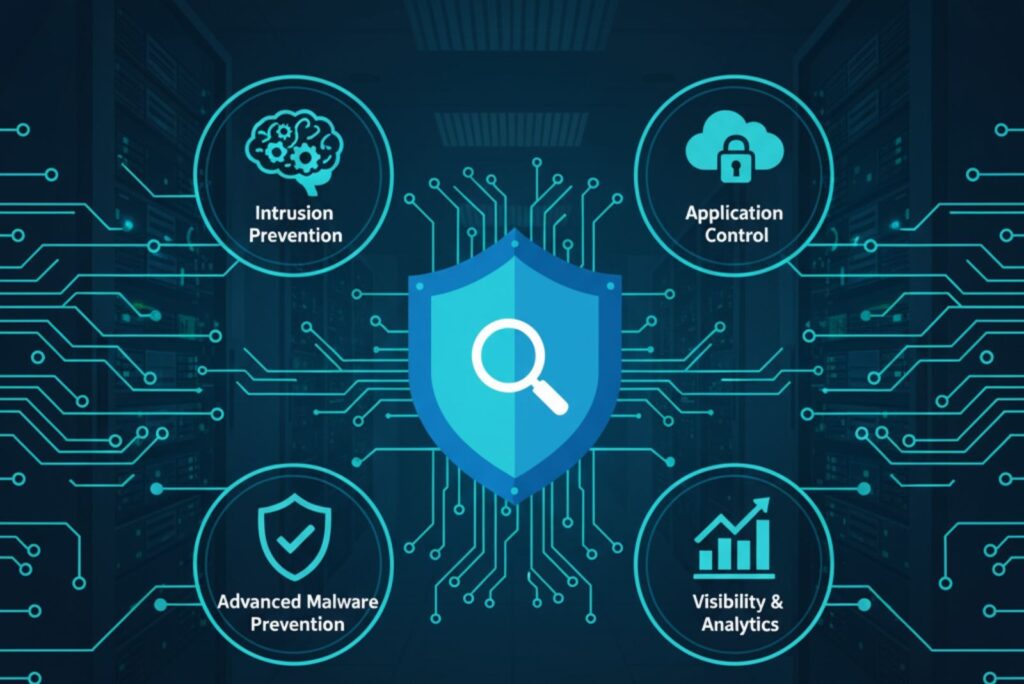
Managing multiple security tools is a headache. NGIPS simplify this by offering unified dashboards that consolidate policy enforcement, event collection, and response workflows. Automated alert triage and attack path visualization reduce time wasted on manual correlation.
Our platform complements these capabilities with risk scoring and executive reporting. This makes communicating network security posture across teams and leadership more straightforward.
Integration with Global Threat Intelligence
Keeping pace with new attacker methods requires constant updates. NGIPS tap into global threat feeds, receiving fresh signatures and behavioral indicators from vast intelligence networks. This early warning system is invaluable.
We leverage these same intelligence sources to update our threat models weekly, keeping clients ahead of emerging threats. The result is faster detection and containment, shrinking the window attackers have to cause damage.
Application Visibility and Control
Not all network traffic is equal. NGIPS identify thousands of applications and enforce granular controls over usage and URL filtering. This helps reduce exposure to risky content and supports compliance with corporate policies.
We’ve seen organizations reduce insider threats and accidental breaches by controlling app behavior through NGIPS features combined with our contextual analytics.
Real-World Benefits Observed with NGIPS
Source: Gaetano Buzzanca
Organizations adopting NGIPS report a 30 to 50 percent improvement in detecting relevant threats compared to older IPS solutions. False positives drop significantly, freeing analysts to focus on real incidents. Incident response times shrink as integrated tools automate containment and remediation steps.
In practical terms, this means fewer breaches, less downtime, and better overall security posture. The combination of network visibility, AI analytics, and threat intelligence integration empowers security teams to be proactive rather than reactive.
Practical Considerations for Deploying NGIPS

Hybrid Deployment Flexibility
Networks today often span cloud, on-premises, and hybrid environments. NGIPS support flexible deployment models, adapting to diverse infrastructures without sacrificing performance. This is crucial for organizations scaling or adopting cloud services.
Multi-Layered Security Approach
NGIPS form one layer in a broader defense strategy. Their ability to integrate with firewalls, endpoint protection, and security orchestration tools means teams can build layered defenses that adapt to evolving threats.
NGIPS support flexible deployment models, whether on-premises, cloud, or hybrid, and understanding IPS placement in network inline mode is critical to minimize latency and maximize protection.
Reducing False Positives and Latency
A balance must be struck between aggressive detection and operational efficiency. NGIPS employ machine learning to continually tune detection rules, improving accuracy and reducing unnecessary alerts. Low-latency architectures ensure network performance remains unaffected.
Network Threat Detection’s Role in Enhancing NGIPS Effectiveness
At Network Threat Detection, we focus on complementing NGIPS by providing advanced threat models and risk analysis tools. Our platform’s visual attack simulations and CVE mapping enable teams to understand vulnerabilities deeply and prioritize remediation efforts effectively.
Our continuous threat intelligence updates ensure that NGIPS policies remain relevant and adaptive. Together, these capabilities help security teams uncover blind spots and accelerate response times, making NGIPS deployments more impactfu (2)
FAQs
What differentiates a Next Generation IPS from a traditional IPS?
Next Generation IPS (NGIPS) goes beyond signature-based detection by using AI, machine learning, and behavioral analytics.
While traditional IPS mainly relies on known attack signatures, NGIPS can identify unknown and zero-day threats by analyzing network traffic patterns and user behavior.
This multi-layered approach reduces false positives and improves detection accuracy. NGIPS also offers enhanced application visibility, threat intelligence integration, and automated response capabilities, making it better suited for today’s complex cyber threats.
How does AI improve threat detection in NGIPS?
AI enables NGIPS to analyze vast amounts of network data in real time, learning what constitutes normal behavior and flagging anomalies.
This adaptive learning helps detect sophisticated threats like zero-day exploits and advanced persistent threats that traditional methods might miss.
AI-driven heuristics reduce false alarms and prioritize alerts that matter most. From our experience, combining AI with human expertise leads to faster, more accurate incident response and improved overall network security.
Can NGIPS detect zero-day threats effectively?
Yes, NGIPS use heuristic and behavioral analysis powered by AI and machine learning to identify previously unknown threats. Unlike traditional IPS that depend on known signatures, NGIPS analyze anomalies in network traffic and user behavior to detect zero-day exploits early.
This capability is critical because zero-day threats often bypass conventional defenses. Integrating threat intelligence further enhances detection, enabling security teams to respond before attackers can cause significant damage.
What role does threat intelligence integration play in NGIPS?
Threat intelligence feeds provide NGIPS with updated information on attacker tactics, techniques, and emerging vulnerabilities. This real-time data helps NGIPS adapt protections dynamically, improving detection of new threats and reducing response times.
At Network Threat Detection, we emphasize combining NGIPS with continuous intelligence updates and tailored threat models. This integration allows teams to anticipate attacks, prioritize risks, and mitigate threats more effectively.
How does NGIPS handle encrypted traffic inspection?
NGIPS incorporate advanced techniques to inspect encrypted traffic without compromising privacy or network performance. They decrypt traffic temporarily to analyze for threats such as malware or data exfiltration attempts, then re-encrypt it before forwarding.
This capability is essential as more network traffic becomes encrypted, potentially hiding malicious activity. Effective encrypted traffic inspection in NGIPS ensures comprehensive monitoring without introducing latency or blind spots.
What is the significance of application and user awareness in NGIPS?
Knowing which applications and users are active on the network adds critical context to threat detection. NGIPS identify applications and associate traffic with specific users or devices, allowing granular policy enforcement.
This visibility helps detect unauthorized or risky behaviors, such as users accessing sensitive data or applications outside normal patterns. We’ve found that application and user awareness improves incident prioritization and helps enforce corporate security policies effectively.
How does NGIPS support scalability for growing networks?
NGIPS are designed with scalable architectures that maintain high performance even as network traffic increases. Features like low-latency, single-pass packet inspection ensure throughput remains high without bottlenecks.
Whether deployed in cloud, on-premises, or hybrid setups, NGIPS adapt to evolving network sizes and complexities. This scalability means organizations can expand their security coverage without sacrificing speed or detection capabilities.
What benefits does centralized management provide in NGIPS?
Centralized management consolidates policy creation, event monitoring, and response actions into a single interface. This reduces complexity and streamlines workflows for security teams.
Automated alert triage and attack visualization tools help analysts quickly understand threats and coordinate responses. Our experience shows centralized management not only improves operational efficiency but also enhances consistency in security enforcement across all network segments.
How does NGIPS reduce false positives?
NGIPS use machine learning models that continuously tune detection rules based on network behavior, significantly reducing false alarms. By correlating alerts with contextual data like user roles and application usage, they filter out benign anomalies.
This focused alerting prevents alert fatigue, allowing security personnel to concentrate on genuine threats. At Network Threat Detection, we combine NGIPS analytics with custom threat models, further improving detection accuracy and operational efficiency.
Can NGIPS integrate with other security tools effectively?
Absolutely, NGIPS are built to integrate seamlessly with firewalls, SIEM, SOAR, and endpoint protection platforms. This integration enables security orchestration and automation, providing a unified defense strategy.
By sharing threat data and coordinating responses, organizations can accelerate incident handling and reduce risks. Our platform enhances this by offering risk analysis and visual attack simulations that complement NGIPS data, ensuring comprehensive and proactive network defense.
Final Thoughts on Next Generation IPS NGIPS Features
The evolution from traditional IPS to next generation IPS is more than just a tech upgrade. It’s about empowering security teams with tools that truly understand modern network environments , from AI-driven detection to contextual intelligence and automated remediation.
From our standpoint, embracing NGIPS along with proactive threat modeling and comprehensive risk analysis transforms network defense. If your organization is ready to step up its security game and face emerging threats confidently, exploring these advanced features is essential.
To learn how Network Threat Detection can help you harness the full power of next generation IPS features, we invite you to take the next step and.
Whether you’re a SOC analyst, CISO, or cybersecurity enthusiast, integrating NGIPS with continuous threat intelligence and automation will make defending your network smarter, faster, and more effective.
References
- https://edgecast.medium.com/detecting-malicious-traffic-with-machine-learning-1a4ebc80672e
- https://www.researchgate.net/publication/357204734_Security_Reshaped_in_The_Digital_Transformation_Era