
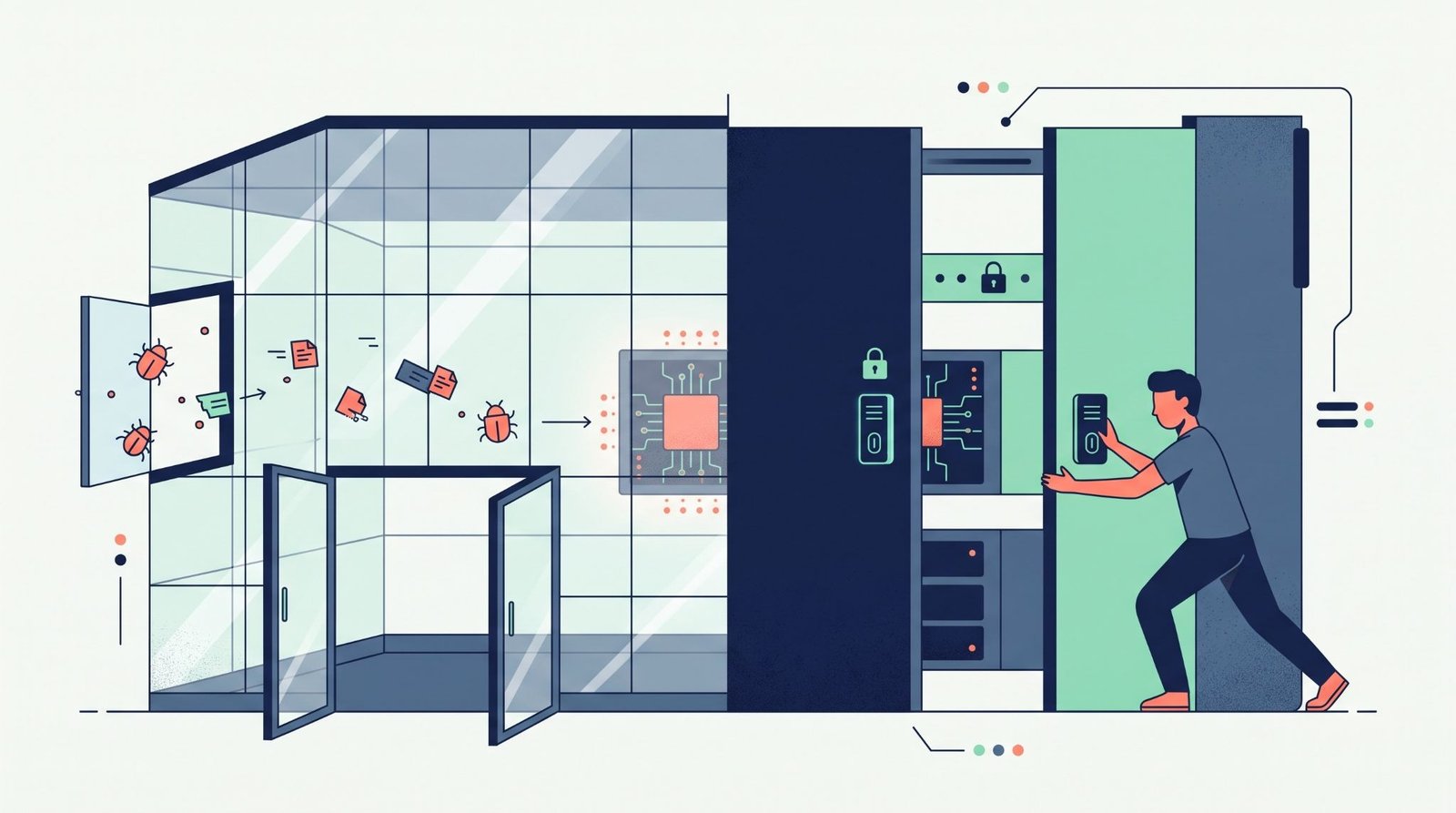
Network segmentation strategies divide an organization’s network into separate zones to control access and limit the spread of cyberattacks. These strategies use tools such as VLANs, firewalls, microsegmentation, and zero trust policies to protect sensitive systems and reduce security risks.
Each organization needs an approach that fits its network structure, daily operations, and security needs. Before choosing a method, teams should understand how their applications communicate and which systems hold sensitive data.
The right setup can make threats easier to contain. Keep reading to explore practical strategies and how to apply them to your network.
Network Segmentation Quick Wins
Network segmentation helps reduce security risks by controlling how systems communicate and limiting unauthorized access. Here are the main points to remember:
- Limit Lateral Movement: Separate systems based on their function, sensitivity, and access needs to prevent threats from spreading.
- Choose the Right Segmentation Method: Use VLANs, security zones, firewalls, or microsegmentation to control traffic across enterprise and cloud environments.
- Keep Security Policies Updated: Monitor network activity, review access rules, and test segmentation regularly to maintain protection as networks change.
How Does Network Segmentation Support Threat Containment?
Network segmentation limits communication between systems that do not need to share data. If an attacker gains access to one device, these boundaries can stop them from reaching other parts of the network.
This limits the blast radius, which means fewer systems may be affected by a security breach. It can also make an incident easier to investigate. Security teams can focus on the affected network area instead of checking every connected system.
“Effective network segmentation restricts communication between networks and reduces the extent to which an adversary can move across the network.” – Cybersecurity and Infrastructure Security Agency (CISA), Targeted Cyber Intrusion Detection and Mitigation Strategies.
Organizations can pair segmentation with Network Threat Detection. We see threat detection as an early step because it helps teams spot unusual traffic. They can then investigate the activity and respond before it spreads. Segmentation adds another layer by controlling which systems can communicate.
Here are some of the main security benefits:
- Lateral movement prevention: Makes it harder for attackers to move between infected devices and servers.
- Blast radius reduction: Limits the number of systems exposed during an attack.
- Smaller attack surface: Removes network connections that systems do not need.
- Better visibility: Helps teams spot unusual traffic within specific network zones.
How Do VLANs and Virtual LANs Support Network Segmentation?
VLAN segmentation separates devices into logical Layer 2 broadcast domains. This lets administrators group devices without setting up separate physical networks for each group.
A virtual LAN (VLAN) places connected devices on the same logical network, even if they use the same physical switches. Administrators can then control traffic between VLANs through routers, firewalls, or access control lists.
This approach is part of implementing VLANs and virtual LAN segmentation without needing separate physical networks for every device group.
There is one detail to remember. Creating VLANs does not secure a network on its own. Devices in different VLANs can still communicate if the routing rules allow it.
A practical setup groups devices based on their roles.
| VLAN type | Typical devices | Security purpose |
| User VLAN | Employee computers and laptops | Separates regular employee activity |
| Guest VLAN | Visitor devices | Keeps visitors away from internal resources |
| Server VLAN | Application and database servers | Limits communication between servers |
| Management VLAN | Administrative consoles and network devices | Protects privileged operations |
| Security VLAN | Monitoring and authentication systems | Isolates important security services |
| IoT VLAN | Cameras, sensors, and smart devices | Limits access from less trusted equipment |
| DMZ VLAN | Public web and mail servers | Separates public services from internal systems |
What Makes VLAN Configuration Secure?
VLANs need extra controls to manage traffic between logical networks. Administrators must decide which devices can connect and which protocols those connections need. Proper network infrastructure and control also helps teams manage these connections and prevent unnecessary access between network segments.
For example, employee computers may need to access an internal application. They may not need direct access to the database behind it. A firewall or router ACL can block that connection.
Useful steps include:
- Give different device groups separate VLAN IDs.
- Use private VLANs when devices in the same VLAN need more isolation.
- Plan IP subnets carefully to separate network resources.
- Limit traffic between VLANs with clear firewall rules.
- Turn off unused switch ports and place them in an isolated VLAN.
- Check trunk ports and allowed VLAN lists to prevent unwanted access.
How Does Microsegmentation Protect Data Centers and Cloud Environments?
Microsegmentation sets access rules for individual workloads, applications, containers, or services. This gives administrators more control over east west traffic, which means data moving between systems inside a network.
Traditional subnet segmentation groups several devices under the same network rules. Microsegmentation is more specific. It controls which individual workloads can communicate, even when they share a subnet.
These microsegmentation concepts for data centers and cloud environments help organizations apply more precise access rules across different workloads.
Why does that matter? If an application server is compromised, it should not automatically have access to every database or virtual machine in the network.
NIST describes microsegmentation as a way to split internal networks into smaller areas where traffic can be monitored and controlled. Organizations can apply these rules through host based firewalls, hypervisor controls, or security agents installed on workloads.
Common uses include:
- Data center segmentation: Separates virtual machines, application layers, storage systems, and management workloads.
- Cloud segmentation: Uses cloud security groups, network policies, and identity based controls to limit traffic.
- Container segmentation: Controls communication between containers and other services.
- Application segmentation: Sets rules for how different parts of an application exchange data.
- Service segmentation: Limits communication between services based on their identity and purpose.
For example, a payment application may need to connect to a database through TCP port 5432. A microsegmentation policy can allow that connection while blocking other workloads from reaching the database.
Container environments need their own rules too. In Kubernetes, network policies control which pods can send or receive traffic. Administrators can use namespaces, workload labels, and service identities to apply these rules.
Cloud networks bring another challenge. Workloads may scale up or down, and their IP addresses can change. This makes fixed firewall rules harder to manage. Identity based policies and software defined networking can help teams control access based on what a workload is, rather than where it sits on the network.
These controls can also support microsegmentation in a zero trust environment by checking workload identity and limiting communication between services.
How Do Network Security Zones and DMZ Segmentation Work?
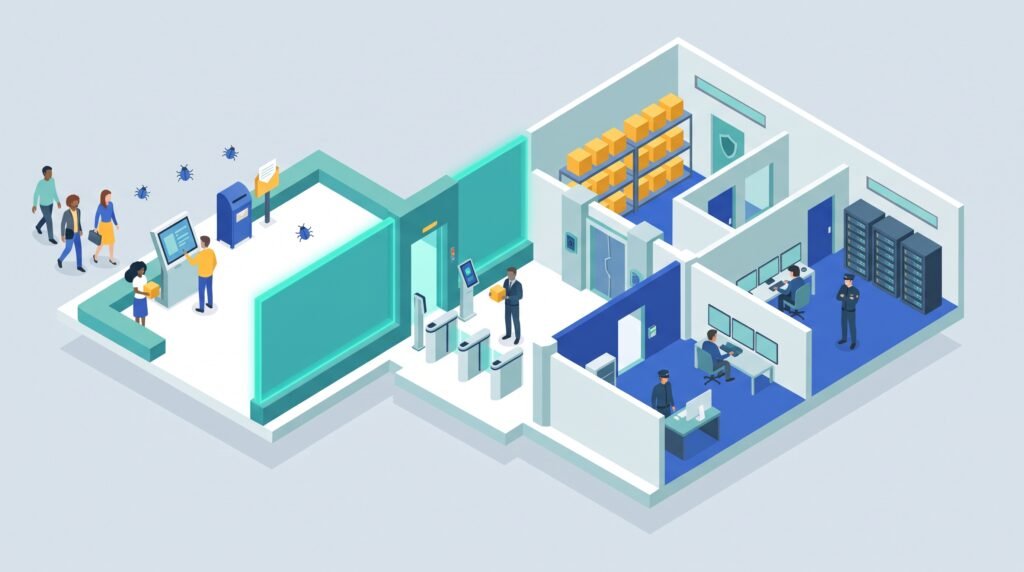
Network security zones group systems based on their trust level, purpose, and data sensitivity. Each zone has rules that define which systems can communicate. This includes creating network security zones for DMZ and internal networks so public facing services remain separate from sensitive company systems.
For example, a company may place public websites, employee devices, production applications, databases, and administrative tools in separate zones.
The demilitarized zone (DMZ) is used for services that need to communicate with external networks. Public websites, mail gateways, reverse proxies, and VPN gateways often sit in this zone.
The point is to keep public facing systems separate from internal resources. A website may need to receive requests from the internet, but that does not mean it should have open access to company databases.
A network may use zones like these:
| Security zone | Typical resources | Access requirements |
| Internet | External users and unknown devices | Restricted incoming access |
| DMZ | Public web servers and reverse proxies | Specific external and internal connections |
| Corporate | Employee devices and business applications | Access based on user roles |
| Production | Application servers and APIs | Approved service connections |
| Restricted data | Databases, backups, and sensitive files | Strict access limits |
| Management | Administrative consoles and monitoring tools | Authenticated access for approved staff |
| Third party | Vendor systems and partner connections | Access only to approved services |
A useful rule is default deny. Systems should only communicate when there is a clear business reason for the connection.
These boundaries also support segmentation for threat containment by limiting the systems an attacker can reach after gaining access to one network area.
How Do Firewall Rules Control Traffic Between Network Segments?
Firewalls enforce segmentation by allowing or blocking traffic between network sources and destinations. Their rules use details such as IP addresses, ports, protocols, and identities to decide which connections are allowed.
Setting up firewall rules that control traffic between segments helps administrators apply these restrictions based on each system’s access needs.
These rules should follow the principle of least privilege. In plain terms, each connection should get only the access it needs.
Before writing firewall rules, administrators need to know how systems communicate. A rule that blocks the wrong connection can stop an application from working.
| Rule element | Recommended configuration |
| Source | Specific IP address, subnet, device, or workload identity |
| Destination | Approved server, application, or service |
| Protocol and port | Only the protocols and ports the connection needs |
| Action | Allow or deny |
| Logging | Record relevant allowed and blocked connections |
| Ownership | Name the person or team responsible for the system |
| Review | Set a review date or expiration date |
For example, a web application may need these rules:
Allow: Web server to App server on TCP 8443
Allow: App server to Database on TCP 5432
Deny: All other traffic to Database
This lets the application reach its database without opening access to unrelated systems.
Access control lists (ACLs) offer another way to filter network traffic. Routers and switches can use them to check source addresses, destination addresses, and protocols.
ACLs and firewalls do not work in exactly the same way. A basic ACL filters packets based on set details. A stateful firewall can also track active connections and apply more detailed inspection rules.
Good firewall management includes:
- Removing rules that are no longer used.
- Avoiding broad permissions that allow any source to reach any destination.
- Recording why each connection is allowed.
- Checking temporary access before it expires.
- Tracking changes to firewall settings.
- Testing new rules before using them in production.
A default deny policy gives teams a clear starting point. But strict rules can also block valid traffic if administrators have not mapped application needs first. Test changes before applying them to critical systems.
How Does Zero Trust Segmentation Improve Network Security?
Zero trust segmentation checks identity, device condition, and resource needs before allowing network access. It does not assume that a connection is safe just because it comes from inside a company network.
In a traditional network, a device may receive broad access after connecting to the corporate network. Zero trust takes a different approach. Each access request must meet the right conditions.
“Zero trust assumes there is no implicit trust granted to assets or user accounts based solely on their physical or network location.” – National Institute of Standards and Technology (NIST), Zero Trust Architecture (SP 800-207).
What Challenges Affect Network Segmentation Policies?
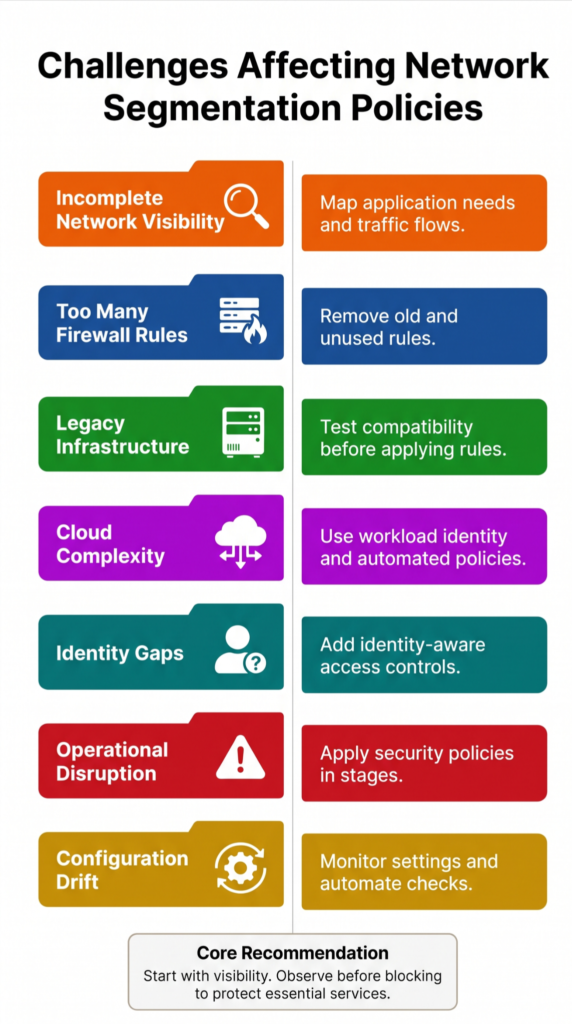
Segmentation can be hard to manage when teams do not have a clear view of their devices, applications, and network traffic. These are common challenges in managing complex segmentation policies, especially when organizations use older infrastructure or frequently changing cloud workloads.
Blocking unnecessary connections can improve security. But a rule that blocks the wrong connection may interrupt logins, backups, or business applications. That is a real risk, especially in older networks.
| Challenge | Operational impact | Practical response |
| Incomplete network visibility | Unknown connections may remain open | Map application needs and traffic flows |
| Too many firewall rules | Rules become harder to review | Remove old and unused rules |
| Legacy infrastructure | Older systems may need unusual protocols | Test compatibility before applying rules |
| Cloud complexity | Changing workloads make fixed rules harder to manage | Use workload identity and automated policies |
| Identity gaps | IP based rules cannot confirm service identity | Add identity aware access controls |
| Operational disruption | Strict rules may interrupt applications | Apply policies in stages |
| Configuration drift | Network settings change without proper review | Monitor settings and automate checks |
CISA stresses that organizations need to understand their applications, assets, workflows, and dependencies before isolating resources through microsegmentation.
What Network Segmentation Tools and Solutions Support Implementation?
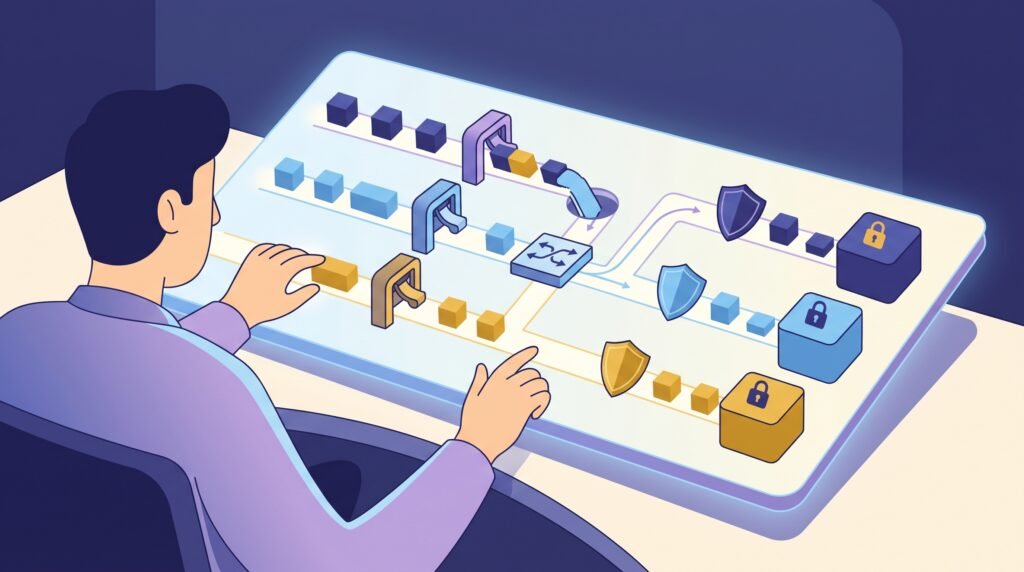
Network segmentation tools help teams find devices, monitor traffic, apply access rules, and check network boundaries. Different network segmentation tools, solutions, and vendors offer features that support these tasks. The right tools depend on the size of the network and the systems an organization already uses.
Most solutions fit into these categories:
| Technology category | Primary function | Common applications |
| Next generation firewalls | Inspect and control traffic between zones | Perimeter and internal network security |
| Network access control (NAC) | Verify and classify connected devices | Employee, guest, and IoT access |
| Microsegmentation platforms | Set access rules for individual workloads | Data centers and cloud workloads |
| Software defined networking (SDN) | Manage network settings through central policies | Virtual networks and changing environments |
| Network discovery tools | Find assets and map communication patterns | Application dependency mapping |
| Network Threat Detection | Identify suspicious traffic and possible attacks | Threat monitoring and incident investigation |
| Service mesh security | Control communication between application services | Container and Kubernetes environments |
Organizations should choose tools that fit their infrastructure and daily needs.
A company with a traditional data center may focus on firewalls and VLAN management. A cloud based organization may need Kubernetes network policies, workload identity, and automated microsegmentation.
It also helps when security tools can share information. Network visibility, threat detection, and access controls give teams a clearer picture when they can connect traffic patterns to specific applications and workloads.
What Regulatory Requirements Apply to Network Segmentation?
Network segmentation can support compliance by separating sensitive systems and limiting access to protected data. Organizations should understand the regulatory compliance requirements for network segmentation under PCI DSS when protecting environments that store, process, or transmit payment card information.
Organizations can use segmentation to separate the cardholder data environment (CDE) from systems that do not need access to payment information.
Segmentation is not a requirement for every organization in every case. PCI DSS allows different network designs, as long as the organization meets the security requirements that apply to it.
The PCI Security Standards Council recognizes internal firewalls, restrictive router settings, and other network controls as possible ways to separate systems.
A compliance focused network may separate:
- Cardholder data environment: Systems that store, process, or transmit payment card information.
- Corporate network: General business devices and applications.
- Shared services: Approved DNS, authentication, logging, and infrastructure services.
Organizations also need to test their segmentation controls. Under PCI DSS Requirement 11.4.5, penetration testing must check these controls when they are used to isolate the cardholder data environment and reduce the scope of an assessment.
The test should confirm that unauthorized systems cannot reach or affect the protected environment through other network paths.
Segmentation may also support security work under other frameworks. Still, using segmentation alone does not make an organization compliant with an entire standard.
How Can Organizations Test and Validate Segmentation Effectiveness?
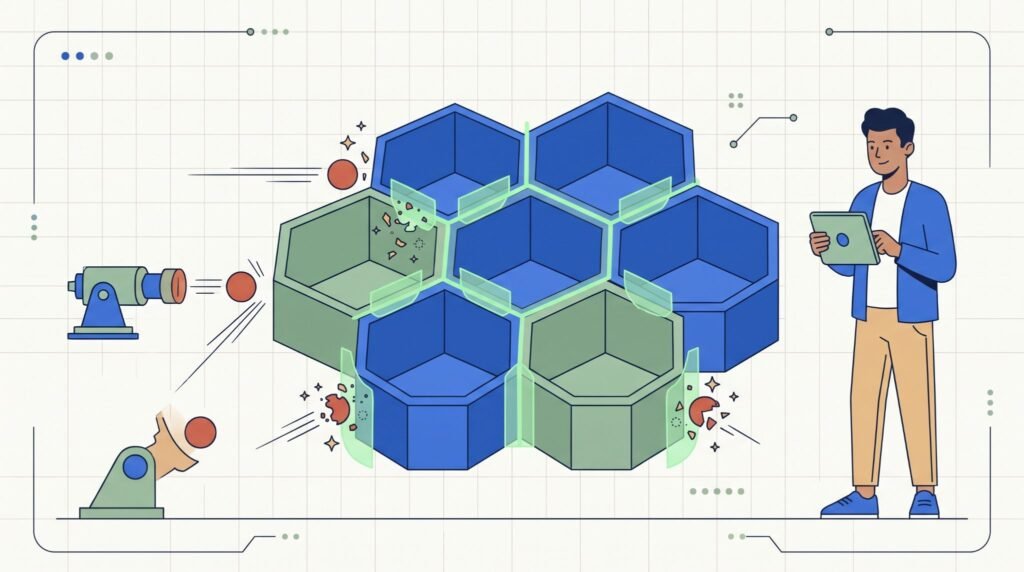
Testing checks whether network rules allow the right connections and block the wrong ones. Setting up VLANs, firewalls, or ACLs is not enough. Teams need to follow a process for testing and validating segmentation effectiveness and controls to confirm that network boundaries work as planned.
A practical testing process includes these steps:
- Document network boundaries. Record security zones, applications, sensitive data, and approved connections.
- Map application needs. Find the normal traffic that moves between systems, both inside and outside each network area.
- Record normal traffic. Observe network activity before adding strict firewall rules.
- Test allowed connections. Check that logins, applications, backups, and monitoring tools still work.
- Test blocked connections. Try to reach restricted databases, production servers, and other protected resources from unauthorized devices.
- Review firewall rules. Look for broad permissions, old rules, and connections that have no clear purpose.
- Check security events. Review firewall logs, network data, and alerts for unusual activity.
- Test again after changes. Repeat checks after application updates, infrastructure changes, or cloud migrations.
For example, a security team may test whether an infected employee computer can reach a restricted database. The firewall or microsegmentation policy should block that connection.
Penetration testing can also uncover network paths that a routine settings review might miss.
Testing should continue after deployment. Applications change, workloads move, and new services need new connections. Any of these changes can weaken existing network rules.
How Should Organizations Implement Network Segmentation Strategies?
Source: Professor Piggy
Before applying strict security rules, organizations need to understand how their current network works. It is usually better to protect the most sensitive systems first, then expand segmentation in stages.
Teams can also apply zero trust segmentation principles and approaches to make sure access decisions depend on identity, resource needs, and security conditions.
This roadmap gives teams a practical order to follow.
| Phase | Main activity | Expected outcome |
| 1. Discovery | List devices, applications, and workloads | Clear view of network assets |
| 2. Classification | Identify data sensitivity and business importance | Risk based priorities |
| 3. Traffic mapping | Record approved communication paths | Application dependency map |
| 4. Zone design | Define VLANs, DMZs, and restricted networks | Clear network boundaries |
| 5. Policy development | Set least privilege and default deny rules | Controlled network access |
| 6. Pilot deployment | Test rules on selected workloads | Tested setup |
| 7. Enforcement | Gradually block unauthorized connections | Stronger isolation |
| 8. Continuous monitoring | Review traffic, alerts, and policy changes | Ongoing security checks |
Teams can begin with payment applications, identity systems, sensitive databases, and backup environments. These systems often need tighter access controls.
Once those areas are protected, administrators can extend segmentation to employee devices, development systems, cloud workloads, and operational technology.
Automation can also help teams manage network rules. Infrastructure as code and policy as code let administrators document, review, and apply settings in a consistent way.
But automated changes still need human review. A faulty rule can affect several environments if it goes live without proper testing.
Clear ownership, written exceptions, and regular reviews should remain part of the process.
FAQs
What Is the Main Purpose of Network Segmentation?
Network segmentation divides a network into separate areas with controlled access. This limits unauthorized communication, makes it harder for attackers to move between systems, and reduces the impact of a compromised device or application.
Are VLANs Enough to Secure a Network?
No. VLANs separate Layer 2 broadcast domains, but they do not automatically block traffic between networks. Firewalls, router ACLs, and other controls must manage connections across VLAN boundaries.
What Is the Difference Between Network Segmentation and Microsegmentation?
Network segmentation separates larger areas, such as departments, servers, or security zones. Microsegmentation uses more specific rules for individual workloads, applications, containers, and services.
How Does Segmentation Help Prevent Ransomware?
Segmentation can stop ransomware from reaching unrelated systems after an initial infection. When the rules are set up correctly, they can limit access to databases, backups, and critical applications.
How Often Should Network Segmentation Be Tested?
Organizations should monitor segmentation controls regularly and test them again after major network or application changes. Some compliance rules also set testing requirements. For applicable PCI DSS segmentation controls, this includes annual penetration testing.
Keep Your Network Segmentation Strategy Up to Date
Managing a segmented network takes more than setting up VLANs or firewalls. You need to check how traffic moves and make sure suspicious activity can’t reach other systems. Otherwise, gaps can go unnoticed.
Network Threat Detection can help your team spot those gaps before they become bigger problems. Its real-time threat modeling, automated risk analysis, and attack path simulations give security teams a clearer view of potential risks.
References
- https://www.cisa.gov/news-events/news/targeted-cyber-intrusion-detection-and-mitigation-strategies-update-b
- https://www.nist.gov/publications/zero-trust-architecture
Related Articles
- https://networkthreatdetection.com/network-infrastructure-and-control/
- https://networkthreatdetection.com/segmentation-for-threat-containment/
- https://networkthreatdetection.com/implementing-vlans-virtual-lans-segmentation/
- https://networkthreatdetection.com/micro-segmentation-concepts-data-center-cloud/
- https://networkthreatdetection.com/creating-network-security-zones-dmz-internal/
- https://networkthreatdetection.com/firewall-rules-controlling-traffic-between-segments/
- https://networkthreatdetection.com/zero-trust-segmentation-principles-approach/
- https://networkthreatdetection.com/challenges-managing-complex-segmentation-policies/
- https://networkthreatdetection.com/network-segmentation-tools-solutions-vendors/
- https://networkthreatdetection.com/regulatory-compliance-requirements-segmentation-pci-dss/
- https://networkthreatdetection.com/testing-validatin-segmentation-effectiveness-controls/
- https://networkthreatdetection.com/micro-segmentation-in-zero-trust/