
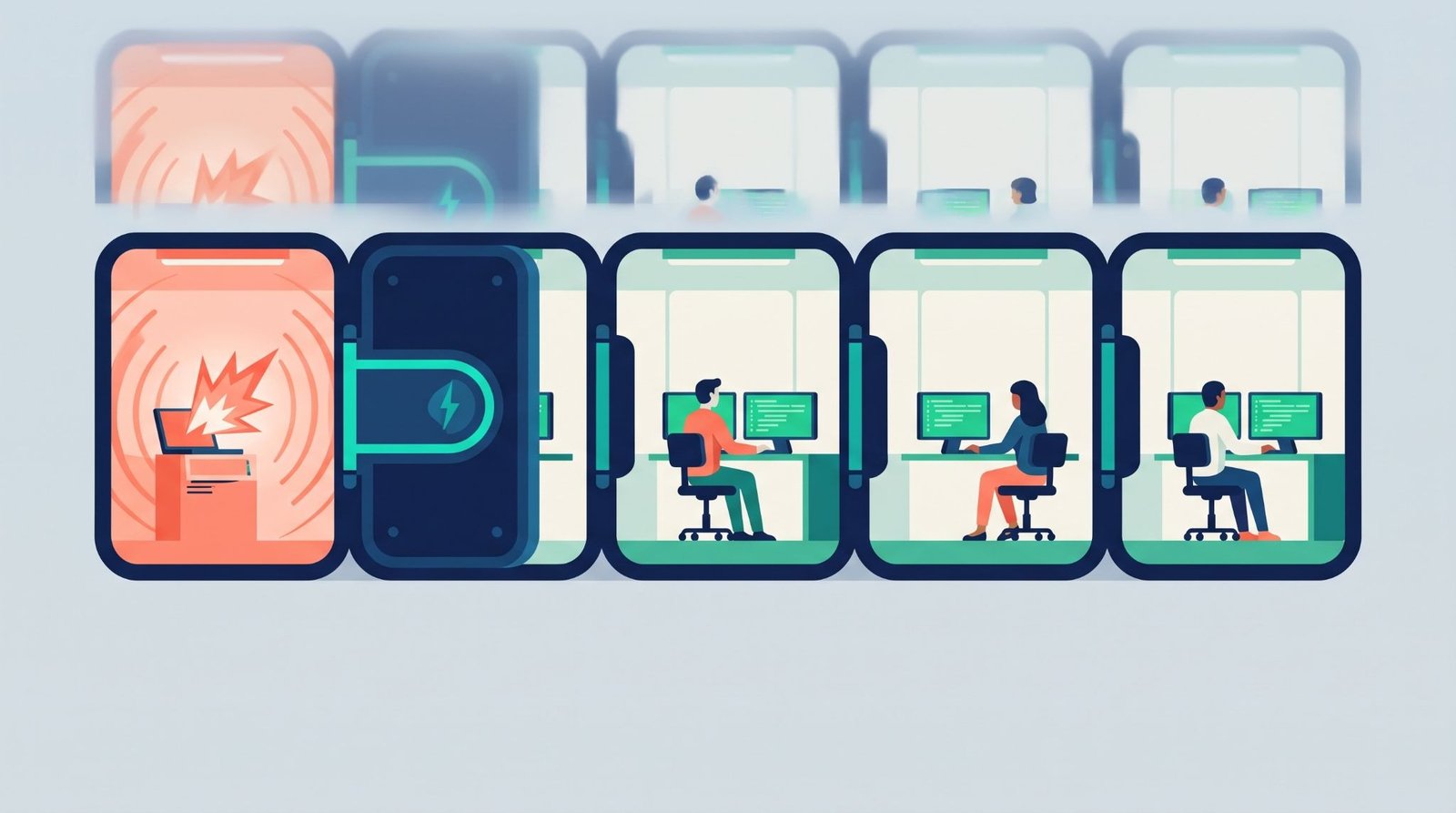
Segmentation for threat containment divides a network into separate security zones, limiting how far an attacker can move after gaining access. Each zone has rules that control which devices, applications, and servers can communicate.
Firewalls and microsegmentation add tighter controls around sensitive systems, while network monitoring can help teams spot unusual activity. These measures do not stop every attack, but they can reduce the number of resources exposed when one occurs.
The right setup depends on how an organization uses its network and which systems need protection across its wider network. Keep reading to learn how these controls work together.
Quick Reads: How Segmentation Keeps Threats Contained
Network segmentation helps prevent a single breach from spreading across an organization by combining isolated network zones, layered access controls, and continuous monitoring.
- Segmentation limits threat spread: Dividing networks into isolated zones restricts lateral movement, reduces the attack surface, and limits the impact of compromised systems.
- Layered controls strengthen containment: VLANs, firewalls, microsegmentation, and zero trust policies enforce least-privilege access and protect critical assets.
- Continuous monitoring remains essential: Network Threat Detection, traffic analysis, and regular segmentation testing help identify suspicious activity and support faster incident response.
How Does Network Segmentation Stop Threats From Spreading?
A network without clear boundaries can give attackers more room to move. If one employee’s computer gets infected, other connected devices may also be at risk. Network segmentation helps limit that access by dividing the network into separate zones.
Each zone has its own access rules. An employee computer, for example, may connect to the tools needed for daily work. It should not have open access to a payment database or backup server.
This makes it harder for an attacker to reach other systems after breaking into one device. It does not stop every attack, but it can limit the damage.
Why Is Lateral Movement a Problem?
Lateral movement happens when an attacker moves from one compromised device to another. They may look for weak passwords, shared folders, or services that allow remote access.
On a flat network, this can be easier because many devices can communicate with each other. An attacker who gets into one workstation may then try to reach a file server or steal login details from another system.
Segmentation puts limits on these connections. It can reduce the number of systems an attacker can reach, which also limits the possible damage.
“Systems and data that do not need to communicate or interact with each other should be separated into different network segments.” – UK National Cyber Security Centre (NCSC), Preventing Lateral Movement
How Does Network Isolation Work?
Network isolation keeps certain devices or systems apart. Firewalls, VLANs, and access control lists can block traffic between zones when there is no valid reason for the connection.
One common approach is a default deny policy. This means a connection is blocked unless a rule allows it.
For example, an employee computer may need access to a business application. It probably does not need direct access to the database behind that application.
We recommend checking what each system needs before setting these rules. Blocking too much traffic can interrupt normal work. Allowing too much creates gaps that attackers may use.
Can Segmentation Contain Ransomware?
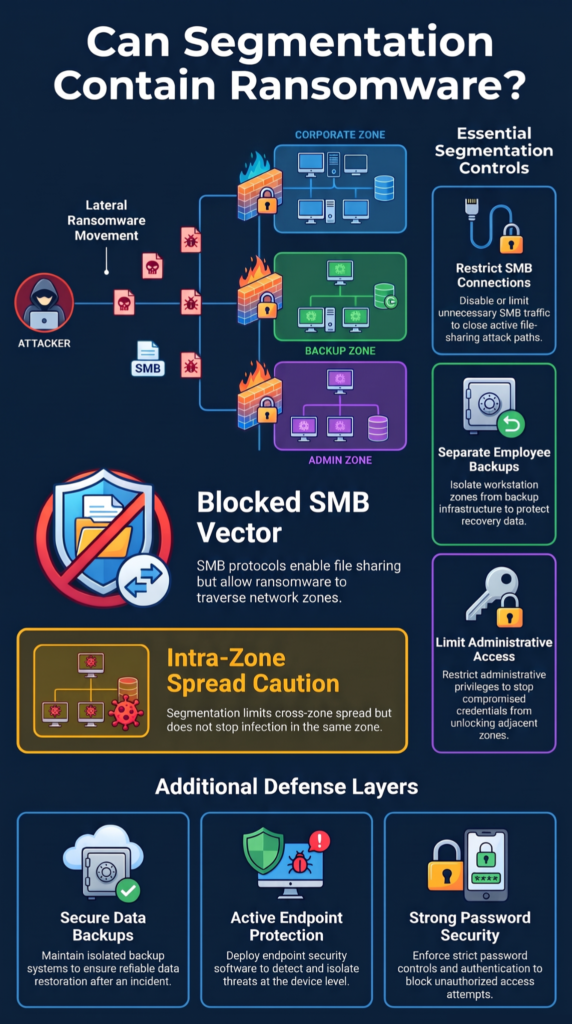
Segmentation can make it harder for ransomware to spread across a network. It limits the connections malware can use to reach other computers, shared folders, and servers.
Some ransomware attacks look for shared resources after infecting a device. Others use protocols such as Server Message Block (SMB), which supports file sharing on Windows networks.
Organizations can reduce unnecessary access by restricting SMB connections, separating employee devices from backup systems, and limiting administrative access.
But segmentation has limits. Ransomware may still affect files on an infected device or reach other systems in the same zone. Secure backups, endpoint protection, and strong password controls are still needed.
Which Systems Need Stronger Protection?
Some systems hold data or support services that an organization cannot afford to lose. These should have stricter access rules than ordinary employee devices.
Examples include:
- Payment systems: Keep cardholder data separate from general business networks.
- Databases: Allow access only from approved applications and administrators.
- Backup servers: Limit access to the systems responsible for backup and recovery.
- Domain controllers: Restrict access to identity and login services.
- Industrial systems: Separate operational technology from office networks.
Medical devices and industrial equipment may need special care. Some cannot run standard security software, and an unexpected network change could interrupt their operation.
Teams should check these risks before applying isolation rules. VLAN segmentation can also help separate operational technology from office networks without giving every device the same level of access.
Which Network Segmentation Method Should Organizations Use?
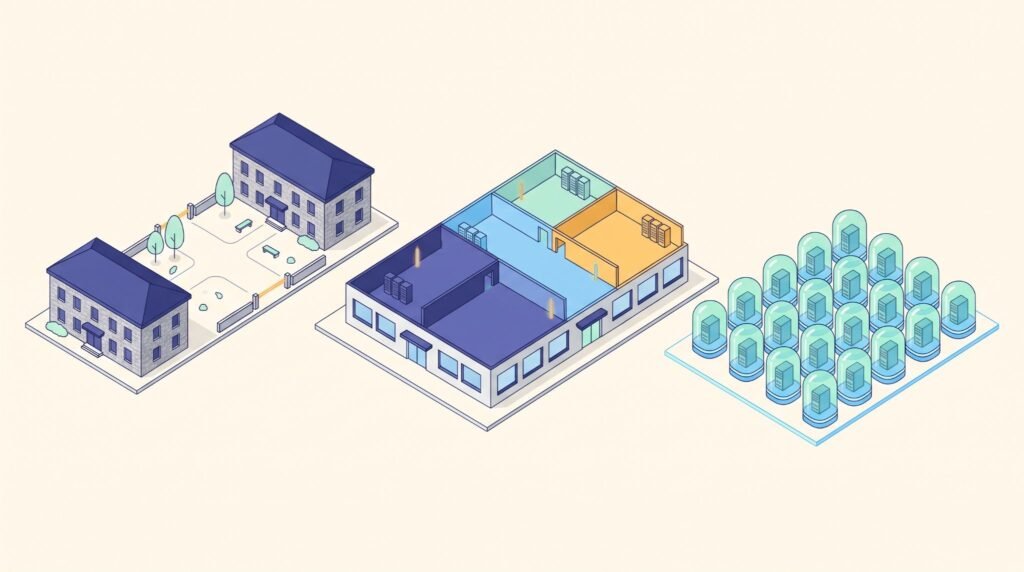
The right method depends on the network and the systems that need protection. Some organizations need broad separation between departments. Others need tighter rules between individual applications.
| Method | How it works | Main limitation |
| Physical segmentation | Uses separate network hardware and cables | Costs more and takes more work to manage |
| Macro-segmentation | Uses VLANs, subnets, and firewalls | Devices may still communicate within a large zone |
| Microsegmentation | Sets access rules for individual workloads | Policies need regular review |
Many organizations use more than one method. VLANs can separate broad groups, while microsegmentation adds stricter rules around sensitive applications.
“Network segmentation or compartmentalization, and layered protection are two strategies that are critical in building a secure network.” – Computers & Security, A Formal Approach to Network Segmentation
When Is Microsegmentation Useful?
Microsegmentation is useful when several applications share a network but do not need to communicate with each other.
For example, a payment application may need access to a payment database. Other applications should not have the same permission. Microsegmentation can set rules for that specific connection.
It is often used in data centers, cloud environments, and systems that run virtual machines or containers. VLANs still have a place, especially when an organization needs to separate larger groups of devices.
What Do Firewalls and Zero Trust Do?
Firewalls control traffic between network zones. They can allow or block connections based on details such as IP addresses, ports, and protocols. Access control lists (ACLs) apply similar rules on network devices.
Zero trust adds another layer of control. NIST Special Publication 800-207 explains that a system should not be trusted just because it is connected to an internal network.
In practice, users and devices need to prove they have permission to access a resource. An employee who can log in to a business application does not automatically need access to its database.
What Can Make Network Segmentation Difficult?

Segmentation can cause problems if teams do not know how their systems connect. An application may rely on a server or service that is not listed in the network documentation. If a new rule blocks that connection, the application may stop working.
Before making changes, teams should map how their applications communicate. They need to know which devices connect, what those connections are for, and which ports or protocols they use.
Testing real network traffic can help fill gaps in existing records.
Can Segmentation Affect Cloud Systems and Performance?
Cloud systems need access rules that can keep up with changes in the environment. Network security groups and virtual network rules control traffic between cloud resources.
In Kubernetes, Network Policies set rules for communication between containers. Microsegmentation in data centers and cloud environments can add more specific controls by limiting communication between individual workloads and applications.
A poorly written rule can leave a system exposed. For example, an unrestricted cloud security group may allow connections that should be blocked.
Performance also needs attention. Sending too much traffic through one firewall can slow down a network. Teams should test speed, delays, and system availability before and after major changes.
How Can Organizations Build a Segmentation Strategy?

A good plan begins with a clear view of the network. Teams need to know which systems they have, what data those systems hold, and how they connect. Effective network segmentation strategies also consider business priorities, system dependencies, and the level of protection each asset needs.
Identify Important Systems
Create an inventory of computers, servers, applications, databases, and cloud resources. Then decide which ones need the most protection.
Payment systems, customer records, identity services, and backup infrastructure often need stricter access rules. A security team can use this list to decide where to create network boundaries first.
Set Access Rules and Test Them
Source: Dixie joe
Group systems based on their purpose and security needs. For example, employee devices, guest Wi Fi, public facing services, and internal databases should not all share the same access.
Allow only the connections each group needs. Then test the rules. Check that approved applications still work and that restricted devices cannot reach protected systems.
Organizations that use segmentation to reduce the scope of a PCI DSS assessment must also meet the relevant testing requirements. PCI DSS Requirement 11.4.5 covers penetration testing of segmentation controls used to isolate the cardholder data environment.
FAQs
How should I segment a network when systems need to share data?
Start by identifying which systems need to communicate to support daily operations. Document their purpose, owners, data sensitivity, and required connections. Then create network zones based on those needs and restrict traffic between zones to approved services and ports. Test each rule with the teams responsible for the affected systems before enforcing it across the network.
How can I protect legacy devices that cannot support modern security controls?
Place legacy devices in restricted network segments and allow connections only to the systems and services they need. Block unnecessary inbound and outbound traffic, and monitor their activity for unexpected connections. Document any access exceptions, assign an owner, and review them regularly. These steps help isolate vulnerable devices without interrupting essential business operations.
How can I restore a legitimate connection blocked by segmentation rules?
First, identify the business task that requires the connection. Review firewall logs and network traffic records to find the source device, destination system, port, and protocol involved. Confirm the requirement with the system owner. If the connection is necessary, create a narrowly defined rule that allows only the required traffic. Document the change and test it before closing the issue.
How should organizations manage temporary access exceptions?
Organizations should assign an approver, define the permitted systems and services, and set an expiration date for every temporary access exception. They should also log administrative activity and limit permissions to the minimum required. When the approved period ends, security teams should remove the exception and verify that the original segmentation rules are active again.
What should happen to network access when employees or systems change roles?
Review access whenever an employee changes roles, a device is replaced, or a workload moves to another environment. Update permissions to match the new responsibilities and system requirements. Remove access that is no longer needed, including outdated administrative privileges. Regular access reviews help prevent unnecessary connections and keep network boundaries aligned with current business operations.
Keep Network Segmentation Effective Over Time
Network segmentation can lose its value when access rules fall behind network changes. New devices and applications can create gaps, even when the original setup was secure. Regular reviews matter. So does monitoring traffic for unusual activity.
Network Threat Detection can help security teams find these gaps before they become bigger risks. Its threat modeling, CVE mapping, and automated risk analysis help teams understand potential attack paths and decide which weaknesses need attention first.
References
- https://www.ncsc.gov.uk/guidance/preventing-lateral-movement
- https://www.sciencedirect.com/science/article/pii/S0167404820304351