

The MITRE ATT&CK matrix helps security teams understand how attackers behave by organizing tactics, techniques, sub techniques, and procedures into a clear framework. Instead of focusing only on malware or known indicators, teams can study attacker actions and improve detection coverage.
At Network Threat Detection, we see that behavior based analysis gives SOC teams better visibility because attackers often change their tools and infrastructure. ATT&CK knowledge helps analysts build stronger threat hunting and response processes by focusing on real attack patterns.
Learn more about improving detection strategies with Network Threat Detection and continue reading.
Quick Reads: MITRE ATT&CK Essentials
A quick summary of how ATT&CK helps teams understand, detect, and respond to attacker behavior.
- Tactics show attacker goals, while techniques explain their methods.
- ATT&CK mapping improves threat hunting, detection, and response.
- Security controls become stronger with better technique coverage.
Why Does The MITRE ATT&CK Matrix Matter For Cyber Defense?
The MITRE ATT&CK framework gives security teams a clearer view of how attacks happen. Instead of seeing alerts as separate problems, analysts can connect different activities and understand the possible actions behind them.
A failed login might not mean much on its own. A strange network connection may also look harmless. But when both events match known attacker behavior, the investigation changes.
“The MITRE ATT&CK framework is a globally accessible knowledge base of adversary tactics and techniques based on real-world observations.” – CISA
The ATT&CK matrix supports important security activities:
- Threat hunting.
- Detection improvement.
- Incident investigation.
The main idea is simple. Look at what attackers do, not only what they leave behind.
How Does MITRE ATT&CK Explain Attacker Behavior?
MITRE ATT&CK focuses on attacker actions during a security incident. Most attacks are not one quick event. They usually involve several steps.
Organizations can use the ATT&CK threat modeling process to better understand possible attack paths and evaluate how different techniques may appear in their environments.
An attacker may start with phishing, run malicious commands, steal account information, and move to other systems. Each step connects to a different ATT&CK technique.
This matters because attackers can change their tools very often. A malware file can be replaced. An IP address can disappear. But attacker habits often stay similar.
Security teams use ATT&CK to study:
- Attacker goals.
- Common methods.
- Repeated behaviors.
This helps organizations build better threat models and improve detection plans.
What Is The Difference Between Tactics And Techniques?
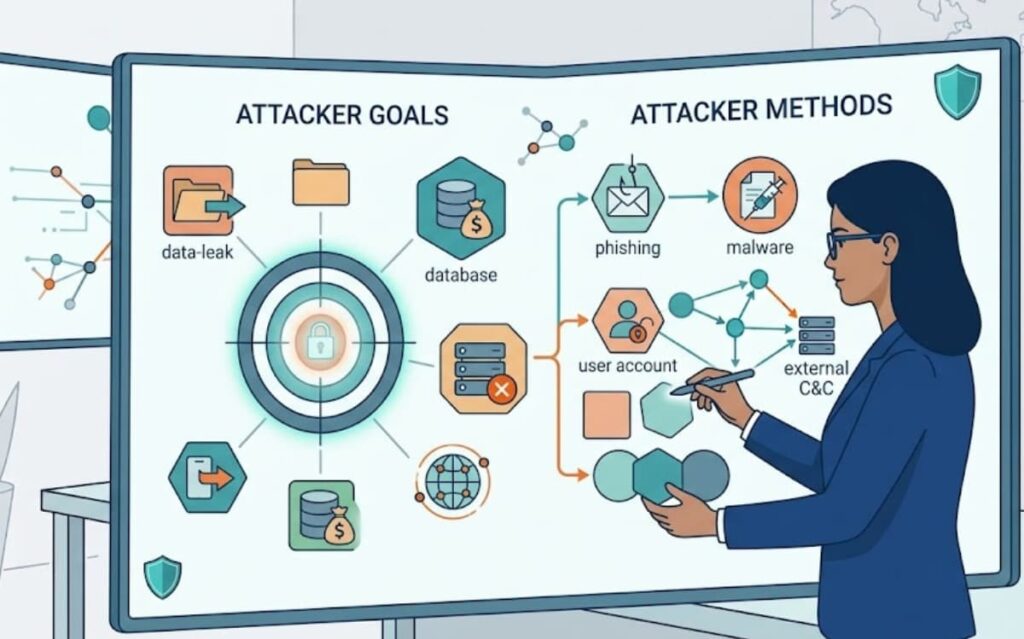
Tactics explain why an attacker performs an action. Techniques explain how the attacker does it.
Understanding this difference makes investigations easier because teams can separate the attacker’s goal from the actual method used.
| Layer | Meaning |
| Tactics | Attacker objective |
| Techniques | Attack method |
| Sub techniques | More specific method |
| Procedures | Real attack example |
What Are MITRE ATT&CK Tactics And How Do Attackers Use Them?
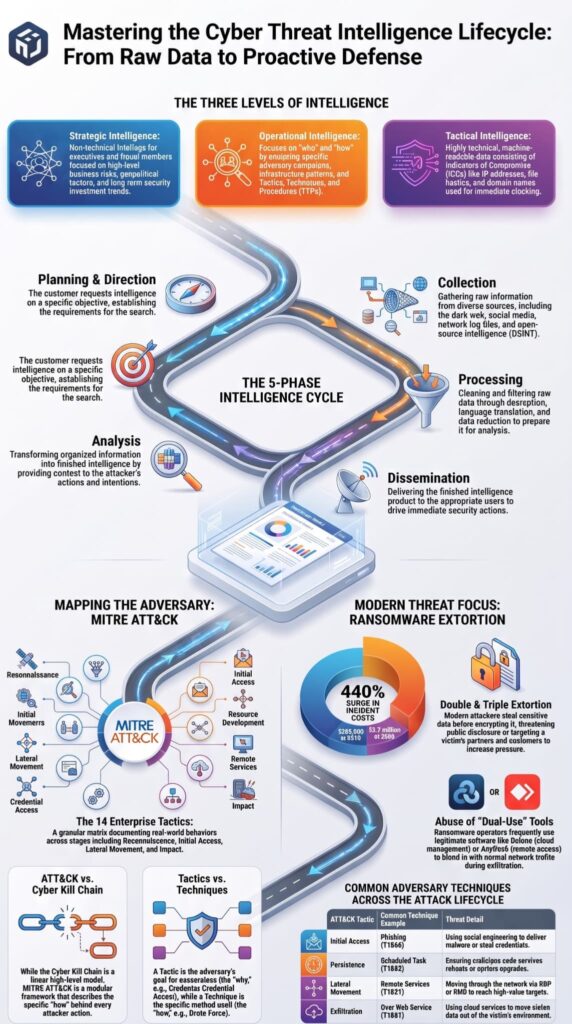
MITRE ATT&CK tactics describe the goals attackers try to achieve during an intrusion. They help security teams understand where an attacker may be in the attack process.
Some common tactics include:
- Initial Access.
- Execution.
- Persistence.
- Credential Access.
- Discovery.
- Lateral Movement.
- Command And Control.
- Impact.
Attackers do not always follow the same path. Some may move quickly. Others may spend weeks collecting information before taking action.
That is why behavior analysis matters.
A suspicious event becomes more useful when teams understand what the attacker may be trying to accomplish. For example, unusual account activity combined with internal network movement could point to a larger problem.
How Do MITRE ATT&CK Techniques Reveal Attacker Methods?

MITRE ATT&CK techniques explain the actions attackers use during an attack. While tactics describe the attacker’s goal, techniques show how they try to achieve it.
This matters because security teams can use these behaviors to find threats in real data. Logs, endpoint activity, and network traffic often contain signs of attacker activity.
Teams may look for:
- Unusual command execution.
- Suspicious remote access.
- Credential theft attempts.
- Strange network behavior.
The focus is not only on finding malware. It is about understanding what an attacker is doing inside the environment.
Attackers can change their tools quickly. A new malware sample may avoid older detection rules, but attacker behaviors often stay similar. Actions like privilege escalation, lateral movement, and unusual account activity can still reveal possible threats.
Why Are Techniques More Useful For Detection Than Tactics?
Techniques help security teams build better detections because they describe actions that can be monitored.
A tactic like Execution only explains that an attacker wants to run code. It does not tell defenders what signs to look for. Techniques provide more specific details.
Examples include:
- PowerShell activity.
- Remote service usage.
- Process injection.
- Suspicious account actions.
These details help SOC teams create detection rules and improve threat hunting.
But detection is not only about technology. Teams still need to understand the reason behind an activity before deciding whether it is a real threat.
How Do Security Teams Apply The MITRE ATT&CK Matrix?
Security teams use the MITRE ATT&CK matrix to connect attacker behavior with security operations. It supports threat hunting, detection reviews, incident response, and security testing.
“Cyber threat intelligence reports contain valuable information about adversary behaviors, including the techniques they use during attacks.” – National Institute of Standards and Technology (NIST)
A good ATT&CK approach helps teams answer simple questions:
- What attacks can we see?
- Where are our gaps?
- What risks need attention?
How Does ATT&CK Improve Threat Detection?
ATT&CK helps security teams create detections based on attacker actions instead of only known indicators.
By applying the MITRE ATT&CK framework, teams can connect detection strategies with specific attacker behaviors and better understand which techniques require stronger monitoring.
For example, teams can review activity related to:
- Credential access.
- Lateral movement.
- Command execution.
- Data collection.
How Does ATT&CK Mapping Reveal Security Weaknesses?
Source: The Intel Lab
ATT&CK mapping helps organizations understand where their defenses may have gaps. Teams compare their current controls against attacker techniques to see what they can detect and what they may miss.
By mapping security controls against ATT&CK techniques, organizations can identify areas where detection coverage is strong and where additional monitoring may be needed.
For example, a company may detect phishing well but have limited visibility into:
- Internal movement.
- Credential misuse.
- Network activity.
Finding these gaps early helps teams improve before attackers take advantage.
More tools do not always fix security problems. Better visibility and useful data usually matter more.
FAQs
What is the difference between MITRE ATT&CK tactics and techniques?
The MITRE ATT&CK matrix organizes attacker behavior into tactics and techniques. Tactics describe the attacker’s goal during different stages of the attack lifecycle, while techniques explain the methods used to achieve those goals. For example, credential access is a tactic, while credential dumping is a technique. Together, they help security teams analyze adversary behavior more clearly.
How do security teams use MITRE ATT&CK for threat hunting?
Security teams use the MITRE ATT&CK framework to connect threat hunting activities with known attacker behaviors. Analysts can use technique mapping, TTP analysis, and log correlation to identify suspicious activity across their environments. This approach helps teams create stronger threat detection rules, improve security coverage, and find attack patterns that may not trigger traditional alerts.
Why are MITRE ATT&CK sub-techniques important?
MITRE ATT&CK sub-techniques provide more specific details about how attackers perform certain actions. Instead of only tracking broad activities like lateral movement, teams can analyze methods such as SMB lateral movement or remote services. This level of detail supports better intrusion analysis, improves detection engineering, and helps teams understand the procedures attackers use during attacks.
How does MITRE ATT&CK support incident response?
MITRE ATT&CK supports incident response by helping teams understand where attacker activity fits within the attack lifecycle. By mapping observed behaviors to tactics and techniques, responders can identify methods such as initial access, persistence, privilege escalation, and data exfiltration. This structured approach helps teams investigate incidents faster and develop more effective response actions.
Can MITRE ATT&CK help improve security controls?
Yes, MITRE ATT&CK can help organizations evaluate whether their security controls can detect important attacker behaviors. Teams can review coverage for techniques such as phishing attacks, process injection, living off the land, and command and control activity. ATT&CK mapping helps identify detection gaps, prioritize improvements, and strengthen overall security operations.
Which MITRE ATT&CK Techniques Should Organizations Prioritize?
When your security team can’t see which attacker behaviors matter most, it’s easy to spend time on low priority risks while missing real threats. A risk based approach helps you focus on activity that can impact your environment. That’s what matters.
If you need better visibility into attacker paths and security gaps, Network Threat Detection can help. Their approach uses threat modeling and attack path simulations with intelligence-driven insights to help organizations understand critical risks. Learn h
References
- https://www.cisa.gov/news-events/news/best-practices-mitre-attckr-mapping
- https://www.nist.gov/publications/alert-framework-efficient-extraction-attack-techniques-cyber-threat-intelligence