

ATT&CK control mapping helps organizations see whether their security tools can detect and respond to real attacker behavior. Instead of only checking if a security product is active, teams can review how well their defenses cover common attack methods.
At Network Threat Detection, we help teams connect security controls with threat models and risk analysis to find weak areas. This approach gives a clearer view of where improvements are needed. ATT&CK mapping supports better planning, testing, and security decisions by focusing on attacker actions, not only alerts. Continue reading to learn how this process improves cyber defense.
ATT&CK Control Mapping Essentials
A quick look at how ATT&CK mapping helps teams improve security visibility and control effectiveness.
- Maps security controls to attacker techniques.
- Finds gaps in detection and visibility.
- Improves security posture through validation.
Why Is ATT&CK Control Mapping Important For Security Teams?
ATT&CK control mapping is useful because it focuses on what attackers do, not only what security products an organization owns.
A company may have endpoint protection, firewalls, and monitoring tools. But can those controls detect credential theft? Can they identify suspicious network movement? Can they help during an active incident?
Those questions matter.
During security reviews, we often see organizations with strong technology stacks but limited understanding of their actual coverage. The issue is not always missing tools. Sometimes the problem is missing visibility, poor configuration, or unclear detection goals.
ATT&CK creates a common language between security teams. Analysts, engineers, and leaders can discuss threats using the same framework.
Teams use ATT&CK mapping for:
- Threat detection reviews.
- Security testing.
- Threat hunting plans.
- Risk analysis.
How Does ATT&CK Mapping Change Security Measurement?
Traditional security reviews often focus on whether a tool exists. Applying the MITRE ATT&CK framework helps teams look deeper by evaluating whether controls can identify specific attacker actions.
It asks:
“Can this control identify a specific attacker action?”
Each control has a different purpose.
| Security Control | ATT&CK Coverage Example |
| Email Security | Phishing detection |
| Identity Security | Credential protection |
| Endpoint Security | Suspicious execution |
| Network Threat Detection | Network movement and communication |
What Is The Difference Between ATT&CK Techniques And Security Controls?
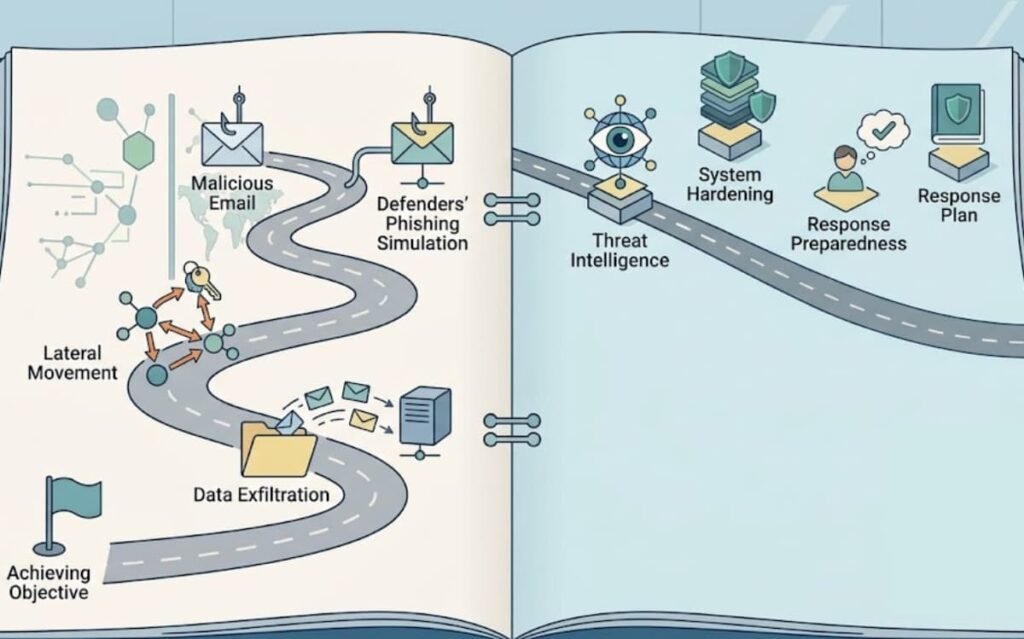
ATT&CK techniques describe attacker actions. Security controls describe how defenders respond.
These two areas connect because organizations need to understand both sides of an attack.
For example:
- Attacker behavior: Credential Dumping.
- Security response: Account protection and monitoring.
- Goal: Reduce unauthorized access.
One control rarely stops an entire attack. Attackers usually use multiple steps, so organizations need several layers of defense.
A company may block phishing emails but still need strong identity protection and network monitoring. Security works better when controls support each other.
How Do Organizations Map Security Controls To ATT&CK Techniques?
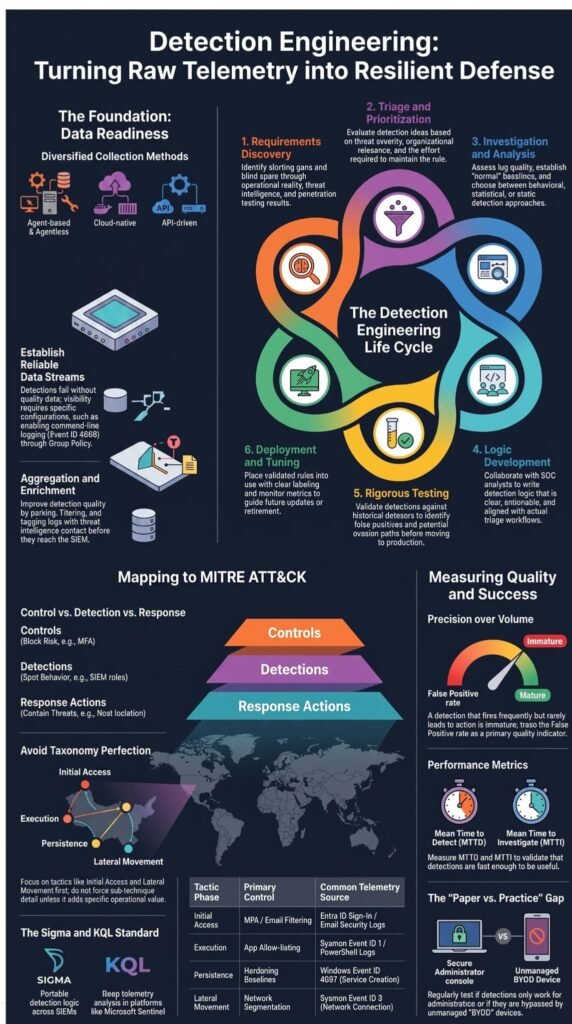
Organizations usually begin ATT&CK mapping by reviewing their current security capabilities through an ATT&CK threat modeling process.
This includes:
- Endpoint tools.
- Identity controls.
- SIEM monitoring.
- Network visibility.
- Cloud security systems.
The goal is not to list every product. The goal is to understand what each control can actually detect or prevent.
A security platform may collect large amounts of data, but that data is only useful if teams can analyze it properly.
How Do Teams Identify Existing Security Capabilities?
Security teams review each control and measure its ability to handle different attacker behaviors.
They usually ask:
- Can this control prevent the technique?
- Can it detect the activity?
- Can it only provide visibility?
A control that only records activity is different from a control that creates an alert or blocks an action.
Understanding this difference helps teams make better decisions.
Why Should Organizations Map Controls At The Sub Technique Level?
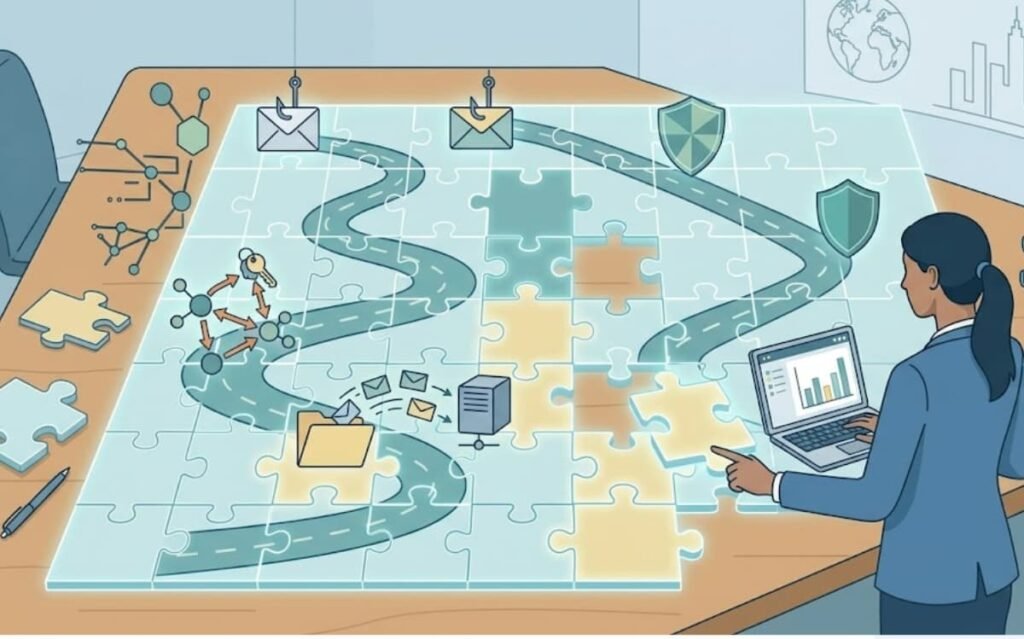
Broad ATT&CK techniques can hide important details. Sub techniques provide a clearer view of how attackers operate.
For example, phishing is a general technique. But attackers may use different methods, such as malicious attachments or harmful links.
Each method may require different defenses.
Sub technique mapping helps teams improve:
- Detection accuracy.
- Security testing.
- Threat hunting.
- Risk reviews.
A detailed review gives organizations a more realistic picture of their defense coverage.
Without this level of detail, teams may believe they have protection when important gaps still exist.
Small gaps can become big problems.
How Does ATT&CK Mapping Show Security Coverage Gaps?
Source: Protech Future
ATT&CK mapping helps organizations find weak points in their security defenses. It shows which attacker behaviors can be blocked, detected, or only seen after they happen.
Many companies already have security tools in place. But having tools does not always mean having enough protection. We often see teams with multiple security products that still miss important attack paths because their controls are not properly connected to attacker behavior.
A control review based on ATT&CK helps answer practical questions:
- Can this control detect the attack?
- Does it only provide visibility?
- Where are the missing protections?
“ATT&CK can be used to identify defensive gaps, assess security tool capabilities, organize detections, hunt for threats, or validate mitigation controls.” – Cybersecurity and Infrastructure Security Agency (CISA)
This gives security teams a clearer view of their real defense capability.
What Do Prevention, Detection, And Visibility Gaps Mean?
Security gaps usually fall into different categories. Understanding these differences helps teams decide what needs improvement first.
| Coverage Level | Meaning |
| Prevent | Blocks attacker activity before damage occurs |
| Detect | Identifies suspicious behavior for investigation |
| Observe | Records activity but needs analysis |
| No Coverage | No protection or visibility exists |
A prevention gap means attackers may complete an action without being stopped. A detection gap means suspicious behavior may happen without creating an alert. An observation gap means teams have data but may not have enough context to understand it.
How Does ATT&CK Mapping Improve Security Prioritization?
ATT&CK mapping helps teams decide where to invest time and resources. Instead of improving every security area equally, organizations can focus on techniques that create higher risk. This approach also supports ATT&CK for threat hunting by helping analysts create focused hypotheses based on attacker behavior and likely attack paths.
“Cybersecurity risk management is the ongoing process of identifying, assessing, and responding to cybersecurity risks.” – National Institute of Standards and Technology (NIST)
For example, a company with valuable customer data may prioritize:
- Credential theft protection.
- Internal movement detection.
- Network communication monitoring.
- Data access controls.
FAQs
How does ATT&CK control mapping improve security decisions?
ATT&CK control mapping helps security teams connect defensive controls with real attacker behaviors. Instead of reviewing security tools separately, teams can understand which attack techniques are covered and where gaps exist. This approach supports better control prioritization, improves security posture assessment, and helps organizations build a defense strategy based on actual risks.
What is the purpose of mapping security controls to ATT&CK?
Mapping security controls to the ATT&CK framework helps organizations evaluate whether their defenses can address common attack techniques. Teams can use this approach for security framework mapping, control assessment, and gap analysis. It provides a clearer view of missing protections and helps improve security planning across security operations, threat hunting, and incident response.
How does ATT&CK mitigation mapping support threat defense?
ATT&CK mitigation mapping helps teams understand which defensive actions can reduce attacker success. By connecting mitigation strategies with adversary behavior mapping, organizations can improve preventive controls, detective controls, and response controls. This supports threat-informed defense by helping security teams focus on practical improvements instead of adding security measures without understanding their effectiveness.
How can teams measure security control coverage?
Teams can measure security control coverage by comparing existing defenses against attacker techniques and tactics. This process includes reviewing detection coverage, telemetry coverage, and control effectiveness. Regular control validation helps security teams identify weak areas, improve security monitoring, and ensure their defensive strategy continues to address evolving threats.
Why should organizations review ATT&CK alignment regularly?
Organizations should review ATT&CK alignment regularly because attackers continue to change their methods. Continuous improvement helps teams update mitigation planning, improve control maturity, and maintain operational resilience. Regular reviews through control testing, adversary emulation, or purple teaming can show whether security controls still provide effective protection against current attack techniques.
How ATT&CK Mapping Improves Incident Response
During an incident, you need to understand what happened and where the attacker may go next. ATT&CK mapping gives your team better context, helping analysts connect activity and investigate with more confidence. It reduces guesswork. That matters when time is limited.
If you’re looking to improve threat visibility and response planning, Network Threat Detection can help. Their threat modeling and attack path analysis approach helps organizations identify risks, validate security coverage, and strengthen response strategies with intelligence-driven insights. Learn how to build a stronger security approach with Network Threat Detection.
References
- https://www.cisa.gov/news-events/news/best-practices-mitre-attckr-mapping
- https://www.nist.gov/cyberframework