

Fraud isn’t always a loud alarm. It’s often a quiet, gradual deviation from normal behavior that slips past traditional rules. Network Threat Detection is built to catch exactly that. By using machine learning to establish a baseline of “normal” for every user and system, UEBA flags the subtle anomalies that signal fraud.
This moves your brand from chasing after financial losses to preventing them entirely. From insider threats to sophisticated financial scams, here is how implementing common ueba use cases examples fraud detection provides the contextual intelligence that static security tools lack.
What We’re Tracking: The Core Benefits
Before diving into the specific scenarios, here is a quick snapshot of how behavior analytics fundamentally changes the fraud prevention game:
- UEBA excels at detecting fraud that lacks obvious red flags, focusing on behavioral changes over time.
- It connects seemingly unrelated events across users, systems, and data to reveal complex fraud schemes.
- The technology prioritizes high-fidelity alerts, drastically reducing false positives and investigation time for security teams.
How Does UEBA Detect Insider Fraud That Rules Miss?
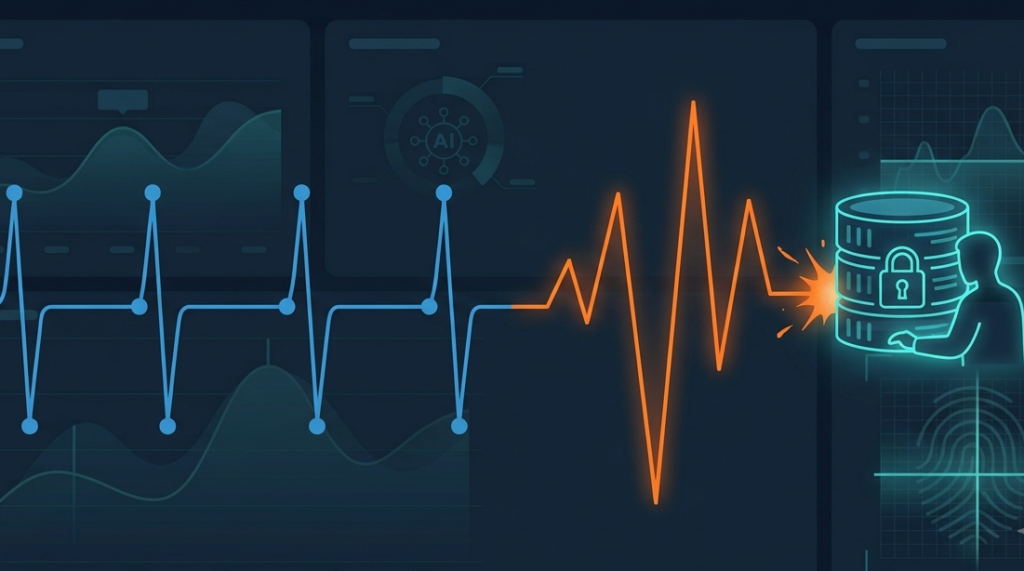
Insider fraud is a ghost in the machine. The user is authorized, their actions are legitimate in isolation, but their intent is malicious. Traditional data loss prevention (DLP) rules might catch a mass download, but they won’t flag an employee who, over six months, slowly exfiltrates sensitive files a few at a time during normal hours.
Implementing user and entity behavior analytics helps security teams move past these static limitations. The system works by establishing a baseline. It knows that Sarah in engineering typically accesses source code repositories and technical specs.
We’ve seen cases where the first alert wasn’t about data volume, but about a new and persistent data access pattern to an unrelated system. That’s the early warning. It’s the difference between catching a fraudster with a handful of records versus a full database.
Can UEBA Really Stop Account Takeover and Credential Fraud?
Account takeover (ATO) is a epidemic. Stolen credentials are bought and sold daily. The fraudster’s goal is to look like the real user, but their behavior always betrays them. Rules can block logins from strange countries, but what if the attacker uses a residential proxy in the user’s own city?
“User and Entity Behavior Analytics (UEBA)… deploys AI to monitor how users and devices behave on a company network. When the models detect suspicious behavior like unusual file transfers or login attempts, they lock the account and alert security teams. UEBA can stop cyberattacks from spreading after initial defenses fail to prevent them.” – Cyber Defense Magazine
UEBA looks deeper. It analyzes the session itself. Even from a “valid” location, is the login time abnormal for this user? Once in, does the mouse movement or typing rhythm match the established biometric pattern? Are they navigating to different applications in a strange order? We integrate these behavioral signals in our Network Threat Detection.
For instance, a valid login followed immediately by an attempt to change account recovery settings or modify routing numbers is a massive red flag. UEBA correlates the credential use with the subsequent high-risk actions, scoring the entire session as malicious and triggering step-up authentication or a session kill before a transaction completes.
What About Fraud in Financial Transactions and Billing?
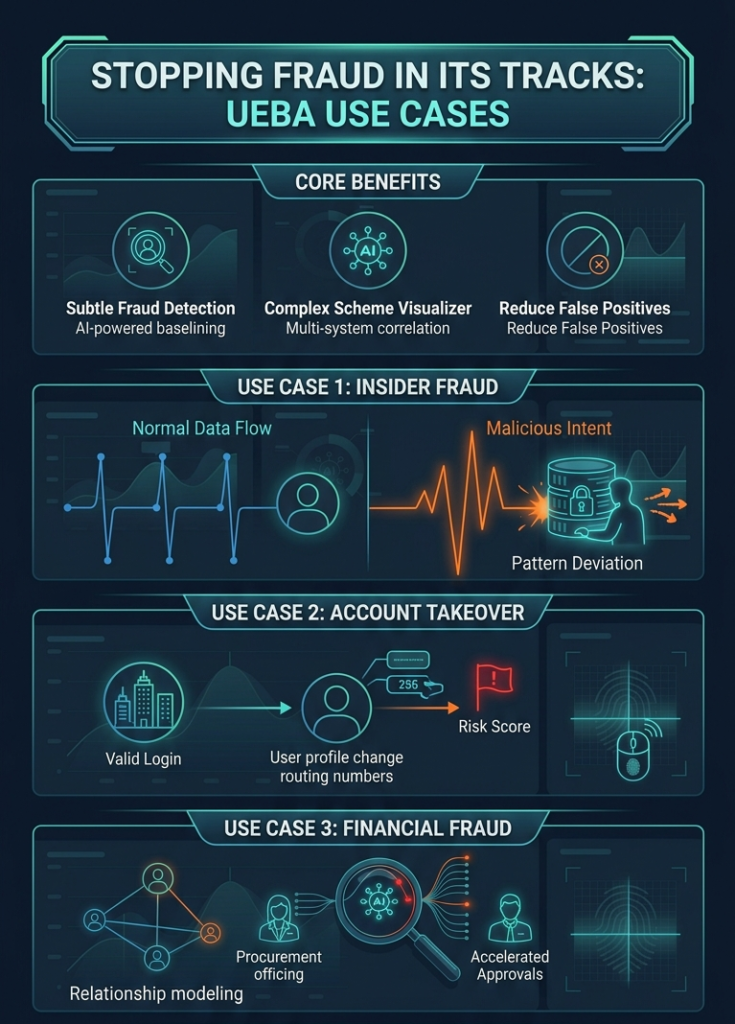
This is where UEBA’s ability to link entities shines. Financial fraud often involves collusion or abuse of process. Think of a procurement officer and a vendor. Individually, their actions might seem fine. But UEBA can model relationships by establishing baseline user entity behavior across the corporate network.
It might notice that approvals from Officer A for Vendor B are always processed 300% faster than the department average. Or that every time Officer A logs in from a new device (a potential compromised session), a new, high-value invoice from Vendor B is created minutes later.
It connects the dots between user behavior, transaction timing, and entity relationships that a rules engine could never codify. The system isn’t just looking for a “large transaction”; it’s looking for a transaction that breaks the established behavioral and relational patterns of the involved human and non-human entities (like the vendor account).
| Fraud Type | Traditional Rule Might Catch | UEBA Behavioral Anomaly Detects |
| Insider Data Theft | Download > 50MB at once | Low-volume, persistent access to unfamiliar data types over weeks. |
| Account Takeover | Login from blacklisted country | Valid login with abnormal session speed, followed by sensitive action. |
| Billing/Procurement Fraud | Invoice amount above $X | Accelerated approval cycles for a specific vendor paired with device anomalies. |
| Payroll Fraud | Duplicate payroll entry | HR admin accessing payroll system at abnormal hours to modify a single record. |
How Does It Help with Privileged User and Third-Party Risk?
Privileged users (IT admins, executives) and third-party vendors have broad access, making their potential for abuse, intentional or accidental, immense. Monitoring them with rigid rules is politically and practically difficult.
UEBA provides objective, behavior-based oversight. It learns what “normal” looks like for a specific database administrator. Maybe they routinely make schema changes on Tuesday mornings. That’s fine. But if that same admin starts querying tables containing personally identifiable information (PII) or intellectual property at night, that’s a stark deviation.
For third parties, UEBA establishes a baseline for their typical access patterns and data touchpoints. A sudden spike in data egress from their account or access to systems outside their contracted scope becomes immediately visible. It shifts monitoring from “watching everyone” to “investigating meaningful deviations.”
Is UEBA Useful for Detecting Rogue Trading or Market Abuse?
Credits: 2021.Ai
In regulated environments like finance, certain trades require pre-approval or fall under strict communication surveillance. UEBA can model complex, multi-step fraud schemes.
Consider a trader who needs compliance approval for a large block trade. A UEBA system monitoring communication platforms, trade systems, and access logs might detect a sequence: first, the trader accesses a research report they never read. Minutes later, they place a personal trade in a related instrument via a different system.
“BioCatch captures pre-transaction data on how users move their mouses, how they type, how they interact with touch screens… By capturing them in the background, financial institutions can spot anomalies in real time without disrupting the customer experience… enabling institutions to make the right decision, in real time.” – Nasdaq
Finally, they execute the large, approved firm trade. Individually, these actions are permissible. In that specific, temporally-linked sequence, they paint a picture of potential front-running. UEBA’s power is correlating these weak signals across different data silos to form a high-risk alert, something manual surveillance would likely miss.
What’s the First Step to Implementing UEBA for Fraud?
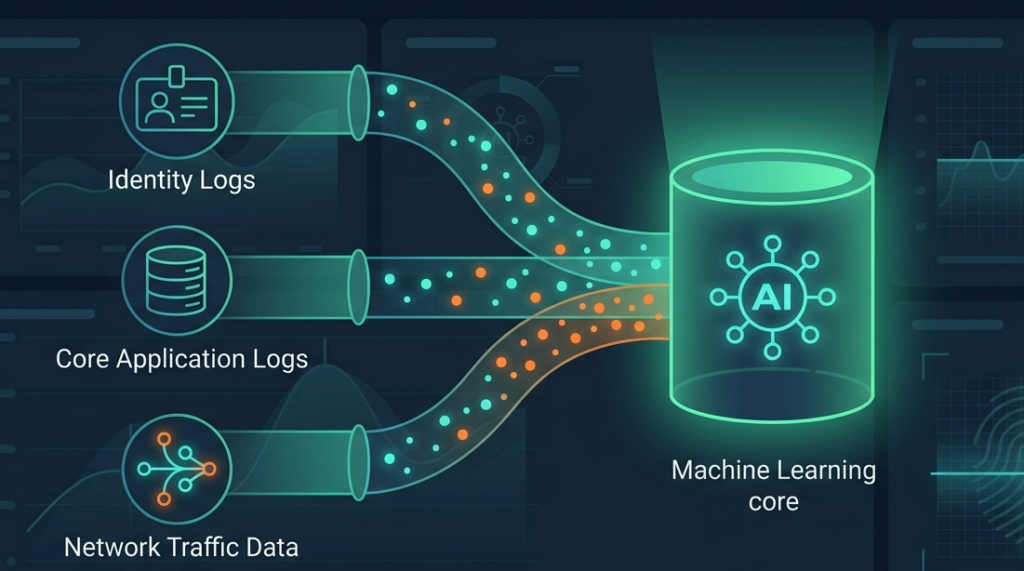
The biggest hurdle is data, not technology. You must start with a critical, high-fidelity data source that clearly reflects user and entity actions. For fraud detection, this often means:
- Identity and Access Management Logs: (Active Directory, Okta, etc.) To see who is authenticating and when.
- Core Application Logs: (ERP, CRM, Banking Platforms) To see what actions are taken post-login.
- Network Traffic Data: To see the movement of data between systems.
In our work, we often find starting with Network Threat Detection provides a foundational, unbiased layer. It shows you what is actually happening on the wire, what data is moving where, and which systems are talking. This network-level behavioral baseline is hard to falsify and provides context for the more granular application logs.
You begin by feeding it this data, letting the underlying machine learning algorithms ueba systems rely on establish a baseline for 30-60 days, and then tuning alerts for the specific fraud use cases that keep you up at night.
FAQ
Does UEBA replace our existing fraud detection systems?
Rarely. It complements them. Think of rules-based systems as a speed trap catching obvious violations. UEBA is the detective noticing suspicious behavior patterns that don’t break a specific law but warrant investigation. They work best together.
How long does it take to see results?
The models typically need 30-90 days of historical data to establish a reliable behavioral baseline. After this learning period, you should start receiving prioritized anomaly alerts. The value compounds as the system learns and incorporates feedback.
Is it only for large enterprises?
No. Cloud-based UEBA solutions have made the technology accessible. The principle, detecting fraud through behavioral change, is universal. The scale of data ingestion is the main variable, not the company size.
Can it generate alerts for regulatory reporting?
Yes. A key output is an auditable alert with a risk score and supporting evidence (the anomalous behaviors detected). This narrative is invaluable for demonstrating due diligence to regulators and auditors after an incident.
Shifting the Fraud Detection Paradigm
The common thread in these UEBA use cases is a shift from looking for known-bad indicators to understanding normal and spotting deviations. Fraudsters evolve, but core human and system behaviors have patterns. UEBA learns these patterns, turning an overwhelming stream of logs and transactions into a clear story about risk.
To bridge these visibility gaps and proactively defend your environment, explore how Network Threat Detection equips SOC teams with real-time threat modeling, automated risk analysis, and visual attack path simulations to expose blind spots before attackers exploit them.
References
- https://www.cyberdefensemagazine.com/newsletters/august-2024/mobile/index.html#p=102
- https://www.nasdaq.com/newsroom/nasdaq-verafin-and-biocatch-partner-fight-financial-crime-behavioral-and-transactional?utm_campaign=ATest&utm_medium=OrganicSocial&utm_source=LinkedIn