

Storing syslog data efficiently is a growing challenge as log volumes continue to increase. In our experience, organizations often collect everything but struggle with storage costs and slow retrieval times. Without a clear strategy, syslog storage becomes expensive and inefficient.
The goal is not just to store logs, but to store them intelligently. This article explores how to balance cost, performance, and accessibility while maintaining strong security visibility. Keep reading to learn practical ways to optimize your syslog storage strategy.
Key Insights for Storing Syslog Data Efficiently
Storing syslog data efficiently requires balancing retention, performance, and cost.
- Prioritize critical logs over low-value data
- Use compression to reduce storage footprint
- Implement tiered storage strategies
Why Efficient Storage Matters in Network Threat Detection

We emphasize Network Threat Detection because storage directly impacts detection and investigation capabilities. By filtering syslog messages effectively, teams can strip away redundant data before it reaches storage, enabling faster forensic analysis and reducing query delays.
- Enables faster forensic analysis
- Reduces query and retrieval delays
- Supports long-term threat visibility
- Improves overall system performance
From our experience, inefficient storage often leads to slow investigations, especially when analysts need historical data quickly.
“Data storage efficiency involves minimizing storage space while maintaining accessibility and performance.” – Wikipedia
Core Techniques for Efficient Syslog Storage
Efficient storage is achieved through a combination of technical strategies. When designing a high availability syslog setup, it is vital to pair redundancy with log compression and deduplication to prevent storage overflow during peak traffic.
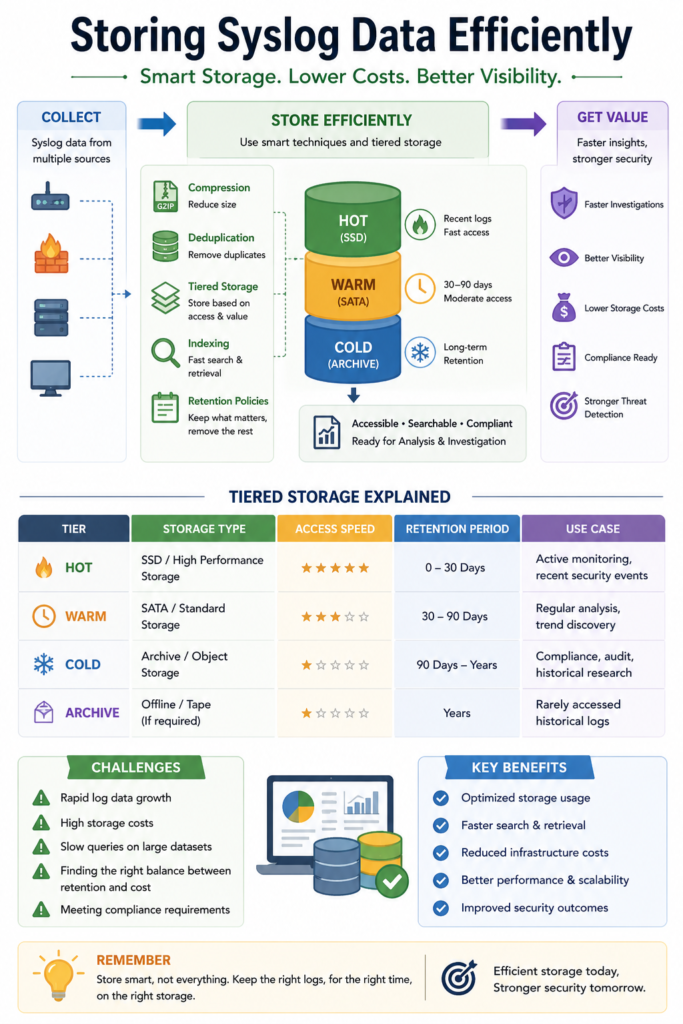
- Log compression (e.g., gzip) to reduce size
- Deduplication to eliminate repeated entries
- Tiered storage (hot, warm, cold layers)
- Indexing for faster search and retrieval
- Retention policies to remove outdated logs
We have found that tiered storage provides the best balance between cost and performance, especially in large environments.
Example Storage Strategy Table
Credits: Firewall Life
| Storage Layer | Purpose | Example Use Case |
| Hot Storage | Fast access | Recent security events |
| Warm Storage | Moderate access | Logs from last 30–90 days |
| Cold Storage | Long-term retention | Compliance and audit logs |
| Archive | Rare access | Historical investigations |
This layered approach ensures efficient use of storage resources.
Challenges in Storing Syslog Data Efficiently
Despite best efforts, several challenges can impact storage efficiency.
- Rapid growth of log data volume
- High storage costs over time
- Slow query performance on large datasets
- Difficulty balancing retention and cost
- Managing compliance requirements
From firsthand experience, one of the biggest issues is storing too much low-value data, which increases costs without improving security.
“Efficient data management requires balancing storage capacity, retrieval speed, and cost constraints.” – ScienceDirect
Best Practices for Efficient Syslog Storage
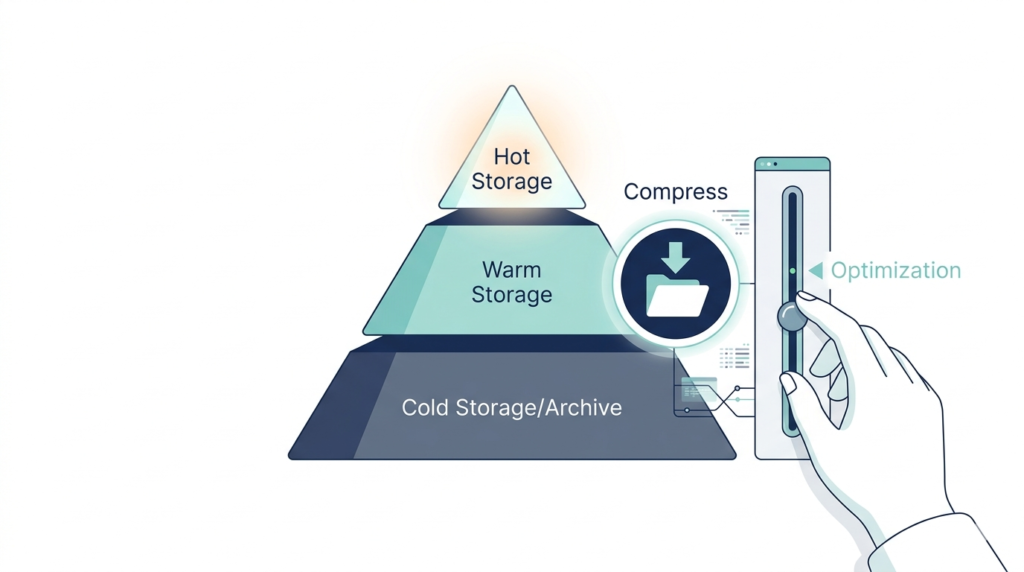
To maintain efficiency, storage strategies must evolve continuously. This evolution starts with understanding syslog protocol and its data formats to ensure your collection stays streamlined. Regularly review and adjust retention policies to keep your infrastructure optimized.
- Regularly review and adjust retention policies
- Compress logs before long-term storage
- Separate critical and non-critical logs
- Monitor storage usage trends
- Integrate storage with analytics and detection tools
We have learned that proactive monitoring of storage usage prevents unexpected capacity issues and performance degradation.
FAQ
What is the best way to reduce syslog storage costs?
The most effective approach is combining compression, deduplication, and tiered storage. By storing only critical logs in high-performance storage and moving older data to cheaper storage tiers, organizations can significantly reduce costs without losing important information.
How long should syslog data be retained?
Retention depends on compliance requirements and operational needs. Some industries require logs to be stored for months or years. However, from our experience, not all logs need the same retention period—prioritization is key.
Does compression affect log accessibility?
Compression reduces storage size but can slightly impact retrieval speed if not managed properly. Modern systems balance this by compressing older logs while keeping recent logs easily accessible.
Can efficient storage improve security operations?
Yes, efficient storage improves both performance and usability. Faster access to relevant logs enables quicker investigations, better threat detection, and more effective incident response.
Storing Syslog Data Efficiently for Better Security Outcomes
To maximize security visibility while controlling costs, organizations must optimize syslog storage through tiered retention and compression. Efficient log management ensures that critical data remains accessible for rapid incident response and compliance.
By aligning storage strategies with detection goals, teams can eliminate blind spots and improve performance. To strengthen your defenses with real-time threat modeling, automated risk analysis, and visual attack path simulations, explore advanced capabilities at NetworkThreatDetection.com.
References
- https://en.wikipedia.org/wiki/Data_storage
- https://www.sciencedirect.com/topics/computer-science/data-management