
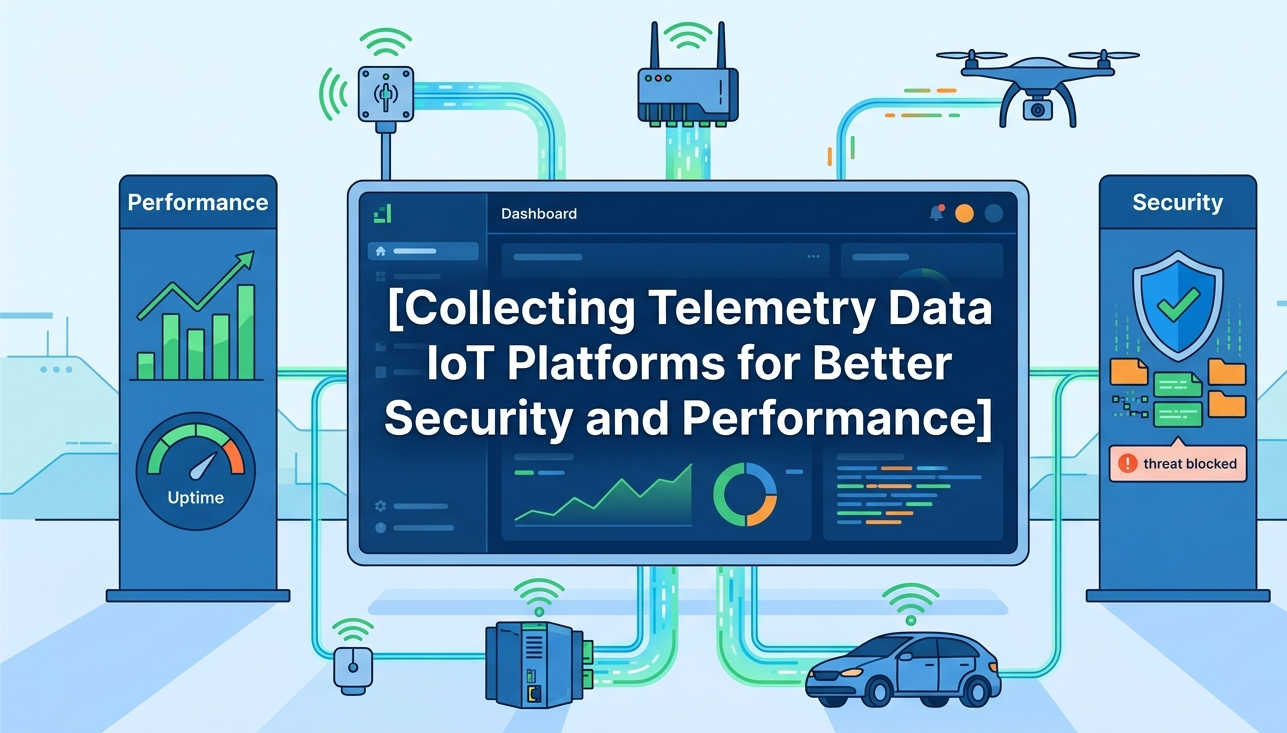
IoT devices generate constant streams of information such as temperature, location, uptime, battery status, traffic activity, and performance metrics. When managed correctly, this data becomes valuable intelligence for security and operations teams. Without a structured platform, however, telemetry can become scattered, inconsistent, and difficult to use.
Understanding collecting telemetry data IoT platforms helps organizations transform raw device signals into actionable insights. Keep reading to learn how IoT platforms simplify data collection, analysis, and smarter decision-making.
Key Insights: Collecting Telemetry Data IoT Platforms
Strong telemetry programs rely on centralized visibility, reliable ingestion, and consistent analysis.
- Centralized platforms improve device visibility
- Real-time data enables faster decisions
- Normalized data supports analytics
What Is Telemetry Data in IoT?
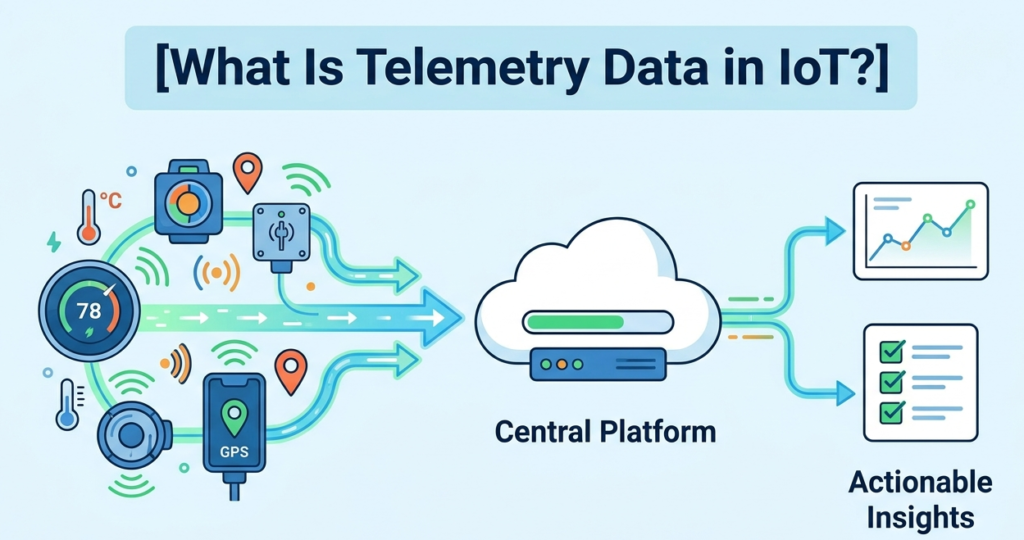
Telemetry refers to automatically collected data sent from remote devices to a central system for monitoring and analysis.
Common IoT telemetry includes:
- Temperature and humidity readings
- Device uptime and health status
- GPS location data
- Battery levels
- CPU or memory usage
- Network traffic statistics
“Telemetry is the collection of measurements or other data at remote points and their automatic transmission.” – Wikipedia
For IoT environments, telemetry simplifies monitoring IoT devices by giving teams visibility into what they are doing at any moment.
Why IoT Platforms Matter
When organizations manage many devices, collecting data manually becomes unrealistic. IoT platforms centralize ingestion, dashboards, automation, and alerts.
Main benefits include:
- One view across many devices
- Easier device onboarding
- Faster troubleshooting
- Automated alerts
- Scalable storage
- Better reporting
Instead of checking separate systems, teams gain a single environment for monitoring connected assets and responding quickly when issues appear.
Types of Telemetry Data to Collect
Not all data has equal value. Prioritize metrics that improve security, uptime, and operational performance.
Recommended categories:
- Device health metrics
- Sensor output values
- Connectivity status
- Authentication attempts
- Firmware versions
- Error logs
- Power consumption
- Usage patterns
Collecting the right data avoids overload while ensuring teams have enough context to investigate incidents or optimize device performance.
Secure Methods for Data Collection
Telemetry systems must protect the data they gather by following IoT security best practices, as weak collection methods can expose sensitive operational information.
Use security controls such as:
- TLS encrypted communications
- Device certificates
- API authentication tokens
- Network segmentation
- Role-based dashboard access
- Secure cloud or on-prem storage
“MQTT is a lightweight messaging protocol.” – Wikipedia
Because lightweight protocols are common in IoT, secure configuration is essential when sending telemetry to platforms.
Real-Time Monitoring and Alerts
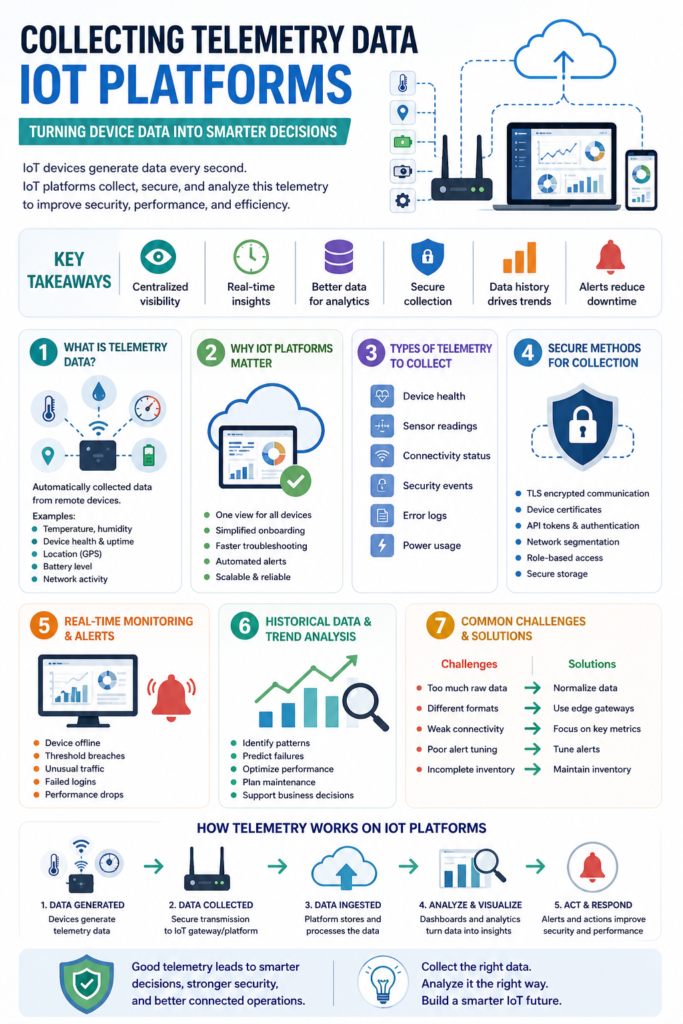
Telemetry becomes more valuable when platforms process data instantly. Real-time visibility allows faster responses to operational or security problems.
Use alerts for:
- Device offline status
- Battery depletion
- Sensor threshold breaches
- Unusual traffic spikes
- Failed login attempts
- Sudden performance drops
Immediate notifications help teams act before minor issues become major outages or security incidents.
Historical Data and Trend Analysis
Past telemetry data supports analyzing IoT telemetry to help identify patterns that real-time dashboards may miss.
Examples include:
- Seasonal usage demand
- Repeated device failures
- Gradual battery decline
- Recurring network latency
- Performance after firmware updates
Historical analysis supports maintenance planning, capacity forecasting, and smarter long-term investment decisions.
Collecting Telemetry Data IoT Platforms Summary
| Telemetry Function | Main Benefit |
| Real-Time Monitoring | Faster response |
| Device Health Data | Better uptime |
| Security Events | Threat detection |
| Historical Storage | Trend analysis |
| Centralized Dashboards | Improved visibility |
Common Challenges and Solutions
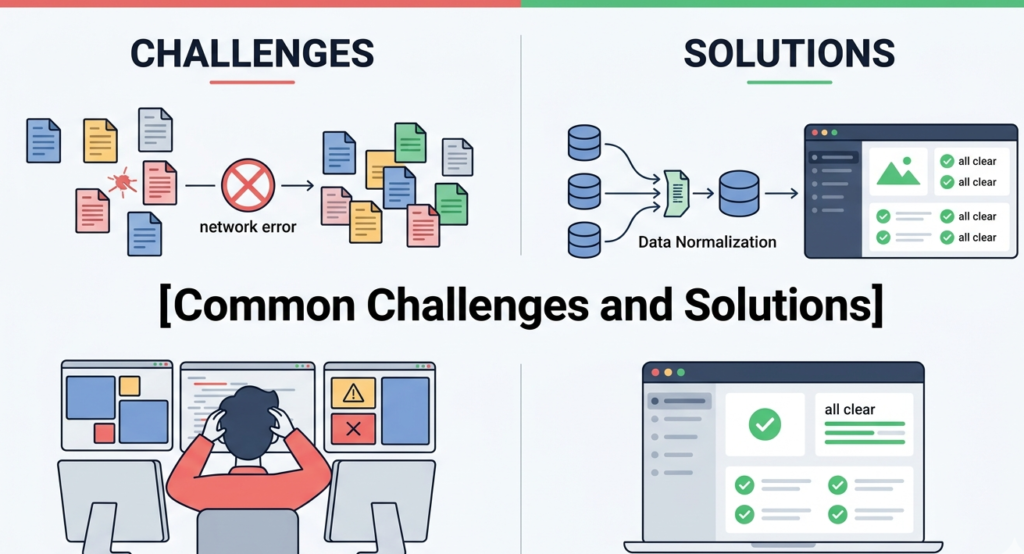
Organizations often face obstacles when building telemetry programs.
Common issues:
- Too much raw data
- Different device formats
- Weak connectivity in remote sites
- Poor alert tuning
- Incomplete device inventory
Helpful solutions:
- Normalize incoming data
- Use edge gateways
- Prioritize critical metrics
- Tune alerts regularly
- Maintain asset records
Good platform design turns noisy data into useful operational intelligence.
FAQ
Why is telemetry important for IoT devices?
Telemetry provides visibility into device status, performance, and behavior. This helps organizations detect failures early, improve uptime, and strengthen security monitoring.
What platform features matter most?
Strong ingestion, dashboards, alerting, analytics, API integration, and secure access controls are usually the most valuable capabilities.
How often should telemetry be collected?
It depends on the device and business need. Critical systems may require near real-time collection, while low-risk devices may report less frequently.
Can small businesses benefit from IoT telemetry?
Yes. Even smaller environments can use telemetry to reduce downtime, track assets, and identify suspicious activity faster.
Collecting Telemetry Data IoT Platforms for Smarter Operations
In the era of smart operations, IoT telemetry is the bridge between reactive maintenance and proactive control. By centralizing data flows, organizations gain the visibility needed to optimize uptime and mitigate risks. Effective telemetry doesn’t just monitor performance; it integrates operational health with cybersecurity intelligence to eliminate blind spots.
To achieve advanced oversight and automated risk analysis, explore how Network Threat Detection empowers teams with real-time threat modeling and visual attack path simulations.
References
- https://en.wikipedia.org/wiki/Telemetry
- https://en.wikipedia.org/wiki/MQTT