
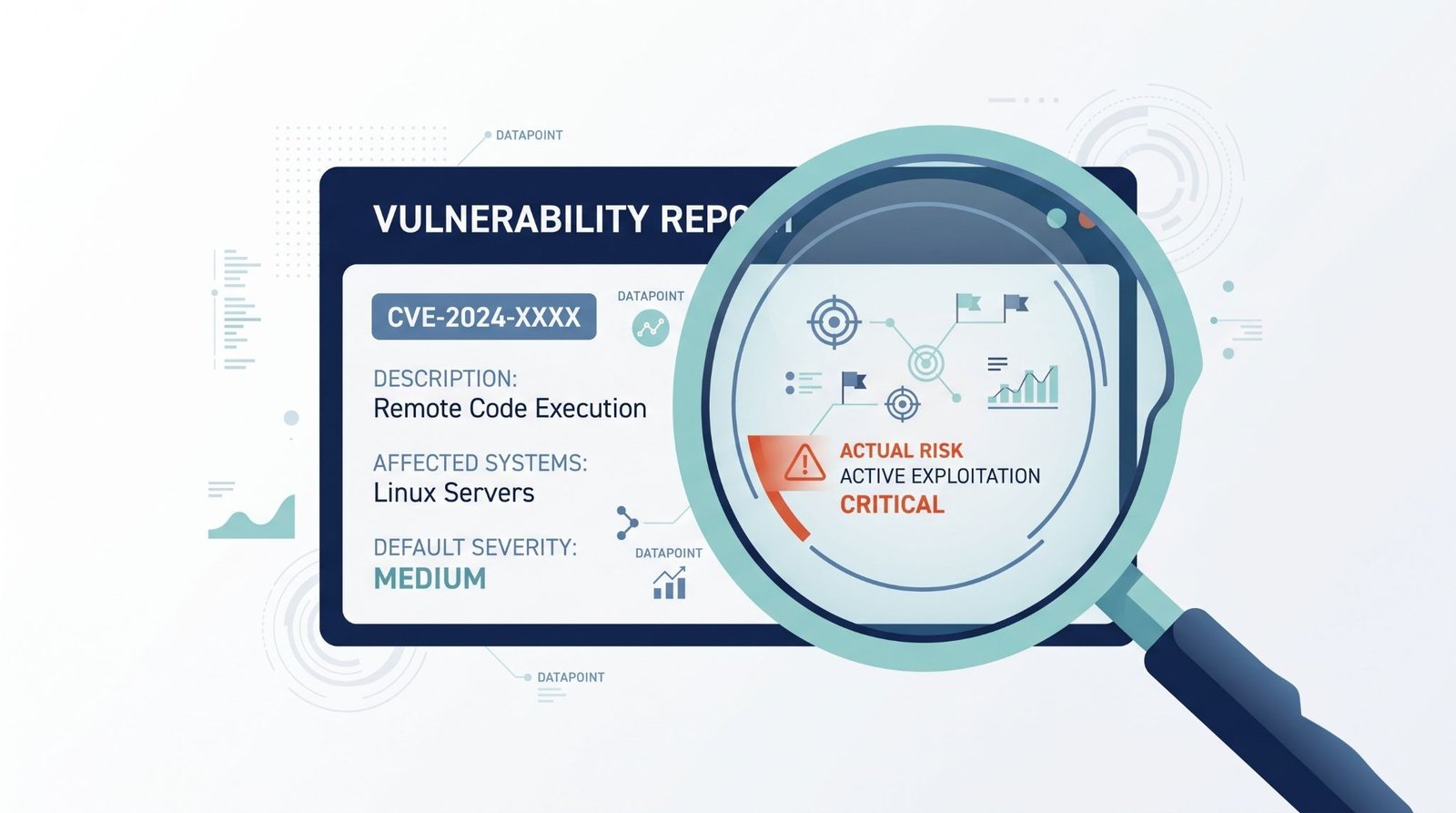
Threat intelligence helps security teams decide which vulnerabilities need attention first. CVSS shows how severe a flaw can be, but it doesn’t show whether attackers are using it right now. That’s where threat data adds useful context.
Teams can look at active exploitation, available exploits, attacker behavior, exposure, and asset importance before setting priorities. Network Threat Detection can bring these signals together to separate a theoretical weakness from one that poses a current threat.
We use this approach to give security teams a clearer view of what needs action now. Keep reading to see how threat intelligence can improve vulnerability prioritization.
Quick Reads: Threat Intelligence Wins
Threat intelligence adds exploitation context to vulnerability data, helping teams build more actionable remediation priorities.
- Add context: CVSS measures technical severity, while threat intelligence shows exploitation activity.
- Use key signals: CISA KEV and EPSS add useful inputs for vulnerability prioritization.
- Connect the data: Combine intelligence with vulnerability and asset data to improve remediation queues.
How Does Threat Intelligence Change Risk Scoring?
Threat intelligence adds a changing risk factor to vulnerability severity and asset context. One possible model is:
Threat-Informed Risk Score = CVSS Base Score × Threat Intelligence Factor × Asset Context
This is a methodology example, not an industry-wide scoring standard. Each organization can adapt the model to its own risk appetite, governance rules, and business needs. This approach also connects with threat prioritization by giving teams a way to weigh current threat activity alongside technical severity.
What Should The Threat Intelligence Factor Measure?
The threat factor can include exploit availability, observed exploitation, adversary capability, relevant threat actor activity, and sector targeting.
For example, public proof-of-concept code can increase concern because attackers have more information about how to abuse a flaw. A working exploit used in real attacks provides stronger evidence.
But the source still matters.
We look at where the information came from, when it was reported, and whether other sources support it. A verified exploit against software used by an organization carries more weight than an unconfirmed claim about software that isn’t deployed.
Asset context changes the picture too. An exploit affecting software on 500 production endpoints creates a different risk from one affecting an unused package on an isolated test machine.
Which Threat Intelligence Signals Matter Most?
Not every threat signal should change a remediation queue. The useful ones usually have clear evidence, current timing, and a connection to the organization’s technology. Using different alert prioritization methods can also help teams decide which signals deserve attention when multiple threats compete for the same resources.
How Does Exploit Availability Affect Priority?
Exploit availability can change how defenders view a vulnerability.
A published proof of concept does not prove that attackers are using the exploit at scale. Still, it removes some uncertainty. Security teams can monitor for functional exploit scripts, malware modules, ransomware use, and other signs of weaponization.
Disclosure → PoC → Functional exploit → Observed exploitation
The stages aren’t always linear. Some vulnerabilities move quickly from disclosure to exploitation, while others receive little attention after publication.
Our threat analysis process treats those differences as signals rather than automatic priority rules. That helps avoid turning every new PoC into an emergency while still giving analysts a way to react when evidence becomes stronger.
What Do CISA KEV And EPSS Add?
CISA KEV and EPSS answer different questions.
CISA’s Known Exploited Vulnerabilities catalog identifies vulnerabilities that CISA has added based on known exploitation. EPSS, maintained by the Forum of Incident Response and Security Teams community, estimates the probability that a vulnerability will be exploited in the wild over a 30-day period.
“EPSS aggregates exploitation activity signals from nearly a dozen data partners.” – FIRST
| Signal | What it tells analysts |
| CVSS | Technical severity |
| CISA KEV | Known exploitation |
| EPSS | Estimated exploitation probability |
| Asset context | Exposure and business relevance |
None of these should become the entire risk decision.
A vulnerability may have a high EPSS score but affect an asset that isn’t exposed. Another may appear in KEV and affect a critical internet-facing system. Those cases need different responses.
We use these signals as pieces of evidence. The final decision still needs asset criticality, exposure, compensating controls, and business impact.
How Should You Correlate Threat Intelligence With Vulnerabilities?
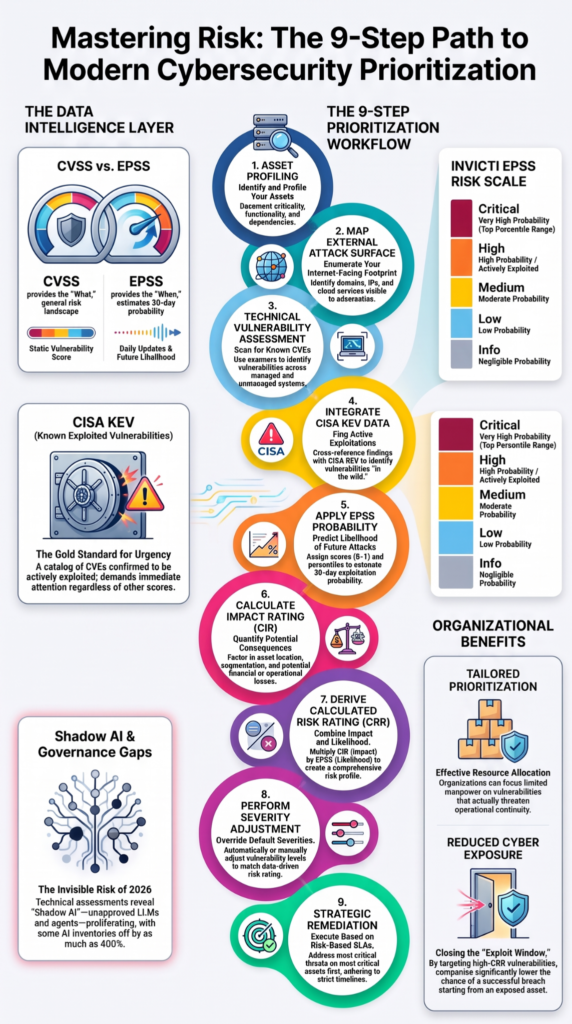
Threat intelligence becomes more useful when it connects with internal vulnerability and asset data. On its own, an external alert may tell a security team that an exploit exists. It doesn’t tell the team whether the affected software is running inside the environment.
That part takes correlation.
“An organization must determine whether the exposure and impact of a specific vulnerability warrants a response and prioritize that response among other critical activities.” – NIST
What Data Should Be Correlated?
A practical workflow can connect:
- CVE records
- Threat intelligence feeds
- CISA KEV and EPSS
- Exploit tracking
- Malware intelligence
- Asset inventory
- Exposure data
- Security controls
The correlation process should answer a few basic questions. Does the organization use the affected software? Where is it installed? Is the asset internet-facing? Is it business-critical? Are there signs of related activity in network or endpoint telemetry?
We use this type of context to reduce noise in vulnerability queues. A threat signal about software that isn’t present in the environment shouldn’t push a finding to the top of the list.
How Can Relevance Improve Prioritization?
Relevance can include source reliability, confidence, timing, sector targeting, geography, technology, and asset context.
A report published two hours ago by a trusted source may need a different response from an unverified claim that is six months old. But age alone doesn’t decide the issue. Older intelligence can still matter if the underlying threat remains active.
So analysts need context.
We also look at whether an intelligence signal leads to a clear security action. An exploit targeting software in production is easier to act on than a broad warning about an unrelated product.
How Should Threat Intelligence Change Remediation SLAs?
Threat intelligence can affect remediation SLAs when evidence shows that exploitation risk has changed. Understanding how CVSS scoring fits into the process can help teams separate technical severity from the additional threat evidence that may require faster action.
A normal patching window may be suitable for a vulnerability with limited exposure and no known exploitation. The same window may not make sense after confirmed exploitation appears.
When Should A Vulnerability Escalate?
An organization can define escalation rules around signals such as:
- CISA KEV inclusion
- Confirmed exploitation
- Functional exploit code
- Active ransomware use
- Targeted campaigns
Some organizations may set emergency remediation targets within 24 to 48 hours. That timeframe is a policy decision, though, not a universal requirement.
Our risk analysis tools can help teams apply these rules consistently. The important part is knowing why a finding changed priority and what evidence caused the change.
Can Low-CVSS Vulnerabilities Become High Priority?
Yes. CVSS doesn’t measure every factor that affects practical risk.
Consider a CVSS 5.3 vulnerability affecting an exposed production system. If attackers are actively weaponizing it, the organization may need to act sooner than it would for a CVSS 8.5 vulnerability on an isolated system with no relevant exploitation evidence.
That doesn’t make the CVSS score wrong. It means the score answers one question, while the broader risk process answers another.
This is one area where teams can easily get stuck. A score looks precise, so it can feel like the decision is already made. It isn’t.
How Do You Automate Threat Intelligence Prioritization?
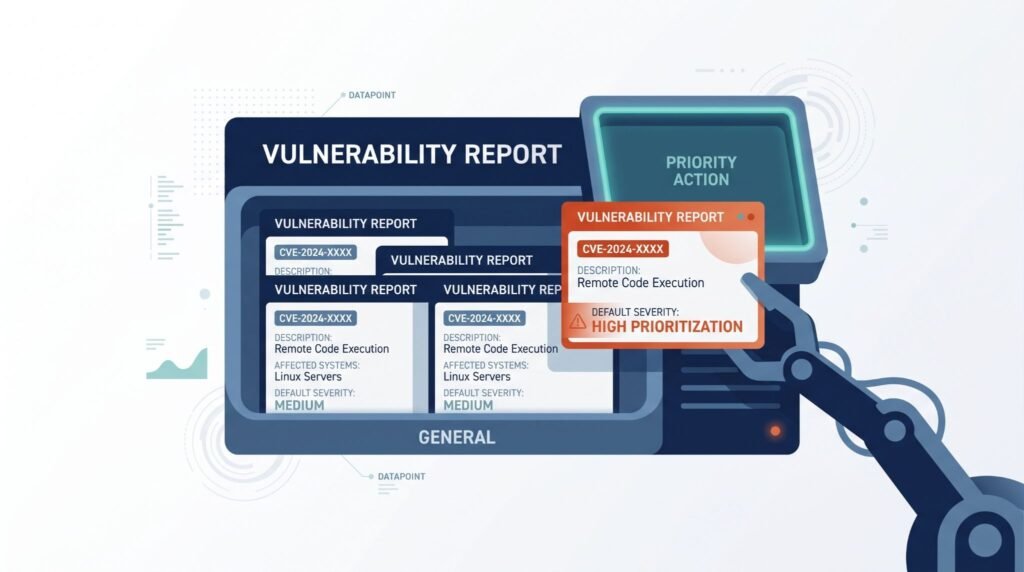
Automation can connect threat feeds with vulnerability management, asset data, scoring rules, and remediation workflows.
But automation needs good inputs. If the asset inventory is incomplete or threat feeds contain poor-quality data, a fast system can produce bad priorities at scale.
How Should Organizations Build A Threat-Informed Prioritization Process?
Source: Standarity
A threat-informed process should connect intelligence with the systems that security teams already use.
What Should The Process Connect?
A practical workflow looks like this:
Threat intelligence → Vulnerability data → Asset context → Risk scoring → Remediation → SOC detection
Each step adds information.
Threat intelligence shows what attackers may be doing. Vulnerability data shows the technical weakness. Asset context shows where that weakness exists. Risk scoring brings those signals together. Remediation addresses the exposure, while SOC detection adds monitoring around the remaining risk.
Our threat modeling and risk analysis tools fit into this type of workflow by helping teams examine the relationship between threats and exposed assets.
The process should also work in both directions. If the SOC detects exploitation activity, that information should be able to influence vulnerability prioritization.
FAQs
How Should Teams Judge Whether a Threat Feed Is Worth Acting On?
Check the feed’s source reliability, timeliness, confidence levels, and actionability before using its data for threat prioritization. A large volume of indicators does not necessarily improve decisions. Compare incoming intelligence with internal telemetry, asset context, and known activity. This helps analysts separate useful signals from outdated or low-confidence information before changing detection rules or remediation priorities.
When Should IOC Prioritization Include Behavioral Indicators?
IOC prioritization should include behavioral indicators when attackers can change or replace technical indicators quickly. Look for patterns such as lateral movement, persistence mechanisms, command and control activity, or unusual data exfiltration. Combining these behaviors with indicators of compromise gives analysts more context for threat hunting and detection engineering, especially when known hashes, domains, or IP addresses provide limited coverage.
How Can Threat Intelligence Improve Patch Prioritization?
Use vulnerability intelligence alongside exploit tracking, asset context, and business impact when deciding which vulnerabilities need attention first. Intelligence can show whether a vulnerability is being actively targeted or linked to current campaigns. Combining those signals with exposure and asset importance supports risk-based vulnerability management and helps patch teams focus on vulnerabilities with meaningful evidence of active exploitation.
How Should Teams Handle Conflicting Intelligence From Multiple Sources?
Compare source reliability, confidence levels, timeliness, and the evidence behind each report. One source may provide technical indicators, while another provides threat actor profiling or TTP mapping. Intelligence fusion can help reconcile those differences before analysts change priorities. Keep uncertain findings clearly marked so low-confidence reporting does not automatically trigger costly remediation or response actions.
How Can Teams Apply Threat Intelligence Across Different Environments?
Start with threats that are relevant to the environment rather than applying every intelligence feed equally. A hybrid environment may require different context for cloud security, OT security, IoT threats, and third-party systems. Combine sector-specific threats, asset context, network telemetry, and endpoint telemetry to determine which intelligence should influence detection, threat hunting, or remediation decisions.
Threat Intelligence and Vulnerability Prioritization
When you’re prioritizing vulnerabilities, threat intelligence adds context that a severity score alone can’t provide. CVSS can describe technical severity, while current exploitation data and asset context help show which issues may need attention sooner. The key is using current evidence.
Network Threat Detection can help your security team review how threat intelligence fits into vulnerability prioritization. As threats, exploits, and assets change, regular tuning keeps remediation decisions aligned with the latest available evidence. That’s what makes prioritization more useful in day-to-day security work.
References
- https://pages.nist.gov/vulntology/about/
- https://www.first.org/epss/how-it-works