
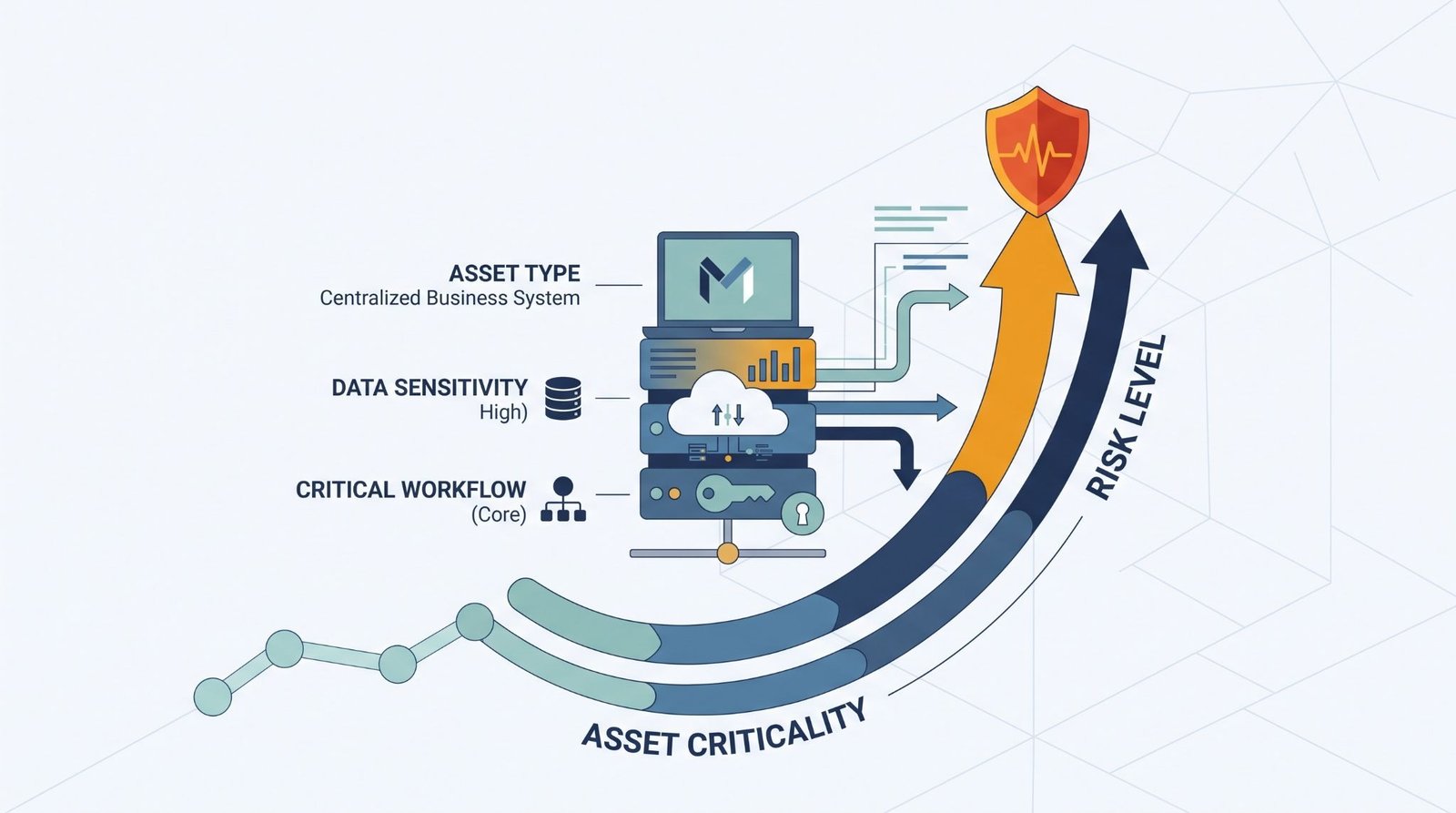
Asset criticality makes risk scoring more useful by linking vulnerability severity to business impact and exposure. Network Threat Detection can use this context to prioritize risks across IT, OT, cloud, and hybrid environments. But the same flaw can have very different consequences depending on the asset.
A vulnerability on a mission-critical database may need faster action than one on an isolated test system. So, security teams need asset context alongside vulnerability data. This guide covers the factors behind asset criticality, how asset discovery supports scoring, and when risk scores should change. Keep reading for the practical scoring framework.
Quick Reads: Asset Risk Scoring Wins
Asset criticality adds business context to risk scoring, helping teams keep priorities aligned with what matters most.
- Add context: Combine threat data, vulnerability severity, exposure, and asset criticality.
- Measure criticality: Consider data sensitivity, business impact, dependencies, regulations, and network exposure.
- Keep scores current: Update asset tags, monitoring, and scores when conditions change.
How Does Asset Criticality Change Risk Scoring?
A vulnerability score tells you about the flaw. It doesn’t tell you how much trouble that flaw could cause in a specific environment.
That’s where asset criticality comes in.
Two servers can have the same vulnerability, yet the risk can be very different. One might run a public facing application that handles customer payments. The other might be a test machine with no sensitive data and no connection to production.
Treating them the same doesn’t give the security team much to work with.
A risk model can combine threat activity, vulnerability severity, asset criticality, and exposure. One possible formula is:
Risk Score = Threat Score × Vulnerability Severity × Asset Criticality
This is a useful model, but it isn’t a universal rule. Each organization has its own risk appetite, systems, and business needs. Some teams use weighted scores. Others use risk bands or qualitative ratings.
We look at the inputs before looking at the final number. That makes the score easier to explain when someone asks, “Why is this vulnerability ranked higher?” This approach also supports threat prioritization by showing why one risk deserves more attention than another.
A practical model can include:
- Threat activity
- Vulnerability severity
- Asset criticality
- Network exposure
- Existing security controls
Why Does CVSS Need Asset Context?
CVSS gives teams a common way to describe vulnerability severity. It doesn’t know what an affected asset does inside a particular company.
That matters quite a bit.
Imagine a vulnerability with a CVSS score of 8.5 on an isolated development server. Now consider a 5.3 vulnerability on a production system that manages employee identities and connects to other critical services.
The first vulnerability has the higher CVSS score. But the second system could create a larger problem if it were compromised.
“The process described in this publication helps leaders determine which assets enable the achievement of mission objectives and evaluate the factors that render assets as critical and sensitive.” – NIST
Our risk analysis tools add this type of context to security findings. We look at the asset, its role, its connections, and its exposure.
The number is useful. The reason behind the number matters more.
How Should You Build an Asset Criticality Model?

Build the model around information that teams can actually verify.
Start with the factors that matter to the business. Data sensitivity, business impact, exposure, service dependency, and regulatory requirements are common choices.
Then decide how each factor affects the score.
One company might use a five point scale for each factor. Another might use four criticality tiers. Both can work if the rules are clear and people use them consistently.
We also recommend recording who owns each rating and when it was last reviewed.
Otherwise, the model slowly gets out of date.
Which Criticality Factors Should You Weight?
A basic model could look at these areas:
| Factor | What it measures |
| Data sensitivity | Type and value of stored data |
| Business impact | Effect of outage or compromise |
| Exposure | How reachable the asset is |
| Dependency | Systems that rely on the asset |
| Compliance | Regulatory or contract requirements |
The weights should match the organization’s priorities.
For instance, a company handling large amounts of regulated data may put more weight on data sensitivity. A manufacturer may put more attention on operational impact.
There isn’t one correct formula.
How Should Criticality Tiers Work?
Criticality tiers make risk ratings easier to use.
A Tier 1 asset could support a core business service or contain highly sensitive information. Tier 2 could cover important business applications. Tier 3 might include support systems. Tier 4 could cover isolated systems with limited impact.
The tier should connect to a real action.
If Tier 1 assets have a shorter remediation target, the security team knows what to do when a high risk finding appears.
Keep the rules clear. People shouldn’t need a meeting to understand what Tier 1 means.
How Do You Identify Critical Assets?
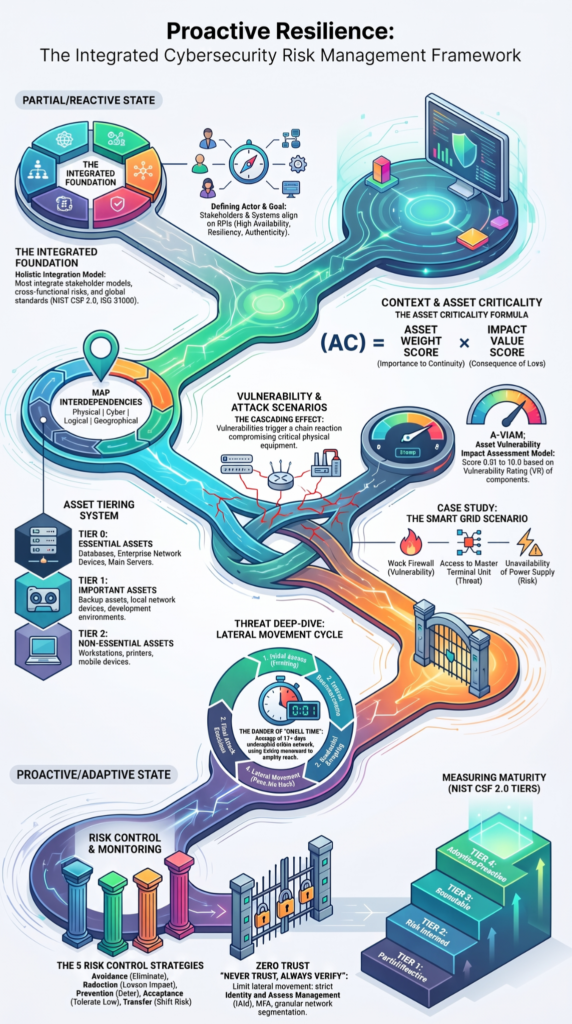
You can’t score an asset properly if you don’t know what the asset does.
That sounds obvious. Yet incomplete asset inventories are still a problem for many security teams.
A company may have a good list of servers and laptops but miss cloud workloads, SaaS applications, OT devices, IoT systems, or older equipment that still talks to production systems.
We start with the inventory because everything else depends on it.
Where Should Asset Discovery Start?
Asset discovery should cover the systems that make up the environment.
That includes servers, endpoints, applications, cloud workloads, network devices, OT systems, IoT devices, and relevant third party connections.
Teams can collect this information from EDR platforms, network discovery tools, cloud APIs, vulnerability scanners, CMDB records, and other inventory sources.
Each asset should have useful context where possible:
- Business owner
- Technical owner
- Business function
- Environment
- Data type
- Network exposure
- Criticality tier
Ownership matters here.
If nobody owns an asset record, nobody may notice when the information becomes outdated.
How Can Business Process Mapping Improve Context?
An asset can look harmless until you understand what depends on it.
A database might support an application. That application could handle payments. Payments could support a major part of the company’s revenue.
Now the database has a different risk profile.
We use business relationships in threat models for this reason. A hostname such as “APP 04” doesn’t tell an analyst much. Knowing that APP 04 handles customer transactions tells them a lot more.
How Does Asset Criticality Improve Vulnerability Prioritization?
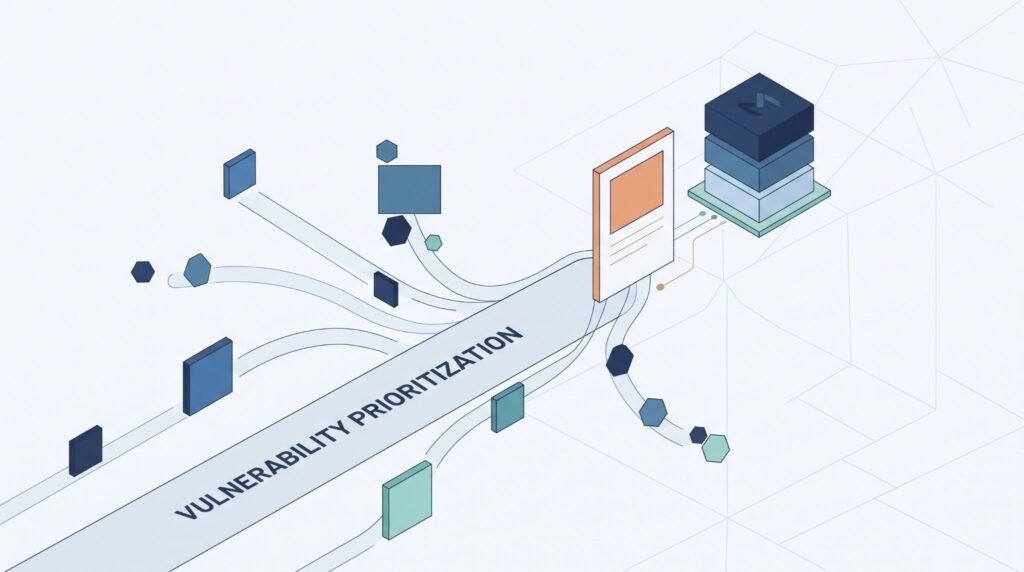
Asset criticality helps teams move beyond vulnerability severity alone.
A risk based process can consider CVSS, exploit activity, asset criticality, exposure, threat intelligence, and existing controls.
That gives the remediation team more useful information.
What Does Risk Based Prioritization Look Like?
Consider two findings.
The first affects an isolated test system with no sensitive data. The second affects a production identity system with an attack path from the internet.
The second issue may deserve attention first even if its vulnerability score is lower.
This is where our risk analysis tools can help. We combine technical findings with asset and threat information so teams can see what is driving the priority.
That makes conversations with security leaders easier too. Instead of saying, “This has a high score,” the team can explain what makes the asset risky. Clear threat alert prioritization can help teams connect those risk factors to practical remediation decisions.
How Should Patch Management Use Criticality?
Patch teams can use asset criticality to build remediation queues. Combining asset context with CVSS and vulnerability scoring can help separate technically severe findings from those that pose the greatest risk to important systems.
A critical production system may need faster action. A low impact development machine may fit into the next maintenance window.
Patching isn’t always possible right away. In those cases, teams may use network segmentation, access restrictions, additional monitoring, or other compensating controls.
The remaining risk should still be recorded.
How Should You Recalibrate Asset Risk Scores?
Source: KirkpatrickPrice
Risk scores should change when the environment changes.
An asset can become more important after a move into production, a network change, a new business dependency, or a change in the data it handles.
“The Environmental metric group represents the characteristics of a vulnerability that are relevant and unique to a particular user’s environment.” – FIRST
When Should Asset Criticality Change?
Review the score when:
- A system enters production
- Internet exposure changes
- Network segmentation changes
- Privileged access is added
- Data classification changes
- A new business dependency appears
- Asset ownership changes
The vulnerability may stay the same while the risk changes.
That part is easy to miss.
Why Does Continuous Monitoring Matter?
An asset score based on old information may not describe the current environment.
Network activity can reveal new communication paths or unexpected exposure. Threat intelligence can also change the threat side of the calculation when attackers begin using a vulnerability more actively.
We treat risk scoring as an ongoing process rather than a one time task.
FAQs
How Should Teams Set Criticality Tiers When Business Owners Disagree?
Start with clear criteria such as data sensitivity, service dependency, regulatory requirements, and business impact. Ask each asset owner to explain the consequences of downtime, compromise, or data loss. Compare those inputs against the organization’s risk appetite. Clear criticality tiers help teams apply risk-based prioritization consistently when different owners assign different levels of importance.
When Should Asset Context Override a High Vulnerability Score?
Asset context should affect priority when a vulnerability affects a system with high business impact, significant exposure, or critical service dependencies. A lower vulnerability score on a mission-critical system may require earlier remediation than a higher score on an isolated asset. Document the risk weighting and business factors used so security teams can explain each remediation decision.
How Often Should an Asset Criticality Model Be Recalibrated?
Recalibrate the asset criticality model when asset ownership, business processes, data classification, service dependencies, or exposure changes. Major infrastructure changes can also alter an asset’s risk. Continuous monitoring can identify changes between formal reviews. Update the asset’s criticality and risk scoring when its underlying context changes instead of waiting for an annual assessment.
How Can Teams Apply Risk Scoring Across Hybrid Environments?
Use a consistent risk scoring methodology across cloud, on-premises, and hybrid environments while accounting for differences in exposure, ownership, and asset lifecycle. Cloud assets may change quickly, while older infrastructure may remain in place longer. Asset classification, discovery and enumeration, service dependencies, and security controls should inform scoring so teams can compare risks across environments.
Which Metrics Show Whether Asset-Based Prioritization Is Working?
Track whether asset-based prioritization improves remediation outcomes rather than simply measuring how many assets receive scores. Useful security metrics include remediation time for critical assets, unresolved high-risk findings, exposure trends, and patch completion rates. Teams can also monitor KRIs for critical assets and compare results with business impact. These measures show whether risk scoring supports better resource allocation.
Why Asset Criticality Risk Scoring Matters
When you’re prioritizing vulnerabilities, technical severity alone doesn’t show what could happen to the business. An exposed system supporting critical operations may deserve attention before a higher-scoring issue on an isolated asset. Context matters.
Network Threat Detection helps teams bring asset context into risk decisions so remediation priorities reflect real business impact. The goal isn’t another score for its own sake. It’s a clearer way to direct limited security resources toward assets where a compromise could cause serious disruption.
References
- https://csrc.nist.gov/pubs/ir/8286/d/upd1/final
- https://www.first.org/cvss/v3-1/specification-document