
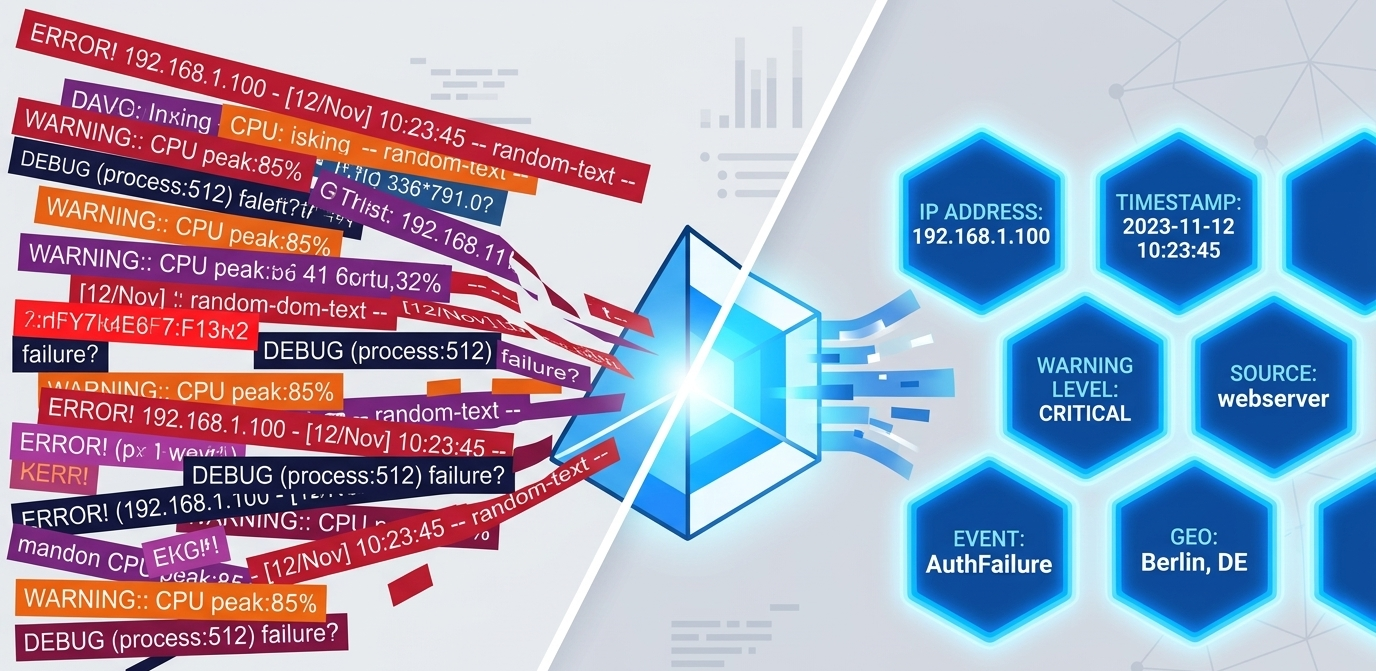
Raw syslog data is often messy, inconsistent, and difficult to analyze. Parsing unstructured syslog messages is essential to transform these logs into structured, searchable, and meaningful data. From our experience, many teams collect logs but fail to extract value because the data remains unorganized.
Without parsing, automation, filtering, and analysis become limited. In this guide, we explore how to handle unstructured syslog messages effectively. Keep reading to unlock the full potential of your log data.
Why Unstructured Logs Create Problems
Unstructured logs lack a consistent format, making them difficult to process.
- Different formats across devices
- Inconsistent message patterns
- Missing or unclear fields
What Does Parsing Syslog Messages Mean
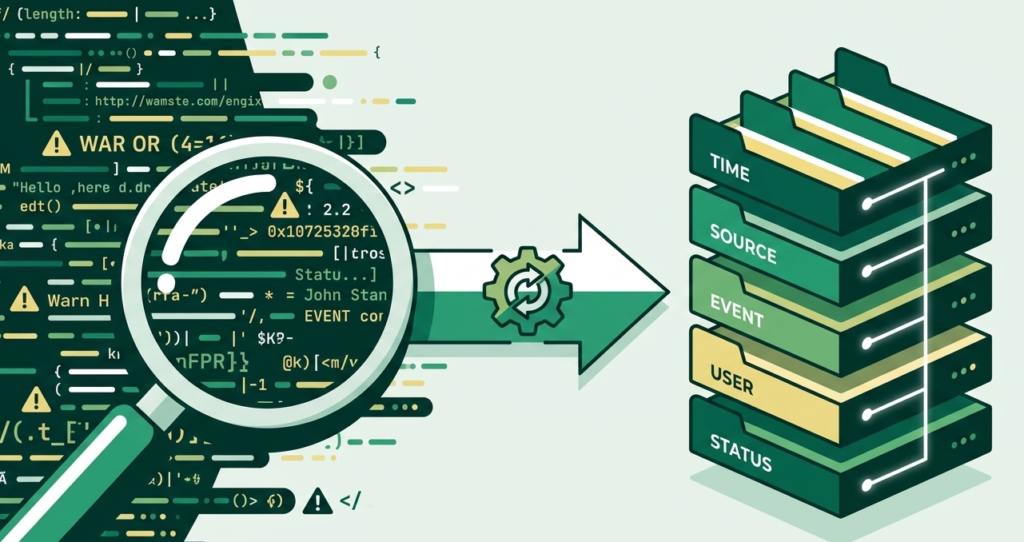
Parsing is the process of converting raw logs into structured data. Understanding the underlying syslog protocol and configuration is essential here, as it dictates how key fields like timestamps and IP addresses are extracted and normalized.
It typically involves:
- Extracting key fields (timestamp, IP, message)
- Normalizing formats
- Converting text into structured outputs (JSON, key-value pairs)
“Log parsing is the process of analyzing log entries to extract structured information from unstructured data.” – Wikipedia
Parsing makes logs easier to search, filter, and analyze.
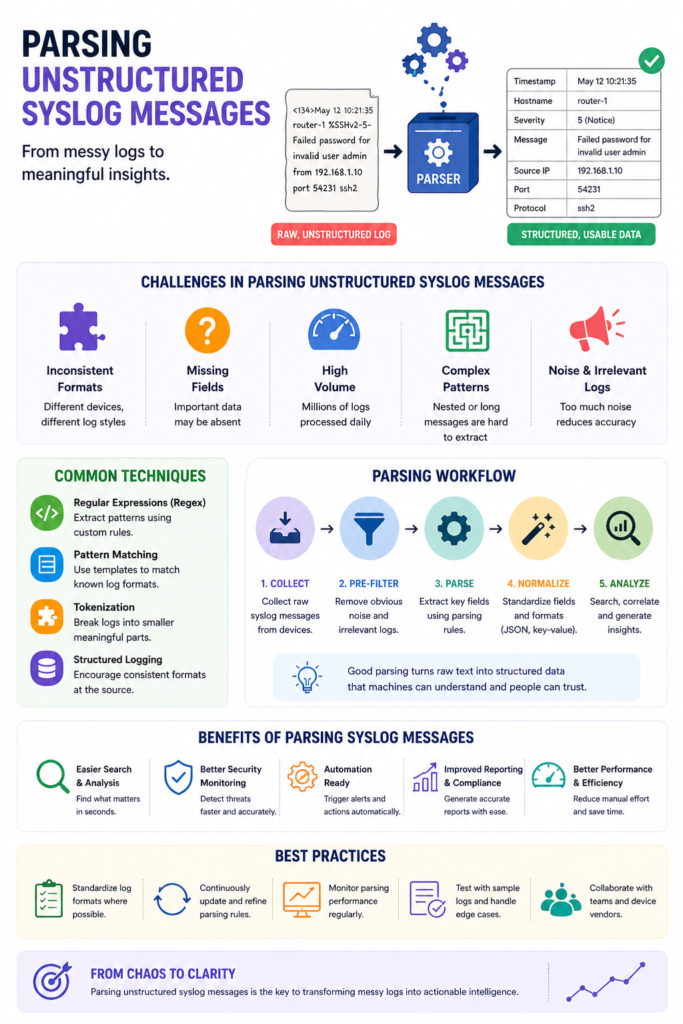
Key Challenges In Parsing Unstructured Syslog Messages
| Challenge | Impact | Example |
| Inconsistent Format | Difficult parsing rules | Different device log styles |
| Missing Fields | Incomplete data | No timestamp or hostname |
| High Volume | Processing delays | Millions of logs per day |
| Complex Patterns | Hard extraction | Nested or long messages |
| Noise | Reduced accuracy | Irrelevant log entries |
These challenges require flexible and scalable parsing strategies.
Common Techniques For Parsing Logs
Credits: Joe Abraham
Several methods can be used to parse syslog data:
- Regex (Regular Expressions): Extract patterns from text
- Pattern Matching: Predefined templates for logs
- Tokenization: Breaking logs into smaller parts
- Structured Logging: Encouraging consistent formats
From our experience, combining regex with pattern-based parsing works best in mixed environments.
Normalizing Logs For Consistency
Normalization ensures all logs follow a consistent structure.
“System logs are typically semi-structured or unstructured, making automated analysis challenging without preprocessing.” – Ieeexplore
Key steps:
- Standardize field names (e.g., “src_ip”, “timestamp”)
- Convert formats into JSON or structured schema
- Align logs from different devices
Normalization simplifies correlation and analysis across systems.
Improving Accuracy In Parsing
Parsing accuracy is critical for reliable insights, especially when securing syslog transmissions.
Best practices:
- Continuously refine parsing rules
- Handle edge cases and variations
- Validate parsed data regularly
- Use sample logs for testing
Poor parsing can lead to incorrect analysis and missed threats.
Handling High-Volume Log Parsing
At scale, parsing becomes a performance challenge. Addressing challenges managing syslog data volume requires solutions like distributed processing systems, stream-based parsing, and load balancing parsing tasks.
Solutions include:
- Distributed processing systems
- Stream-based parsing
- Load balancing parsing tasks
- Efficient memory usage
We’ve seen systems fail when parsing wasn’t designed for scale from the start.
Filtering Before And After Parsing
Filtering helps reduce unnecessary processing.
- Pre-filter logs to remove noise
- Post-parse filtering for refined analysis
- Focus on high-value log events
Filtering syslog messages effectively reduces workload and improves performance.
From Raw Logs To Security Insight
Parsed logs enable deeper analysis:
- Correlate events across systems
- Detect anomalies and patterns
- Trigger automated alerts
We position Network Threat Detection as the first layer of insight, where structured logs allow faster and more accurate threat identification.
Best Practices For Parsing Syslog Messages
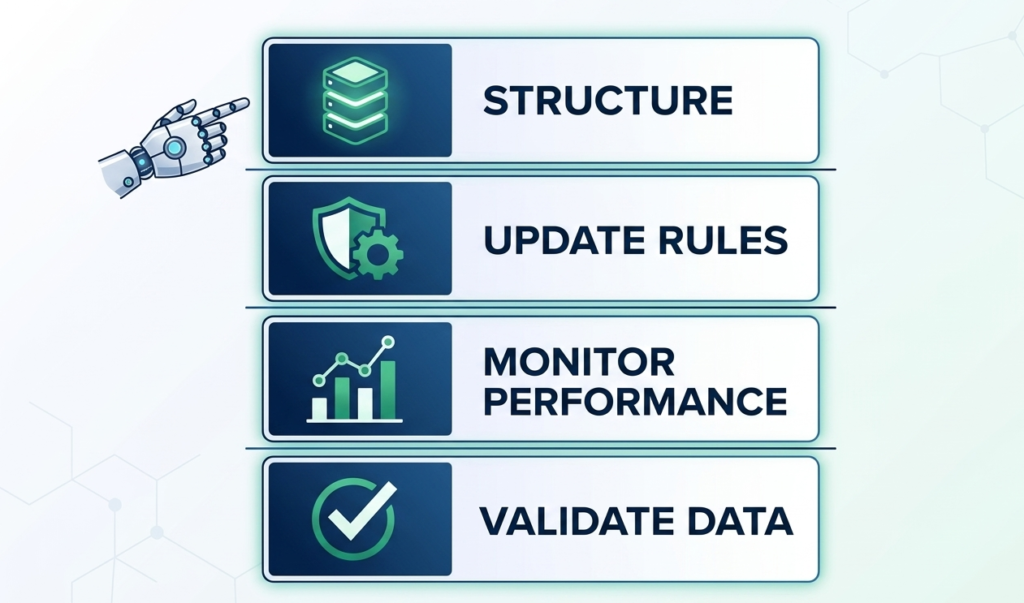
To ensure effective parsing:
- Standardize log formats where possible
- Use scalable parsing systems
- Regularly update parsing rules
- Monitor parsing performance
Consistency and adaptability are key to long-term success.
FAQ
Why Are Syslog Messages Often Unstructured?
Different devices and vendors generate logs in their own formats, leading to inconsistencies. Without a universal structure, logs vary widely in content and format.
What Is The Benefit Of Parsing Syslog Messages?
Parsing transforms raw logs into structured data, making them easier to search, analyze, and use for automation or monitoring.
Is Regex Enough For Parsing Logs?
Regex is powerful but not always sufficient. Complex environments often require a combination of regex, pattern matching, and structured logging approaches.
Can Parsing Improve Security Monitoring?
Yes, structured logs enable better correlation and detection of anomalies. This significantly improves systems like Network Threat Detection.
Transforming Chaos Into Clarity
Parsing unstructured syslog messages is a critical step in modern log management. By converting raw data into structured insights, organizations can improve visibility, automate analysis, and detect threats more effectively. From our experience, combining strong parsing strategies with filtering and Network Threat Detection creates a powerful foundation for security and operations. Start refining your parsing approach today and turn messy logs into meaningful intelligence.
References
- https://en.wikipedia.org/wiki/Log_file
- https://ieeexplore.ieee.org/document/7886924