
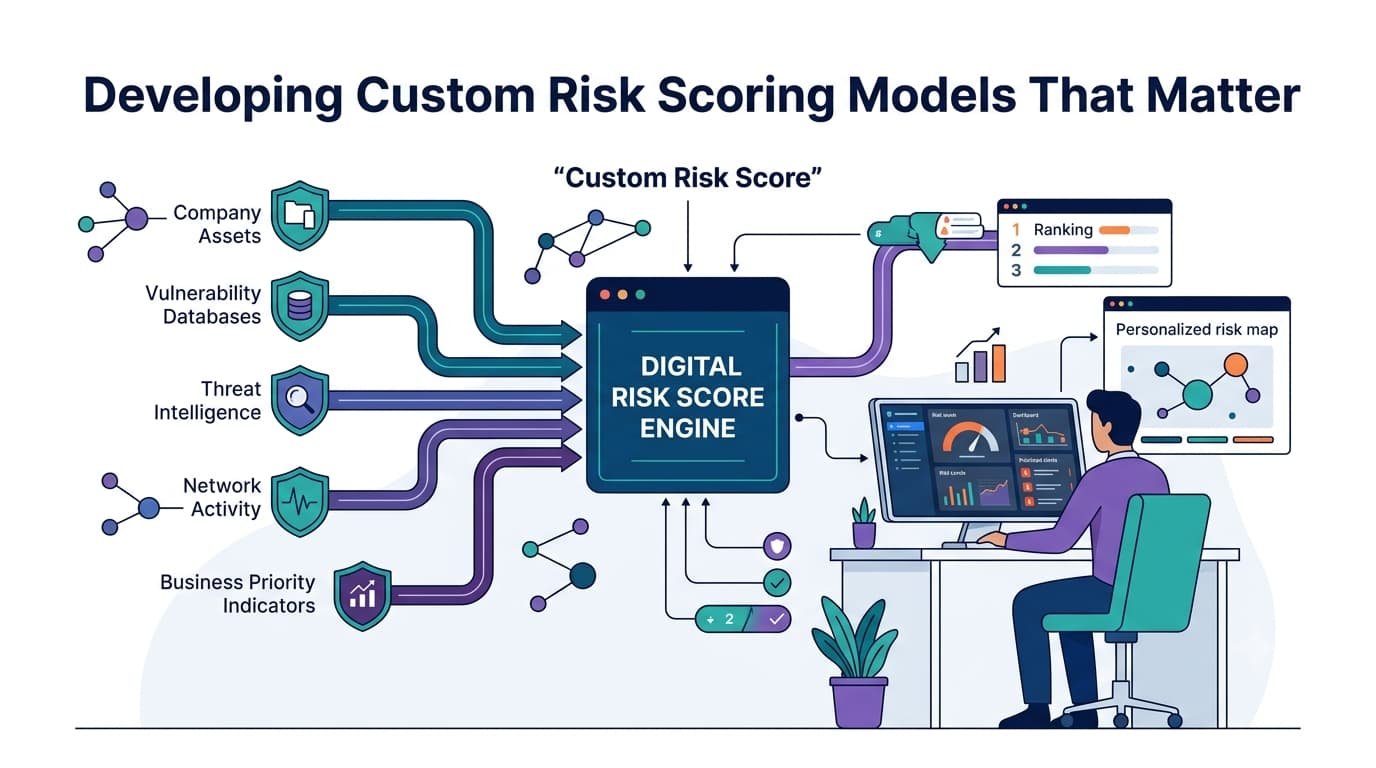
Developing custom risk scoring models gives you a clearer picture of what needs attention first. Generic risk scores can assign a number, but they can’t tell whether a vulnerability affects your CEO’s laptop or an old server that’s no longer in use.
That’s a gap Network Threat Detection helps close. A scoring model built around your own environment points to the risks that matter most, not every alert that appears. Most teams find that far more useful.
Keep reading to see how to build a model that matches your business instead of relying on a one-size-fits-all score.
Custom Risk Scoring at a Glance
- Context is everything. A custom model folds in your unique asset value, network layout, and real-time threat activity, moving beyond static severity ratings.
- Start simple, then complicate. Begin with a weighted formula of 3-5 key factors, validate it against past incidents, and only then layer in machine learning.
- It’s a living system. Scores must decay, weights must be adjusted quarterly, and the entire model needs constant feeding from both internal telemetry and external intelligence.
What You’re Really Building Isn’t Math
A security scoring model isn’t a math exercise. It’s a translator. We’ve found its real job is turning the noisy mix of network telemetry, SIEM alerts, firewall logs, endpoint activity, and threat intelligence into something analysts can act on. That matters more than chasing a perfect score.
Effective threat prioritization depends on connecting these signals with business context, allowing teams to focus on risks that require immediate attention instead of treating every alert equally.
Before we build a model or tune a single weight, we ask one question: So what? Why does this vulnerability, on this asset, at this moment, matter to our organization? In our experience, that question usually exposes the risks worth addressing first.
The core inputs we rely on are:
- Asset criticality: Customer PII or test server?
- Network Exposure: Internet-facing or isolated?
- Threat Intelligence: Active exploits in the wild?
- Business Impact: Financial, operational, or reputational cost?
Understanding asset criticality helps the model assign higher priority to systems where vulnerabilities could create greater operational or business impact.
Academic research supports what we see in the field every day: static CVSS ratings fail to account for operational context. In a recent analysis published on arXiv
“Contextual or environmental factors capture the criticality of the component and its dependencies within the system ensuring that the system prioritizes the most critical vulnerabilities while accounting for severity, exploitability, and environmental factors.” – arXiv
Our threat models and risk analysis tools help connect those signals, so the score reflects what’s happening now instead of yesterday’s assumptions. Static scores can’t keep up when conditions change. Researchers reached the same conclusion in dynamic scoring studies, and we see it in practice. If the environment changes but the score doesn’t, the priority is already out of date.
What Is the Simple Formula That Actually Works?
You don’t need a neural network on day one. When we redesigned the risk engine for a mid-sized financial institution handling 40,000 daily alerts, we replaced their raw CVSS triage with a 5-factor weighted model.
Within two weeks, high-priority ticket volume dropped by 62%, and the team’s Mean Time to Respond (MTTR) on actual exposed assets fell from 14 hours to 45 minutes.
We’ve used this framework to build threat models and risk analysis tools that help security teams focus on the issues that matter most.
A practical starting point looks like this:
| Factor | Example Weight | Why It Matters |
| Vulnerability Severity | 30% | CVSS gives the baseline, not the final answer. |
| Asset Importance | 25% | Critical systems carry more business risk. |
| Threat Activity | 20% | Cross-reference CISA’s Known Exploited Vulnerabilities (KEV) catalog with real-time EPSS scores. If a CVE is in KEV, it gets an immediate 1.0 multiplier because it’s actively exploited. If it’s not in KEV, we use the EPSS probability score (e.g., EPSS > 0.35) as a progressive scalar to flag threats likely to weaponize next |
| Network Exposure | 15% | Internet-facing assets face greater risk. |
| Detection Confidence | 10% | Higher confidence means faster action. |
Ensure all inputs are normalized onto a uniform 0.0–1.0 scale before applying weightings to prevent high-scale metrics from disproportionately distorting the final score.
We’ve seen productive debates between security teams, application owners, and executives uncover assumptions that no dashboard could reveal. That’s risk modeling in practice.
Our threat models and risk analysis tools support that process, but the weights should never stay fixed. Review them after major incidents, test them against new threats, and update them as the environment changes. A scoring model should evolve alongside the network it protects.
Feeding the Beast: Data is the Diet
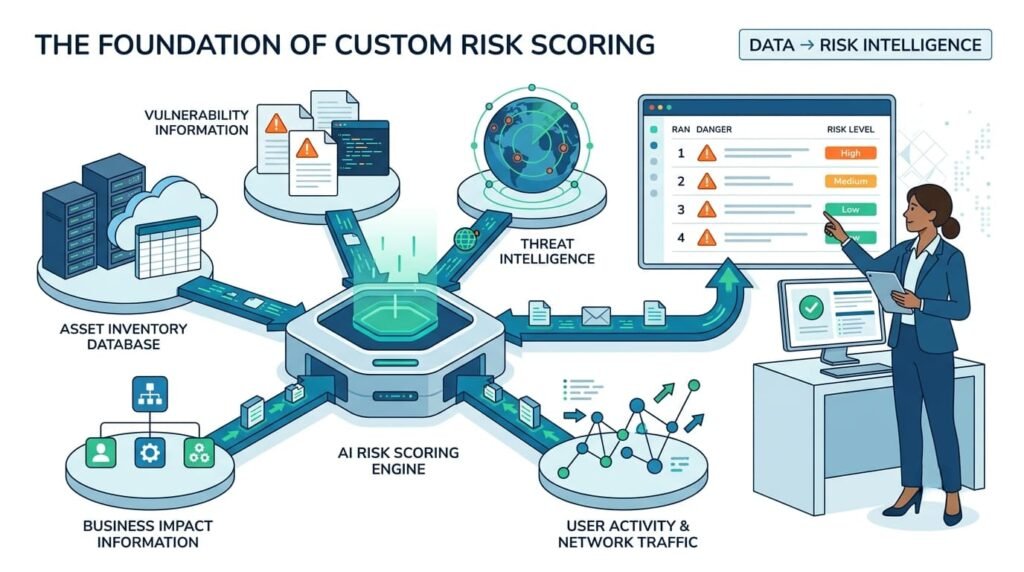
A risk model is only as reliable as the data behind it. We’ve learned that even a well-designed scoring system falls short when the inputs are incomplete or outdated. Strong threat models depend on balanced, trusted data from both inside and outside the network.
A risk engine requires four core internal inputs to calculate context:
- Asset Metadata: Ties hostnames to business value (e.g., PCI vs. staging).
Telemetry Streams: Feeds real-time execution events from EDR and SIEM.
Network Topology: Verifies whether the host sits behind an ingress firewall or in a DMZ.
Posture Controls: Confirms whether compensating controls, like active EDR isolation or enforced MFA, are currently healthy. - Combining these inputs improves alert prioritization because analysts can separate urgent security events from lower-impact activity using richer context rather than relying only on severity ratings.
What makes a scoring model useful is the context behind the data. Our threat models and risk analysis tools go beyond a CVE ID by connecting the details that explain why a vulnerability matters. We’ve seen analysts make faster decisions because they don’t have to piece together information from multiple sources.
Rather than showing only a vulnerability number, the model presents the full picture. It flags that the affected system is a finance SQL server, contains sensitive PCI data, and has a publicly available exploit. That extra context transforms isolated alerts into actionable risk, allowing security teams to prioritize emerging threats with greater confidence and respond before they become larger incidents.
Where Machine Learning Fits (And Where It Doesn’t)
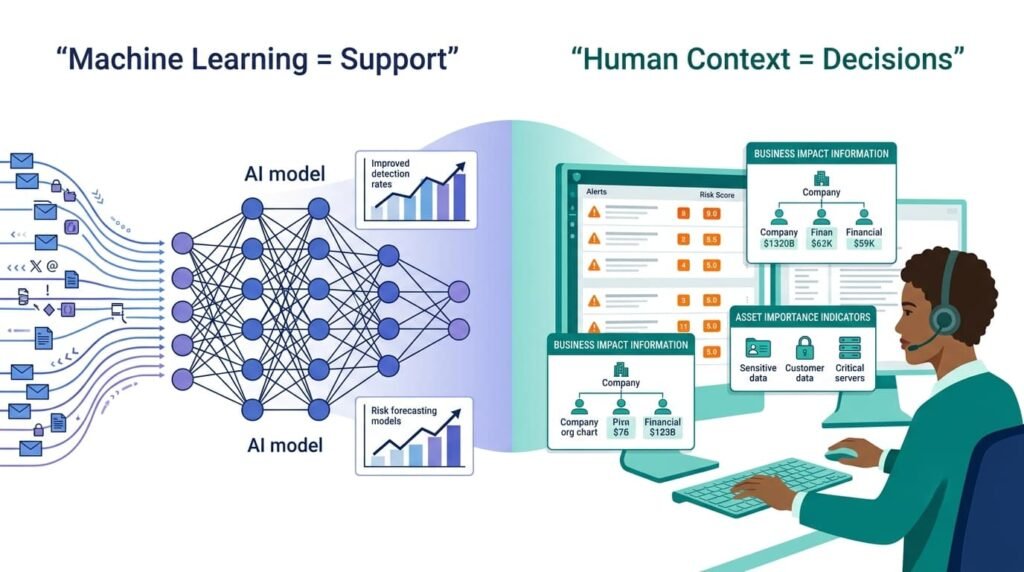
Machine learning can improve a custom risk scoring model, but it shouldn’t be the first step. We’ve found its biggest strength is spotting patterns in large amounts of security data that people or basic rules can miss.
For example, it can connect unusual user activity with a recent vulnerability scan or detect risk patterns that are easy to overlook.
Several machine learning models are used in cybersecurity. Logistic Regression is popular because its results are easy to explain. Random Forest works well with more complex data.
When we introduce ML, we start with Logistic Regression because auditors and SOC managers demand clear decision trees, they need to know exactly why an asset scored an 8.8 instead of a 4.2. Once the baseline model stabilizes, we move to XGBoost specifically for tabular SIEM logs, as it handles sparse feature sets and non-linear interactions without overfitting.
In our experience, machine learning works best as an upgrade, not the foundation. We first build and test a weighted scoring model with our threat models and risk analysis tools. After that, ML can improve specific parts of the score.
It might adjust threat activity based on new intelligence feeds or improve detection confidence by learning from analyst decisions. This approach keeps the scoring model clear, flexible, and easy for security teams to trust.
How Can Scores Breathe and Change?
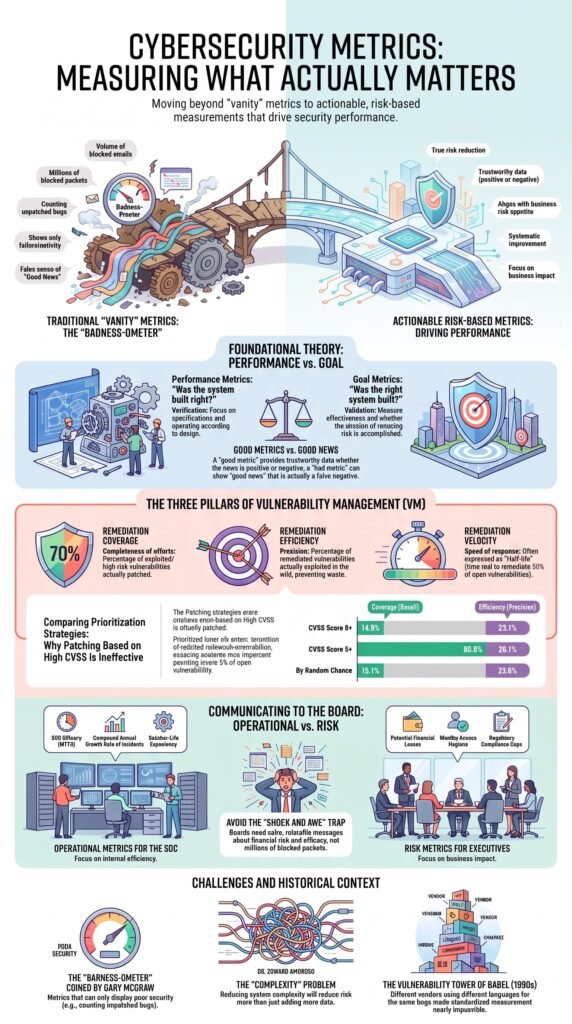
A risk score shouldn’t stay the same forever. We’ve seen how quickly conditions change, so a scoring model needs to change with them. Our threat models and risk analysis tools are built to reflect current risk, not outdated assumptions.
Risk is temporary, so scores must decay. In our production models, if a CVE’s EPSS score drops or if an asset is migrated behind a firewalled VLAN, we apply a daily half-life decay function.
This automatically cools down aging alerts and prevents ‘priority debt’ from clogging the SOC queue. That helps reduce alert fatigue and keeps security teams focused on the threats that matter now.
Certain events should trigger an immediate score update:
- New threat intelligence for a tracked CVE
- An asset moved to a DMZ
- A spike in suspicious login attempts
When those events occur, the model recalculates the risk instead of waiting for the next scan. We’ve found this approach gives analysts a more accurate view of changing conditions and helps them respond faster to emerging threats.
How Does Validation Prove Your Risk Scoring Model Works?
Credits: RSAC Cybersecurity
A custom risk model is only useful if it performs well in real situations. We’ve learned that testing is the only way to know if the scores reflect real risk or create more noise. Our threat models and risk analysis tools are regularly checked against past incidents, security exercises, and analyst decisions.
A few metrics tell the real story:
- Precision: How many critical alerts were truly critical?
- Recall: Did the model catch the highest-risk events?
- Mean Time to Acknowledge: Are analysts responding faster?
We also compare the model with historical incidents and red-team exercises. If high-impact attacks receive high scores and analysts rely on those scores during triage, the model is moving in the right direction.
Not every result will be perfect. When performance drops, we don’t rush to replace the model. Instead, we review the scoring weights, verify the data sources, and remove unnecessary complexity.
In our experience, a simpler model with reliable data often delivers better results than a complex system that security teams struggle to understand or trust.
What Mistakes Should You Avoid When Building a Risk Scoring Model?
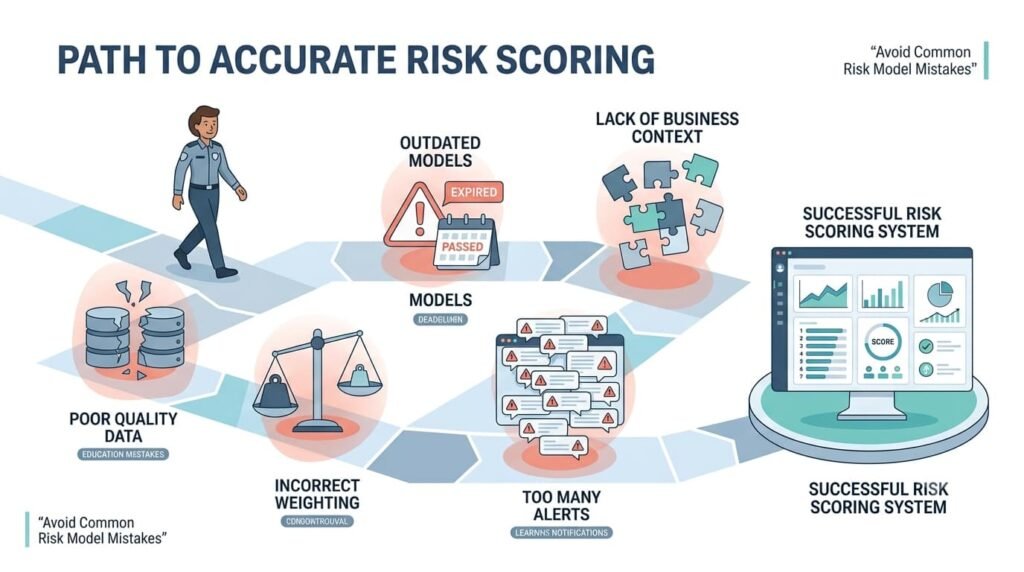
We’ve seen security teams run into the same problems when building custom risk models. The goal isn’t to create the most advanced model. It’s to build one that security teams can trust and use every day.
One common mistake is building the model in isolation. We’ve seen better results when network engineers, system administrators, and business teams work together from the start. A model may look right on paper, but it can miss real business needs.
Without that context, risk scores can point teams in the wrong direction. Our threat models and risk analysis tools combine technical data with business priorities, helping security teams understand emerging threats and make faster, better decisions.
Another mistake is adding too many factors. A simple model is easier to review, explain, and improve over time. We usually begin with a small set of reliable inputs before expanding the model.
Data quality matters just as much. An outdated asset inventory can weaken every risk score. We’ve found that improving the data often has a bigger impact than adding more rules or machine learning features.
How Can You Apply a Custom Risk Scoring Model to Your Organization?
Deployment is where the model becomes part of daily security work. We’ve found that a phased rollout helps teams test the model before using it across the network. Start with one business unit or network segment. Run the new model beside the current process, compare the results, and adjust the scoring as needed.
The risk score should fit into the tools analysts already use. Our threat models and risk analysis tools work best when the score appears in the SOC ticketing system, SOAR playbooks, or a Network Threat Detection platform. This gives security teams the right context without adding extra steps.
According to TechScience
“SOAR systems are designed to pick up the incident response process where SIEM functionality ends, providing an automated and orchestrated response A SOAR solution should be viewed as an enabler for the security program and a force multiplier for security analysts, allowing them to work smarter.” – TechScience
Success also depends on teamwork. Security operations set the priorities. Threat intelligence adds current attack data. IT and network teams confirm asset details, while risk management checks that the final scores match the organization’s risk tolerance. We’ve seen this approach help security teams respond to emerging threats faster and make better decisions with greater confidence.
What Are the Benefits for Your Security Team?
The value of a custom risk model goes beyond better reports. We’ve seen the biggest benefit come from better decisions. Our threat models and risk analysis tools help security teams focus on the risks that matter instead of spending time on low-risk issues.
A good model gives every analyst clear context. Senior analysts can spend less time on low-priority alerts, while new team members know what to review first. It also helps explain security decisions to business leaders because every score is based on both technical data and business needs.
We’ve found that the biggest improvement is better focus. The model reduces alert noise and brings the most important threats to the top. This helps security teams spend less time reacting to every alert and more time on real risk. By combining technical data with business priorities, organizations can respond to emerging threats faster and protect the systems that matter most.
FAQs
What makes custom risk scoring models more effective than standard severity ratings?
Custom risk scoring models are more effective because they use business context instead of relying only on severity scores.
A cybersecurity risk scoring model combines asset criticality scoring, business context scoring, threat-based risk scoring, and environmental risk factors to produce a more accurate composite risk score.
This approach improves vulnerability prioritization and supports a more reliable risk prioritization model for security teams.
How do you build a reliable risk scoring framework?
A reliable risk scoring framework begins with a thorough security risk assessment that identifies critical assets, likely threats, and existing security gaps.
The framework should define a consistent risk scoring methodology, apply appropriate risk factor weighting, establish a clear risk calculation formula, and set meaningful scoring thresholds. Regular risk model validation and risk model calibration ensure that the framework remains accurate as risks evolve.
Why is dynamic risk scoring important for modern security teams?
Dynamic risk scoring is important because it updates risk levels whenever new security data becomes available. The process uses real-time risk scoring, contextual threat intelligence, security telemetry enrichment, and threat intelligence integration to reflect current conditions.
Continuous updates through continuous risk assessment and continuous threat monitoring help security teams identify changing risks faster and improve remediation prioritization.
Can AI improve vulnerability risk scoring without replacing human decisions?
Yes. AI risk scoring and machine learning risk scoring improve vulnerability risk scoring by analyzing exploit prediction scoring, attack likelihood modeling, attack path analysis, and security data correlation.
Human analysts remain responsible for reviewing the results, refining risk scoring rules, and validating recommendations. This combination improves false positive reduction while maintaining accurate and consistent risk decisions.
Which data sources improve enterprise risk scoring accuracy?
Accurate enterprise risk scoring depends on complete and current security data. Organizations should combine asset inventory integration, vulnerability context enrichment, attack surface scoring, business impact analysis, security control effectiveness, and cyber exposure management to produce more reliable results.
These data sources strengthen risk analytics, support risk scoring automation, and provide clear insights through a risk scoring dashboard.
Build a Smarter Risk Strategy
You don’t need a perfect model before you can make better decisions. A custom risk scoring model helps you focus on what matters to your organization, so every alert has clearer context. That’s what makes the difference.
Building a custom scoring pipeline from scratch requires maintaining continuous API connections across your SIEM, CMDB, and intelligence feeds.
If your team lacks the engineering bandwidth to build and maintain these ETL pipelines, platforms like Network Threat Detection handle the correlation and score decay out of the box, allowing your analysts to focus on remediation rather than model maintenance.
References
- https://arxiv.org/abs/2502.11070
- https://www.techscience.com/iasc/v28n2/42057