
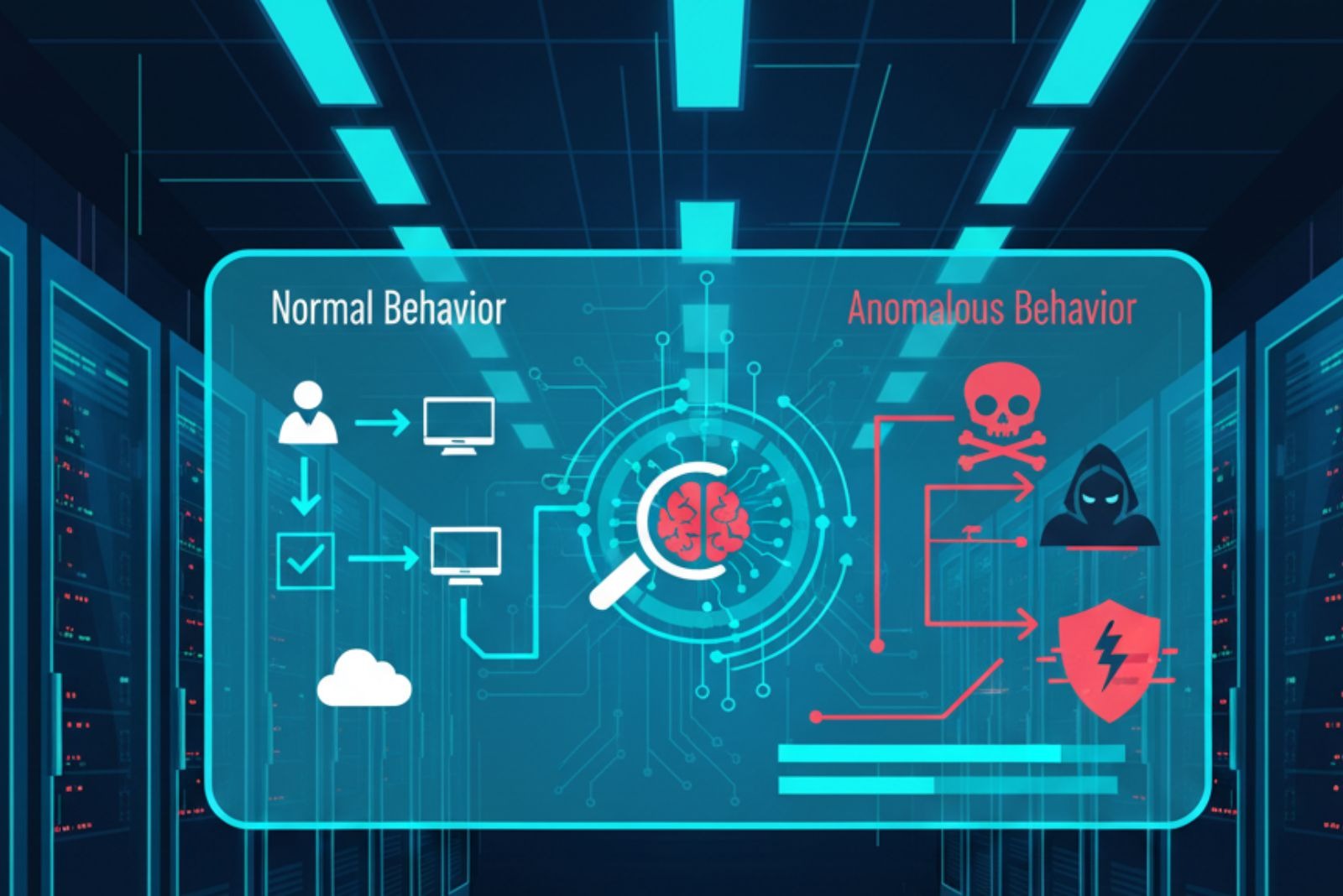
We watched a security team scramble for days, reacting to alerts that came too late. The problem wasn’t a lack of data; it was a lack of understanding. They were looking for known bad things, instead of spotting abnormal behaviors.
That’s the core of behavioral analysis for threat detection. It’s a shift from chasing signatures to understanding normal patterns, so you can spot the subtle deviations that signal a real attack.
Key Takeaways
- It learns normal behavior for users and devices to spot subtle anomalies.
- It connects seemingly minor events to uncover complex attack sequences.
- It drastically cuts down false alarms, letting you focus on real dangers.
A Shift in Perspective
The old way of thinking was like having a list of known criminals. You’d check everyone against the list. It worked, for a while. But attackers got smarter.
They stopped looking like criminals and started blending in with the crowd. They used legitimate tools and moved slowly. We realized we needed a new approach.
The core components of this approach are:
- Establishing a dynamic baseline of normal activity.
- Continuously monitoring for deviations from that baseline.
- Assigning a risk score to anomalies based on their severity.
User Entity Behavior Analytics UEBA

This is where the theory becomes practice. UEBA is the engine that drives modern behavioral analysis. The “E” for “Entity” is crucial. It’s not just about people. It’s about everything on your network,servers, printers, IoT sensors, cloud workloads.
Each of these entities has a personality, a job to do. UEBA learns that personality. It understands that a web server will talk to a database server. That’s normal. It also understands that a printer should not suddenly start sending large amounts of data to an external IP address. That’s a massive red flag.
Understanding Normal User Behavior Patterns
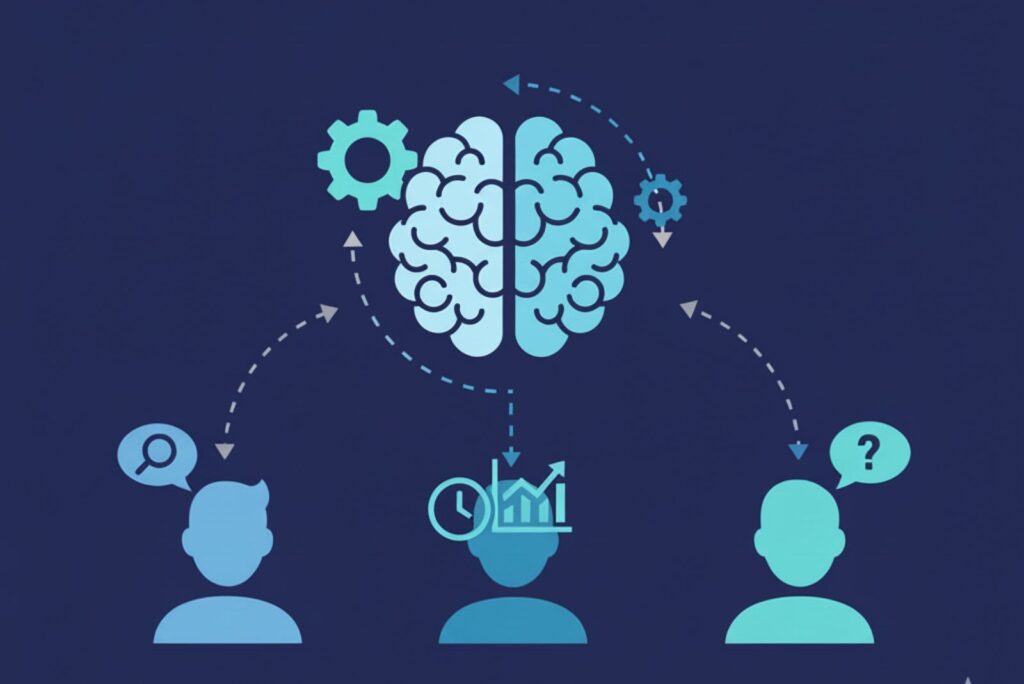
Before you can find the strange, you must know the ordinary. Establishing a baseline of normal user behavior is the foundational step (1). This isn’t a single snapshot. It’s a living, breathing understanding that adapts over time.
Normal for a system administrator is very different from normal for an accountant. The admin might log in from multiple locations, use powerful tools, and access sensitive systems regularly. For them, that’s normal. For the accountant, a single attempt to access an administrative console would be highly abnormal.
We remember a case where a user’s behavior slowly changed over a month. The deviations were minor at first.
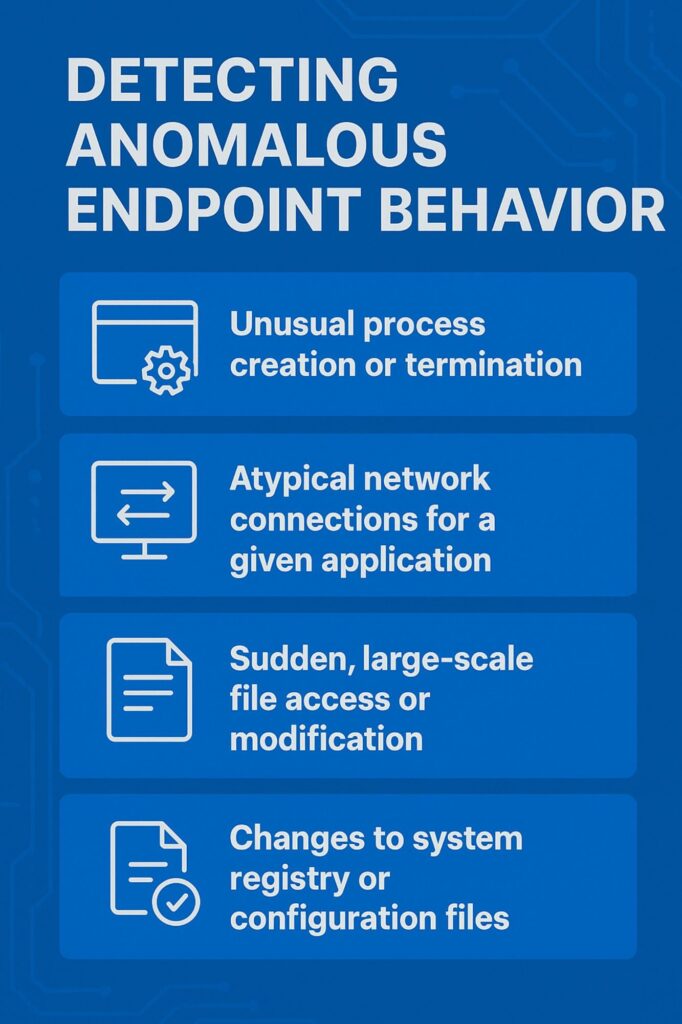
Detecting Anomalous Endpoint Behavior
Endpoints,laptops, desktops, servers,are the front lines of most attacks. Ransomware encrypts files there. Data exfiltration starts there.
Detecting anomalous endpoint behavior means understanding what a healthy machine looks like. What processes does it normally run? How much CPU and memory does it typically use?
An endpoint might start spawning unusual child processes. A legitimate application like Microsoft Word should not launch PowerShell and then attempt to contact an external IP address. That’s a chain of behavior that strongly suggests a macro-based attack.
Common endpoint anomalies include:
- Unusual process creation or termination.
- Atypical network connections for a given application.
- Sudden, large-scale file access or modification.
- Changes to system registry or configuration files.
Identifying Lateral Movement Behavior
Once an attacker breaches one system, they don’t stop. They try to move laterally, spreading through the network to find valuable data or systems. This lateral movement has a distinct behavioral signature.
Attackers use tools like RDP (Remote Desktop Protocol) or PsExec to jump from one machine to another.
Detecting C2 Communication Behavior
Command-and-control communication is the lifeline for an attacker. It’s how they control compromised systems, send instructions, and exfiltrate data. They try to hide this communication, often making it look like normal web traffic. Behavioral analysis is exceptionally good at finding these hidden channels.
It does this by looking for patterns that deviate from normal network communication. A common technique is DNS tunneling, where attackers hide data in DNS queries. Normally, DNS traffic is small and quick. Tunneling creates sustained, large-volume DNS traffic to an unusual domain, a clear behavioral anomaly.
Behavioral Biometrics Network Security
This takes behavioral analysis to a deeply personal level. Behavioral biometrics doesn’t look at what you do, but how you do it. It analyzes the unique patterns in your keystrokes,your rhythm, speed, and the pressure you apply.
Imagine a scenario. An attacker in another country gets hold of a user’s credentials. They log into the corporate VPN. The login is successful, so a traditional system might grant access. But a behavioral biometrics system is watching. It notices the keystroke timing is all wrong.
This technology monitors patterns like:
- The unique cadence and timing of your typing.
- The characteristic way you move and click your mouse.
- The angle you hold a mobile device.
AI Driven Behavioral Analysis
The scale and complexity of modern IT environments make manual behavioral analysis impossible. This is where artificial intelligence becomes not just useful, but essential. AI, and specifically machine learning, is the brain that powers effective UEBA.
It’s what ingests the terabytes of log data and finds the meaningful patterns. There are different approaches. Supervised learning can be trained on known bad behaviors. But the real power for threat detection lies in unsupervised learning.
We’ve seen AI models evolve to the point where they can predict potential threats. By analyzing the early stages of an attack, they can forecast the attacker’s likely next steps. This allows security teams to be truly proactive, hardening defenses against the anticipated actions. The AI doesn’t get tired.
It doesn’t suffer from alert fatigue. It continuously learns and adapts as the organization’s IT landscape changes. New employees, new applications, new network configurations,the AI incorporates it all into its evolving understanding of “normal.” This dynamic learning is what separates a static security system from a living, adaptive defense.
Profiling Network Device Behavior
Your network is made of more than just computers and servers. Printers, cameras, HVAC controllers, medical devices,the Internet of Things is vast. These devices are often insecure and overlooked, making them perfect entry points for attackers.
Profiling their behavior is critical. A network thermostat has a simple job. It should check in with a control server periodically and maybe receive updates. Its network traffic profile is small and predictable.
UEBA vs NBA Comparison
It’s easy to get these acronyms confused, but they focus on different, complementary aspects of security. NBA stands for Network Behavior Analysis.
As the name suggests, its primary focus is on the network layer. It analyzes flow data (NetFlow, IPFIX) to understand normal traffic patterns between IP addresses, protocols, and ports. It’s excellent at detecting network-level anomalies like DDoS attacks, port scanning, and unusual data transfers. It sees the forest.
It analyzes log data from servers, endpoints, and applications to understand their individual behavior patterns. It’s excellent at detecting insider threats, compromised accounts, and lateral movement. It sees the trees.
identified the culprit and the violation of policy. Together, they provide a 360-degree view. Network Threat Detection often incorporates elements of both, using network data to enrich entity behavior and vice versa, creating a more intelligent and holistic defense system.
Integrating Behavior Analysis SIEM
Source: IBM Technology
Most security operations centers already have a SIEM. It’s the central log aggregator, the workhorse of the SOC (2). But SIEMs can generate a lot of noise. They are great at correlating events based on rules, but rules have limits
Instead of the SIEM alerting on every single failed login, the UEBA system can feed it alerts only when a sequence of failed logins is anomalous for a specific user or from a specific location.
The SIEM alert now has context. It’s not just “Event ID 4625,” it’s “Anomalous login activity for a privileged user account.”
They were spending their time investigating high-fidelity behavioral anomalies that almost always indicated real threats. It transformed their SOC from a reactive firefighting team into a proactive hunting unit in NTD Technologies and Methods.
FAQs
What is behavioral analysis in cybersecurity?
Behavioral analysis helps teams spot threats by learning what “normal” looks like for users and devices. Instead of looking only for known bad files, it watches for actions that seem odd. When something unusual happens, it sends an alert. This helps catch new or hidden attacks early and lets teams act fast before damage spreads.
How does UEBA help detect insider threats?
UEBA watches daily user and device actions and builds profiles. It looks for changes, like strange logins or sudden access to sensitive files. Insider threats often look normal, so UEBA finds small clues that something is wrong. Even with real credentials, unusual actions stand out. This helps stop trouble before it grows.
Why is establishing a baseline so important?
A baseline shows what normal activity looks like. Every user and device has its own pattern. The system learns these habits over time. When something changes, it spots it quickly. Without a baseline, alerts would be noisy or wrong. With a strong baseline, alerts become clear, accurate, and easy to trust.
What types of anomalies can behavioral analysis detect?
Behavioral analysis finds many unusual actions. It can see odd login times, strange network traffic, new processes, or sudden file access. It can also catch slow changes that add up over time. By looking at full patterns, not single events, it finds attacks that try to blend in with normal behavior.
How does behavioral analysis reduce false positives?
Old tools alert too often because they follow fixed rules. Behavioral analysis learns real patterns, so it knows what is normal and what is not. It alerts only when something truly stands out. It also groups events to show if they form a bigger issue. This cuts down noise and keeps teams focused on real threats.
Can behavioral analysis detect zero-day attacks?
Yes. Zero-day attacks are new and have no known signatures. But they still behave in strange ways. Behavioral analysis spots odd actions like unusual processes or strange traffic. Even if the attack is new, the behavior looks wrong. This helps teams find trouble early, long before the threat becomes well known.
How does AI enhance behavioral threat detection?
AI studies huge amounts of data fast and finds patterns people may miss. It keeps learning as systems change. AI links events, gives them risk scores, and can even guess the next step in an attack. This helps teams act sooner. AI never gets tired, so it watches the system all day and grows smarter over time.
What role does behavioral biometrics play in security?
Behavioral biometrics checks how a person types, moves the mouse, or uses a device. These habits are unique and hard to copy. If someone logs in with the right password but the behavior feels off, the system knows. It can block access or ask for more proof. This adds quiet but strong protection.
How does behavioral analysis detect lateral movement?
Attackers often move from one computer to another. Behavioral analysis looks for signs of this, like odd logins, new access paths, or use of remote tools. When it spots these steps early, teams can stop attackers before they reach important data. This keeps the attack from spreading.
How does behavioral analysis integrate with SIEM tools?
Behavioral analysis makes SIEM alerts smarter. SIEM tools collect logs but can send too many alerts. When behavior data is added, SIEM focuses on what matters most. Simple logs become clear warnings with context. This helps teams respond faster and saves time. Together, SIEM and UEBA create a stronger defense.
Making Behavioral Analysis for Threat Detection Work
Starting with behavioral analysis can feel daunting, but it doesn’t have to be. The key is to start small. Don’t try to boil the ocean. Pick a critical area, like monitoring privileged user accounts or your most sensitive servers.
Let the system learn their behavior. Get comfortable with the alerts it generates. Use NetworkThreatDetection early successes to build confidence and demonstrate value.
The goal is to move from a reactive security posture, constantly putting out fires, to a predictive one. You’re not just waiting for the alarm to sound.
References
- https://medium.com/@igniobydigitate/baselining-normal-behaviour-of-enterprise-it-systems-with-data-driven-thresholds-b878a5e7e40b
- https://iritt.medium.com/intro-to-logs-soc-level-2-log-analysis-tryhackme-walkthrough-df57b983af53